Warranty
Roof Warranties, Explained
Every Roofing Army roof carries a 50-year workmanship warranty for how it is installed and a manufacturer warranty for the materials. Here is what each one covers, for how long, and who stands behind it. For the promises around the warranty, see the Mission Complete Guarantee.
Two Types of Roofing Warranties
Every roofing project includes two separate warranties. One covers the quality of the installation, and the other covers the roofing materials themselves. Understanding the difference is critical.
Workmanship Warranties
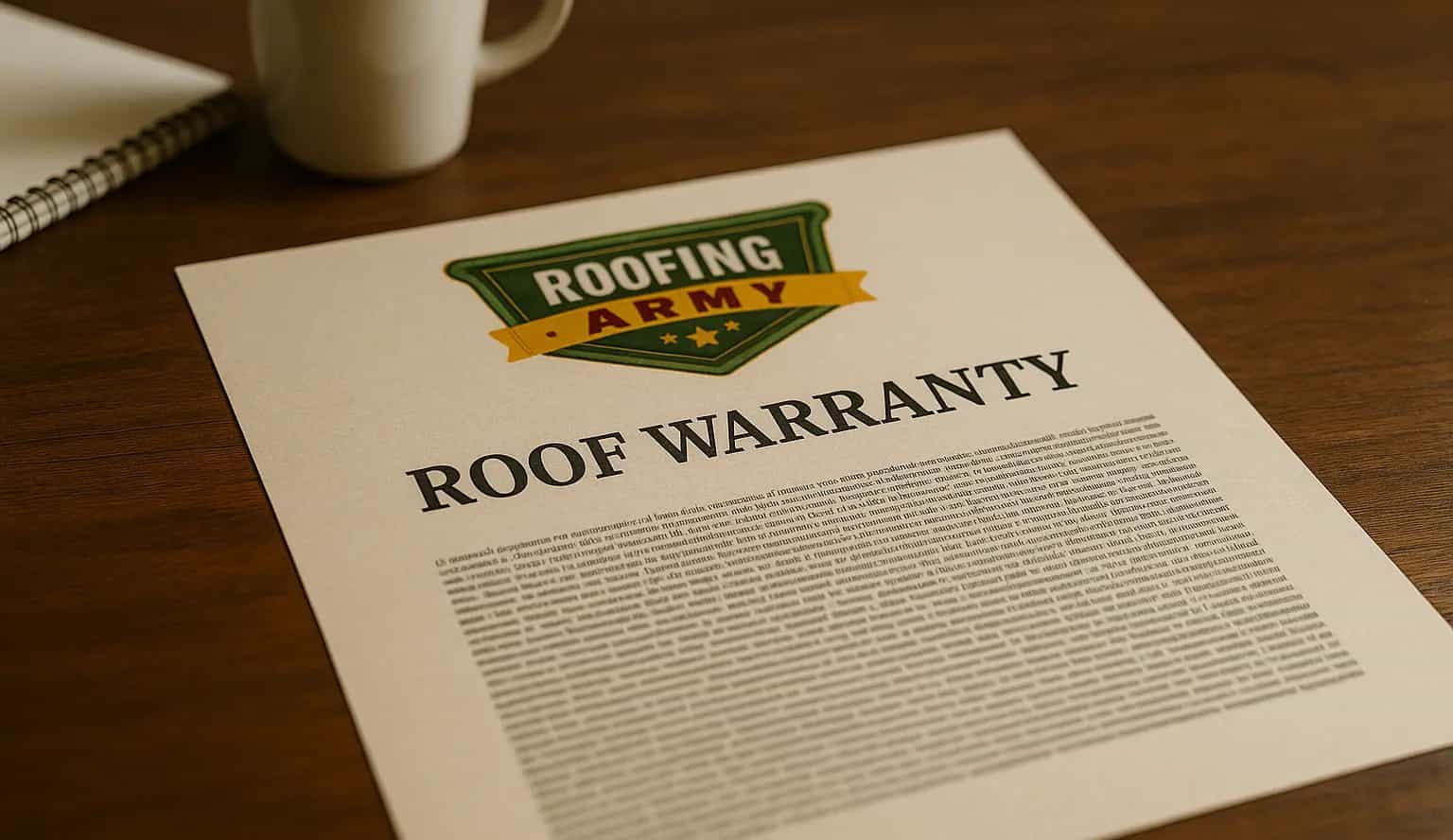
Our workmanship warranty covers the quality of the roof installation itself. If leaks or defects occur due to improper or faulty installation of any part of the roofing system, Roofing Army will cover both labor and material costs to repair or replace the affected area. Every roof we install carries a 50-year workmanship warranty, backed directly by Roofing Army.
- Covers installation related issues and leaks
- Includes labor and materials
- Backed directly by Roofing Army
- 50 years on every roof we install
Manufacturer Warranties
Manufacturer warranties cover defects related to the roofing materials and their performance over time. Coverage varies by brand and product, and while many are advertised as ‘lifetime limited,’ full material and labor coverage typically applies only during the first 5-10 years, with reduced or prorated coverage afterward.
- Covers material defects and performance
- Backed by the manufacturer, not the installer
- Coverage varies by brand and product line
- Long-term coverage is often limited or prorated
We've Got Your Back
Our Workmanship Warranty
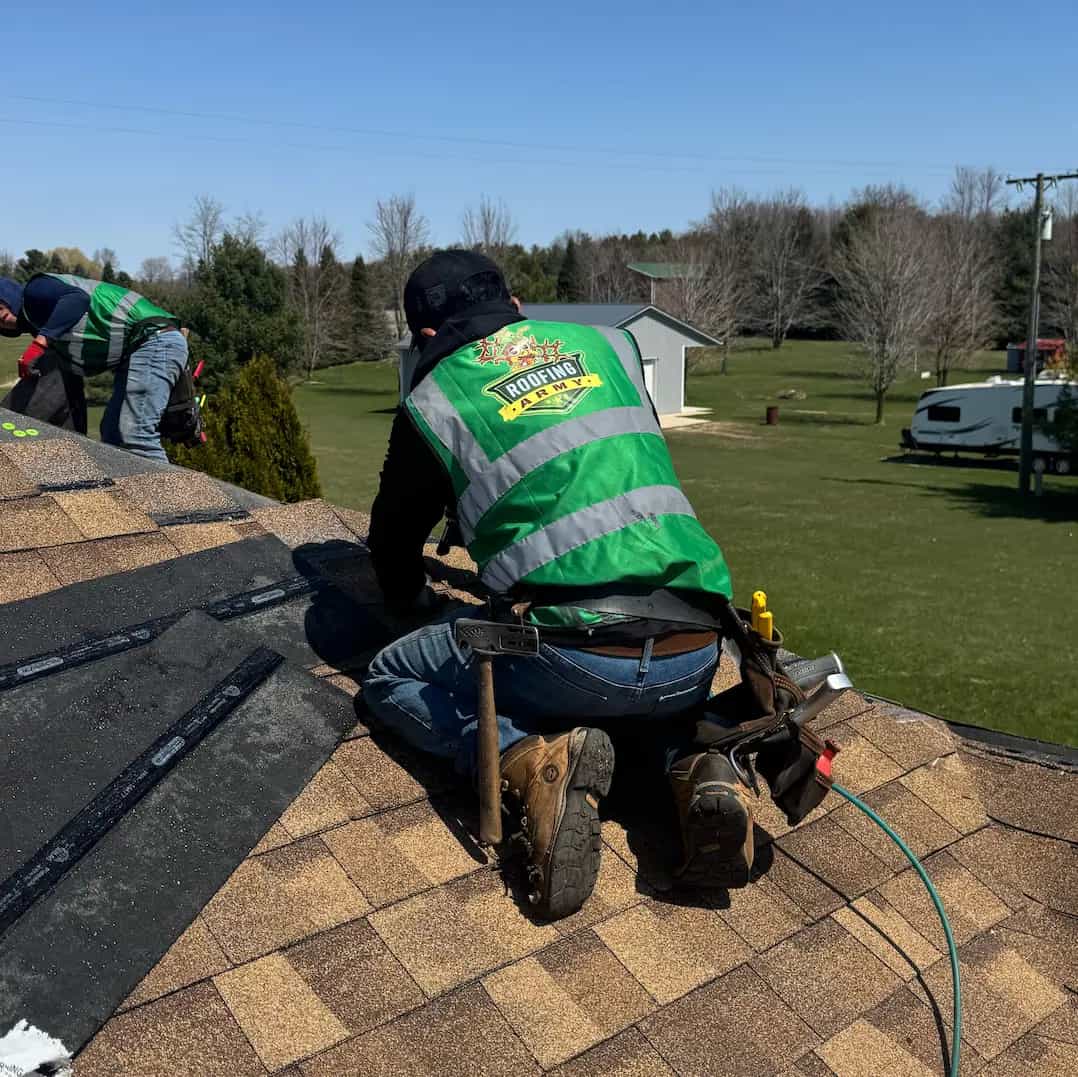
Our workmanship warranty covers the quality of the roof installation itself. If a leak or defect occurs due to improper or faulty installation of any part of the roofing system, Roofing Army will repair or replace the affected area at no cost to you, including both labor and materials. Every full roof replacement carries a 50 year workmanship warranty. This warranty is backed directly by Roofing Army and applies only to roofs installed by our trained, in-house crews.
Understanding
Manufacturer Warranties
Many roofing manufacturers advertise ‘lifetime limited’ warranties, but the actual coverage can be more restrictive than the headline suggests. Manufacturer warranties are designed to cover defects in the roofing materials themselves, not installation quality, and coverage terms vary widely by brand and product. In most cases, full material and labor coverage applies only during the first 5-10 years, after which coverage may become limited, prorated, or material-only. Because of this, manufacturer warranties should be viewed as supplemental protection alongside a strong workmanship warranty.
Select a Brand Below to View Warranty




How We Maximize Your Coverage
We help homeowners get the maximum coverage available from manufacturer warranties by installing each brand's complete roofing system, not just the shingles. This includes their underlayment, starter shingles, ice and water shield, ventilation components, and manufacturer-approved accessories. Using the full system allows homeowners to qualify for the most comprehensive coverage possible, unlike contractors who install only the shingles and cut costs with off-brand or lower-quality components that can limit warranty protection.
What's Not Covered
Warranty Exclusions
Natural Disasters
Damage caused by events such as hurricanes, tornadoes, or severe hailstorms beyond standard wear and tear.
Unauthorized Alterations
Any alterations, repairs, or maintenance conducted by parties outside Roofing Army may void the warranty.
Improper Maintenance
Neglecting basic roof upkeep can lead to issues not covered by the warranty.
Structural Modifications
Changes to your home's structure, like new additions that impact the roof, fall outside warranty protection.
Warranty Claim Process
How to File a Claim
Take a few clear photos of the problem area from the ground or attic if accessible, plus any interior ceiling stains or active leaking.
Submit our warranty claim form online or call our office so we can collect details, confirm your address, and review your warranty info.
We'll send a Roofing Army roof inspector out to evaluate the issue and document the affected areas of the roof system.
We'll assess the damage and determine whether it relates to a manufacturer material issue or an installation related workmanship defect.
Once we confirm coverage and the proper repair approach, we'll outline the next steps and schedule the repair as quickly as possible.
Hundreds of Happy Customers
“Aaron performed a very thorough inspection of the roof with a well-documented report. I was provided a very reasonable quote for a new roof with many options. The whole process was transparent and professional from start to finish.”
“After getting the runaround from a couple other companies, Aaron came out and was completely straight with me about what I needed. No pressure, no scare tactics, just honest info. The crew showed up on time, did solid work, and left the place clean.”
“This was an extremely smooth process. Starting with Aaron Scott who handled the estimate, he was friendly, on time, no hard sell, just advised me of problems and gave a good price. Evan and the roofers took it from there. The clean up was excellent. I would highly recommend Roofing Army.”