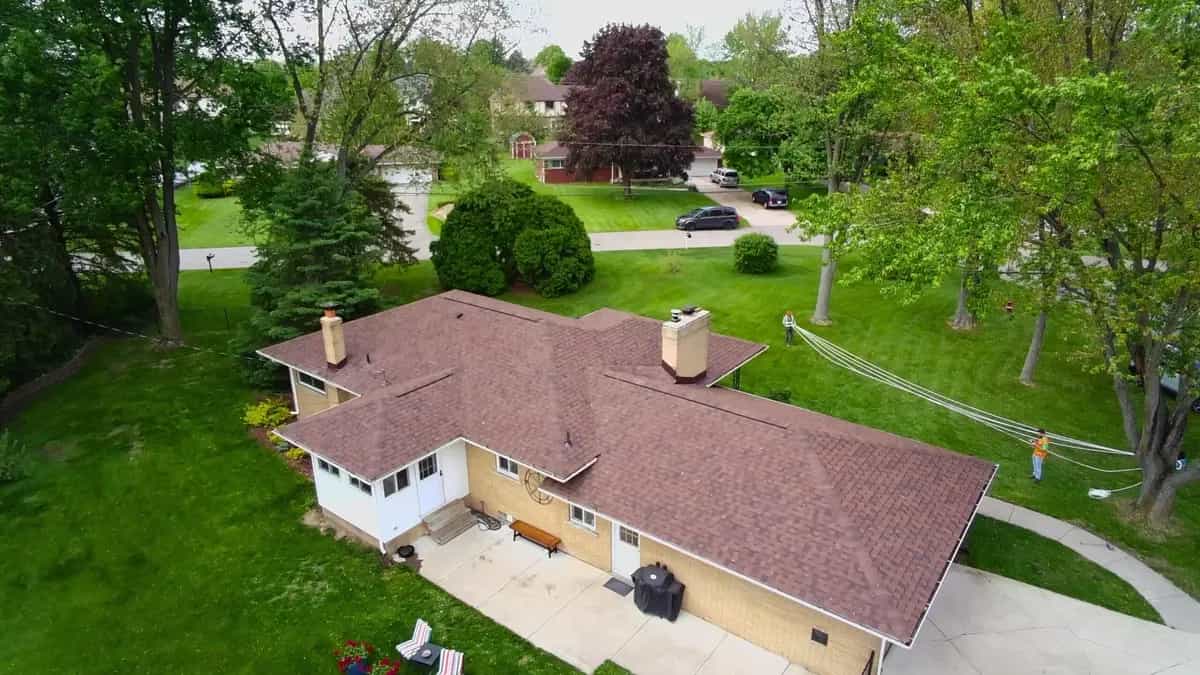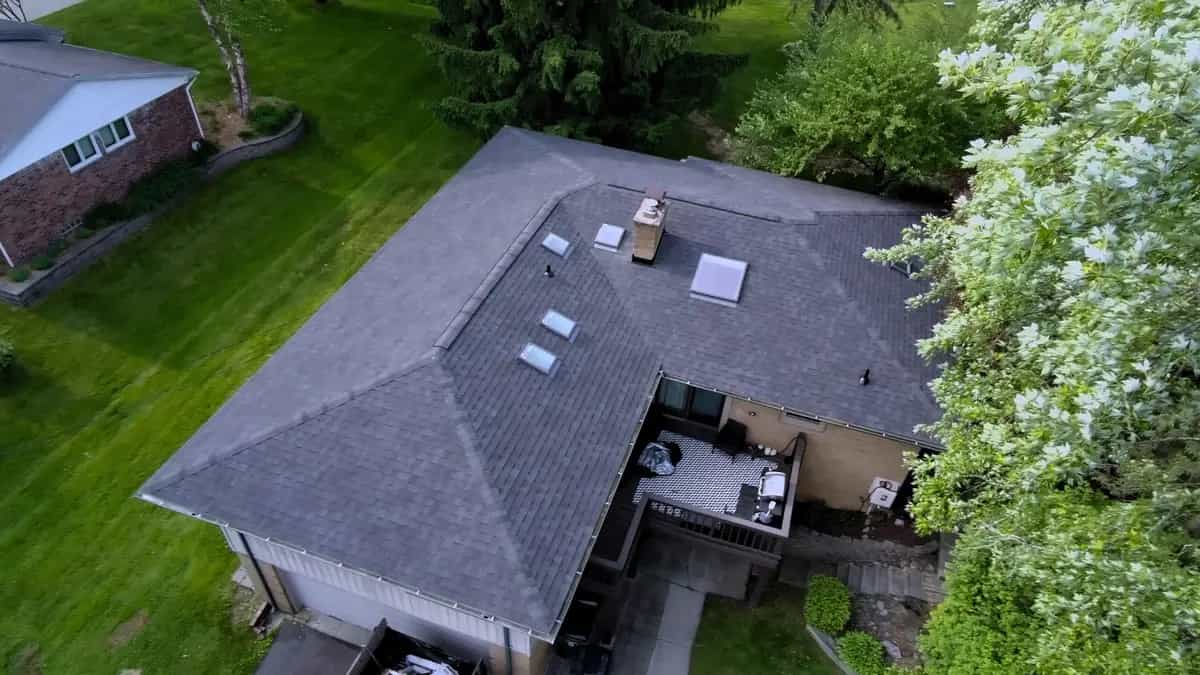
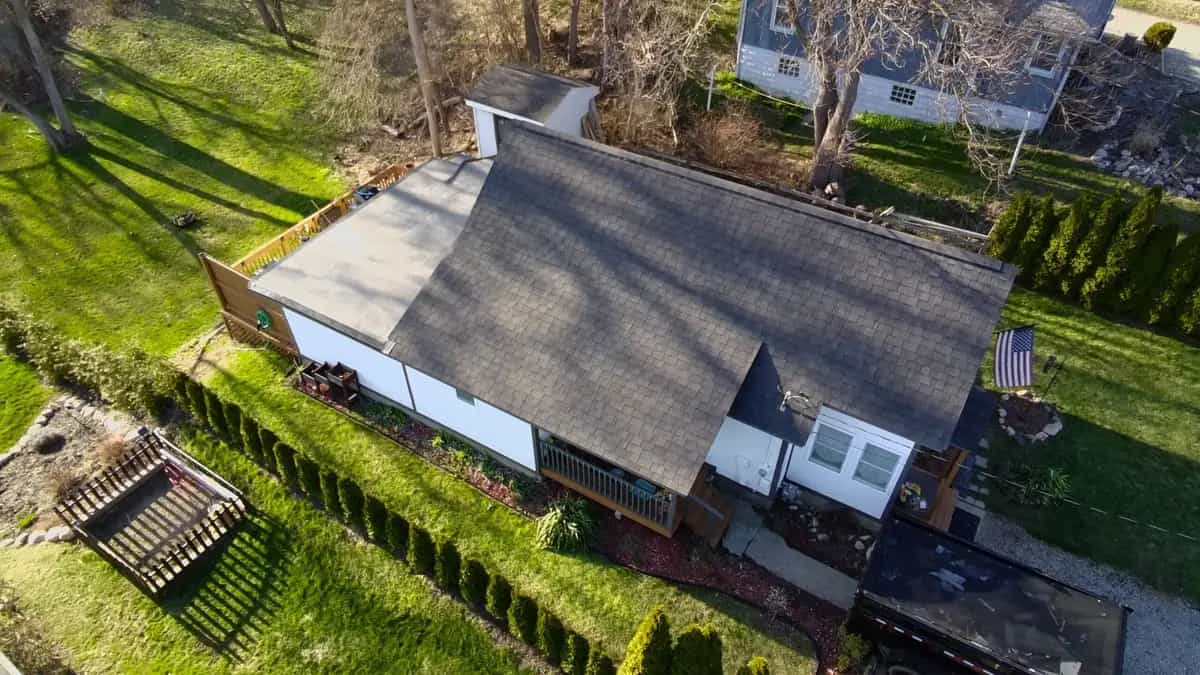
An RCV (replacement cost value) roof policy pays what it costs to replace your storm-damaged roof today, minus your deductible. An ACV (actual cash value) policy pays that same replacement cost minus depreciation for the roof's age, and the depreciation is never paid back. On a typical Southeast Michigan roof, that difference can be thousands of dollars. I'm Aaron Scott, a licensed Michigan residential builder and owner of Roofing Army, and this guide walks through both policy types using a real roof price from our job gallery.
What Is Actual Cash Value (ACV) on a Roof Claim?
Actual cash value is the replacement cost of the roof minus depreciation. Depreciation is the insurer's estimate of how much value the roof lost through age and wear before the storm hit. An adjuster assigns the roof an expected life, looks at how old it is, and subtracts a proportional share of the replacement cost. A 15 year old shingle roof with a 25 year expected life would typically be depreciated by more than half.
Under an ACV policy, that deduction is permanent. You receive one check for the depreciated amount minus your deductible, and the rest of the roof cost is yours to cover, whether you replace the roof or not. Insurers have been steadily moving older roofs onto ACV terms, often through an endorsement called a roof surfacing payment schedule or similar language, and homeowners frequently learn this only when the settlement arrives.
What Is Replacement Cost Value (RCV) on a Roof Claim?
Replacement cost value is the full cost to replace the damaged roof with materials of like kind and quality at today's prices. An RCV policy still calculates depreciation, but it holds that amount back rather than keeping it. This held-back portion is called recoverable depreciation, and the insurer releases it once the roof is actually replaced and the final invoice is submitted.
So an RCV claim is usually paid in two checks: an initial payment at actual cash value, then the recoverable depreciation after completion. Your total out of pocket is your deductible, plus anything the estimate missed. We cover the second check in detail in our guide to how recoverable depreciation is released.
How Do ACV and RCV Compare Side by Side?
| Feature | Actual Cash Value (ACV) | Replacement Cost Value (RCV) |
|---|---|---|
| What it pays | Replacement cost minus depreciation minus deductible | Replacement cost minus deductible |
| Depreciation | Deducted permanently | Held back, then paid after the work is done |
| Number of checks | One | Usually two |
| Must you replace the roof? | No, the payment is yours either way | Only to collect the held-back depreciation |
| Typical premium | Lower | Higher |
| Common on | Older roofs, budget policies, roof schedule endorsements | Standard homeowners policies on newer roofs |
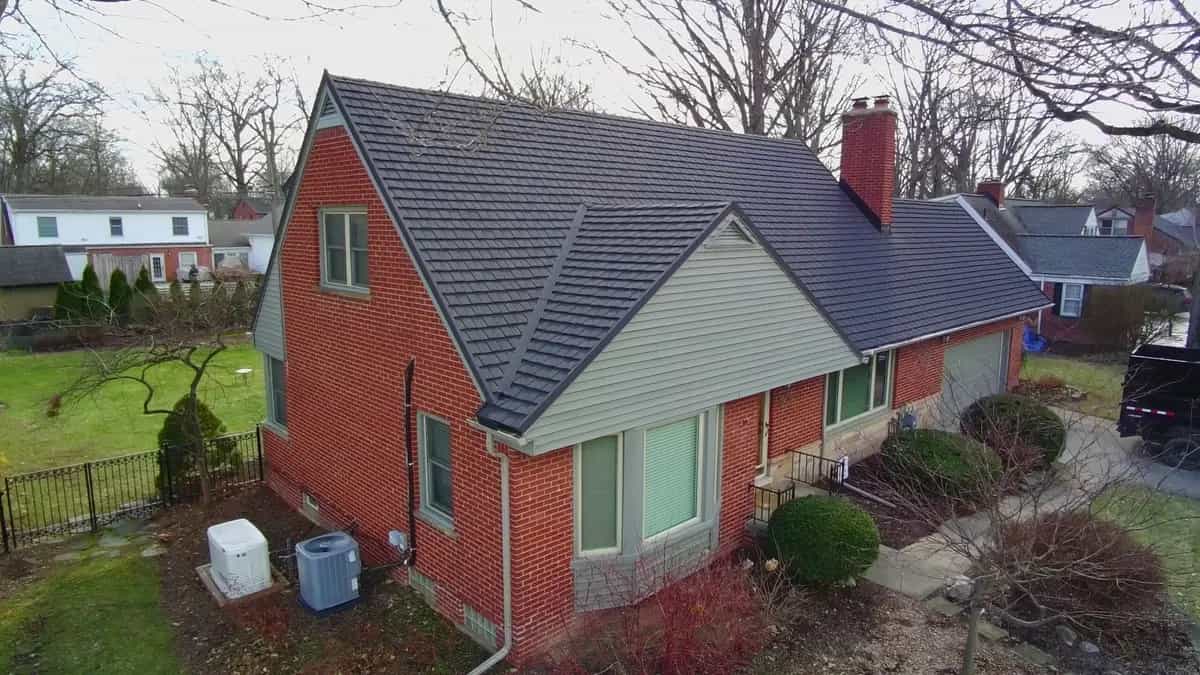
What Does a Real Michigan Roof Look Like Under Each Policy?
We publish the real price of every completed job. Take our roof replacement at 4586 Lehigh Drive in Troy: 2,202 square feet of roof, $15,118 total. Assume for illustration that the adjuster's estimate matched that price, the homeowner carries a $1,500 deductible, and the roof was old enough that the adjuster applied 40 percent depreciation to the materials portion. Those depreciation figures are hypothetical; every carrier calculates them differently.
- RCV policy: replacement cost $15,118, minus $1,500 deductible. First check arrives at the depreciated amount, second check releases the held-back depreciation after we finish and invoice. Total insurance payment: $13,618. Homeowner pays $1,500.
- ACV policy: if roughly $9,000 of that estimate is materials and 40 percent depreciation is applied to it, about $3,600 comes off permanently. Insurance pays about $10,018 after the deductible. Homeowner pays about $5,100 for the same roof.
Same house in Troy, same storm, same roof, and a gap of more than $3,500 that comes down entirely to two letters on the declarations page. On a bigger roof like our $16,890 replacement in Shelby Township, the gap scales up with it.
Why materials, not the whole estimate: in Michigan, depreciation on a homeowners claim is supposed to apply to the physical, aging parts of the roof. The next section explains why labor is treated differently here than in many other states.
Can a Michigan Insurer Depreciate Labor on an ACV Payment?
Only if you specifically bought a policy that says so. According to the Michigan Department of Insurance and Financial Services (DIFS) Bulletin 2024-26-INS, actual cash value is ordinarily understood as a deduction for wear, tear, and deterioration of physical, tangible items. Labor, taxes, fees, and contractor overhead and profit are nontangible; they do not age or wear out. For homeowners and dwelling policies issued or renewed on or after January 1, 2025, an insurer that wants to depreciate those nontangible items must do it through a standalone endorsement that identifies them, offered as optional coverage in exchange for a reduced premium.
In practice, that means an ACV settlement on a Michigan roof should show depreciation applied to shingles, underlayment, and the other materials, not to the crew's labor or the tax line, unless you signed up for that endorsement. If your settlement worksheet depreciates everything across the board, ask your adjuster to point to the endorsement that allows it. Our guide to reading a roof insurance estimate shows where those columns live on the paperwork.
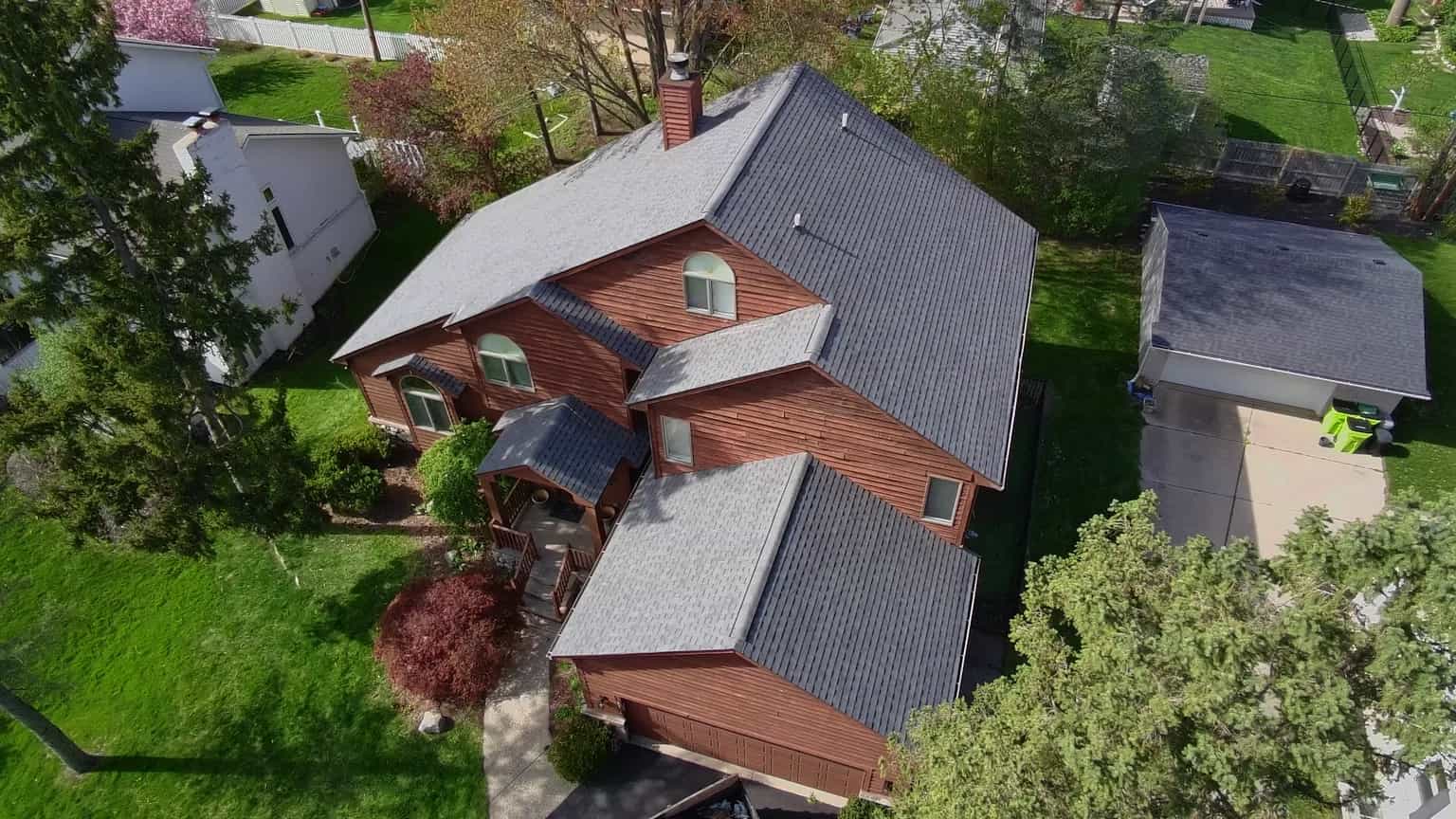
How Do You Know Which Coverage Your Roof Has?
Pull your declarations page and look for three things:
- The loss settlement basis for the dwelling. Most standard homeowners forms settle the dwelling at replacement cost, but your declarations page or an endorsement can override that for the roof specifically.
- A roof endorsement. Look for wording like roof surfacing payment schedule, actual cash value roof, or a table that assigns a payment percentage by roof age and material. That table is an ACV schedule even when the rest of the policy is RCV.
- A separate wind or hail deductible. Many Michigan policies now set a percentage deductible for wind and hail, calculated against the dwelling coverage limit, which can be far larger than the flat deductible on the rest of the policy.
If the language is unclear, call your agent and ask one direct question: if wind damages my roof tomorrow, is the roof settled at replacement cost or actual cash value? Get the answer in writing. Do this before storm season, not after.
Is an RCV Policy Worth the Higher Premium?
For most Southeast Michigan homeowners with a roof more than about ten years old, we think it is, because that is exactly when depreciation starts to eat a claim. The premium difference is usually modest compared to a four-figure gap on a single wind claim. If your insurer will only write your roof at ACV because of its age, that is useful information too: it tells you the roof is close enough to end of life that a planned replacement at a cash price may make more sense than waiting for a storm. Our guide to repairing versus replacing a roof walks through that decision, and financing can spread the cost.
What Should You Do After Storm Damage, Regardless of Policy Type?
The claim process is the same either way. Photograph the damage, arrange emergency tarping if the roof is open, and get an independent inspection before you decide whether to file. Our storm damage team inspects for free, documents every slope with drone and on-roof photos in your job portal, and meets your adjuster on site so nothing is missed. A Roofing Army project manager is on site for every job we install, we never ask for a deposit, and we install 6 feet of ice and water shield at the eaves rather than the code minimum.
For the broader rules, including what is and is not a covered peril, read our guide on whether homeowners insurance covers roof replacement in Michigan, then the step-by-step Michigan roof insurance claim guide. We work claims across Rochester Hills, Shelby Township, Troy, and the rest of Southeast Michigan, and every finished roof is published with its real price in our job gallery. If you want the full roof replacement process explained before you file, start there.
Frequently Asked Questions
Can I switch my roof from ACV to RCV coverage?
Often, yes, but it depends on the roof's age and condition. Many insurers will write replacement cost coverage on a roof under a certain age, or after an inspection, and some will restore RCV terms once a new roof is installed. Ask your agent what documentation they need; a dated invoice and photos from a completed replacement usually qualify.
Does an ACV policy still require me to replace the roof?
No. Under an ACV policy the depreciated payment is yours whether you replace the roof, repair it, or do nothing. Keep in mind that leaving documented storm damage unrepaired can create problems on the next claim, since the insurer can argue that later water damage was preventable.
How does an insurer decide how much to depreciate a roof?
The adjuster assigns the roof an expected lifespan based on the material, estimates its age from records or condition, and subtracts a proportional share of the replacement cost. Methods vary by carrier, and the age and condition assumptions can be challenged with permit records, invoices, or a contractor's inspection report.
Does Michigan let insurers depreciate labor on a roof claim?
Not by default. According to DIFS Bulletin 2024-26-INS, for homeowners and dwelling policies issued or renewed on or after January 1, 2025, an insurer may depreciate labor and other nontangible items only through a standalone, optional endorsement offered for a reduced premium. Without that endorsement, depreciation should apply to the aging materials, not the cost of installing them.
What is a roof surfacing payment schedule?
It is an endorsement that replaces standard loss settlement on the roof with a table of payment percentages based on roof age and material. A 15 year old asphalt roof might be scheduled at a fraction of replacement cost. It functions as actual cash value coverage for the roof even when the rest of the dwelling is insured at replacement cost, so read it before storm season.