Here is a conflict of interest nobody in this industry likes to say out loud: a roofing company makes far more money on a replacement than a repair. That is exactly why so many homeowners with one leaky pipe boot end up sitting through a two hour pitch for a $18,000 roof. We repair roofs every week, and we tell homeowners to repair rather than replace whenever repair is genuinely the right answer. This article is the actual framework we use to make that call, so you can walk into any sales conversation knowing what the honest answer should look like.
The Quick Version
Repair makes sense when the roof is relatively young, the damage is isolated and has a specific cause, and the surrounding shingles are still healthy enough to last many more years.
Replacement makes sense when the roof is near the end of its life, problems are showing up in multiple places, the damage covers a large area, or you would be repairing the same roof again within a couple of years.
Everything below is how to tell which side of that line you are on.
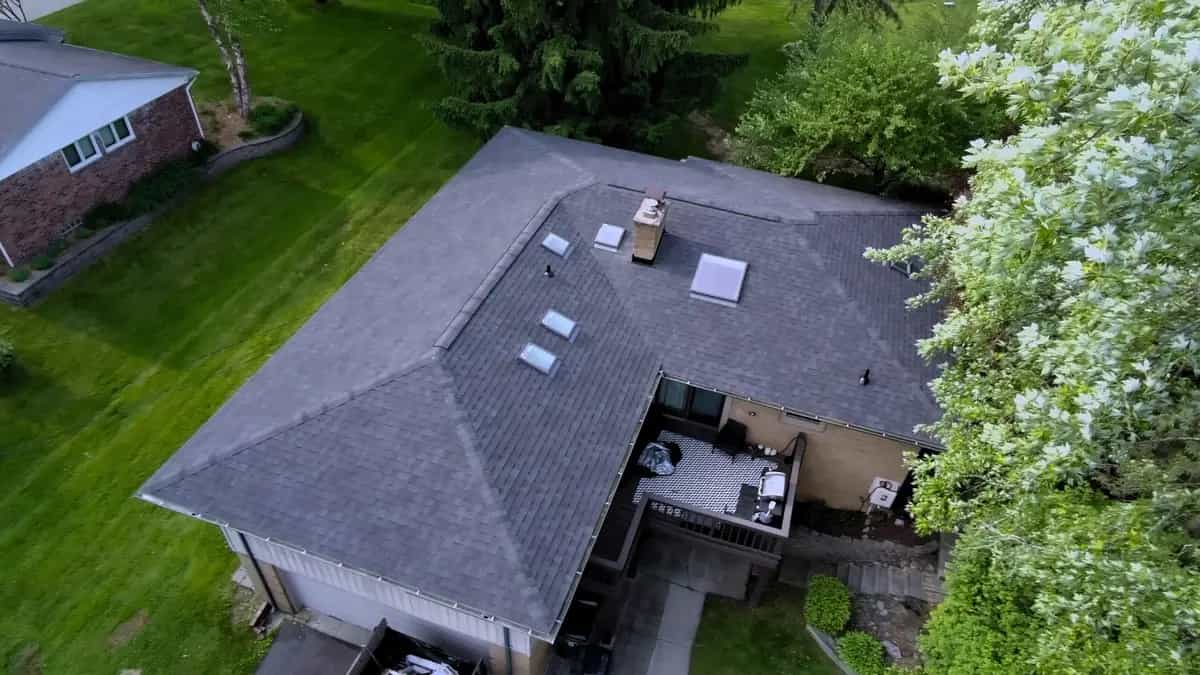
Start With Two Questions
1. How old is the roof?
Age sets the ceiling on how much a repair is worth. A typical architectural asphalt shingle roof in Michigan lasts 25 to 30 years when it is installed correctly and the attic is ventilated properly. Poor ventilation can shorten that dramatically, and a 3-tab shingle roof holds up for closer to 15 to 18 years regardless of ventilation. See our 3-tab vs architectural shingle guide for the full breakdown.
- Under 10 years old: repair is almost always the right call for isolated damage. If a young roof is failing broadly, that is an installation problem, and your first call should be to the installer about their workmanship warranty.
- 10 to 18 years old: the judgment zone. Isolated problems are still worth repairing. Multiple problems in different areas are the roof announcing its retirement.
- Over 18 to 20 years old: repairs buy time, and it is honest to say only that. Every dollar spent here should be evaluated against the replacement you already know is coming.
2. Is the damage isolated or systemic?
This is the single most useful question. Isolated damage has a story: a wind storm lifted shingles on one slope, a pipe boot cracked, flashing pulled away from the chimney. Systemic damage has no single story, because the whole roof is wearing out at once: granules filling the gutters, shingle edges curling and cupping, cracks spread across multiple slopes, more than one leak in unrelated places.
Isolated damage gets repaired. Systemic damage gets replaced. Paying to patch a systemic problem is renting time on a roof that has already decided.
The 25 Percent Rule
There is also a code dimension to this decision. Under the Michigan Residential Code, when more than 25 percent of a roof section is repaired or replaced within a 12 month period, that work is no longer treated as a minor repair. The reroofed portion must be brought into conformance with current code requirements, including things like proper ice barrier at the eaves.
In practice, this means large "repairs" stop being cheap patch jobs. Once storm damage or deterioration crosses roughly a quarter of a roof section, you are paying for code-compliant reroofing of that area anyway, and the math frequently tips toward replacing the whole section or the whole roof, doing it once, and resetting the clock with full warranties. A contractor quoting a huge repair without mentioning this is either unaware of the code or hoping you are. Reroofing at that scale also means pulling a permit; see our Michigan roof permit guide for what that adds in your city.
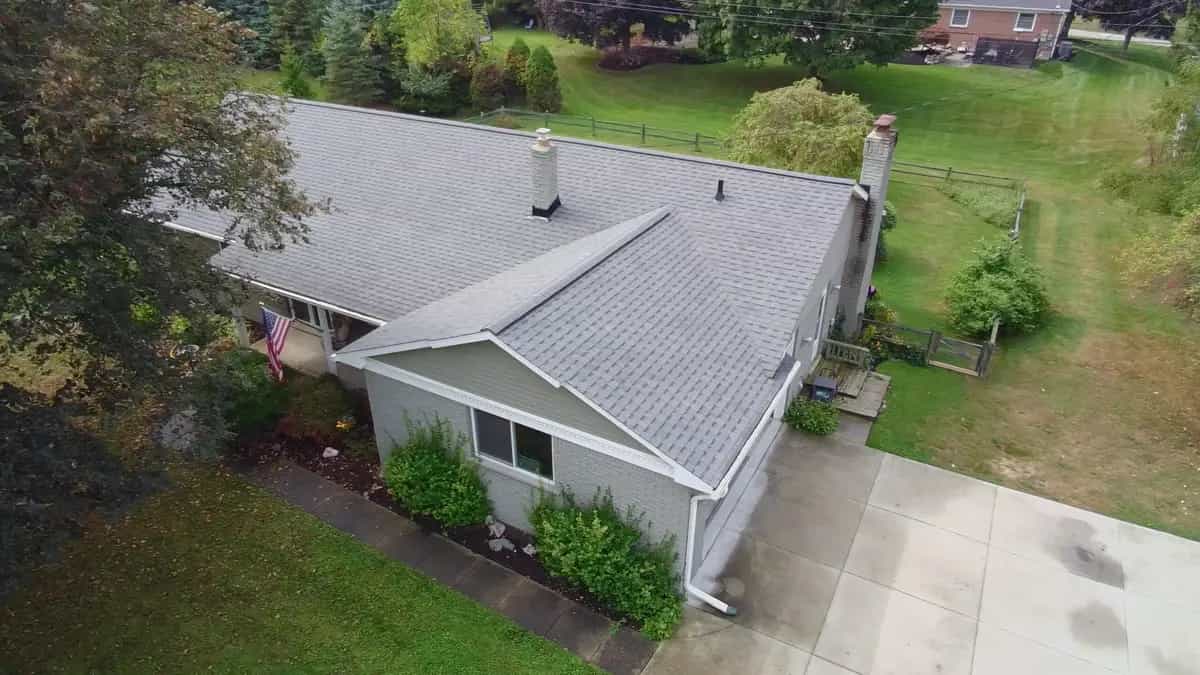
When Repair Is the Right Answer
These are situations where we will tell you to keep your money and fix the actual problem. You can see how we handle these on our roof repair page.
- Cracked or rotted pipe boots. The rubber boots around plumbing vents fail years before shingles do. This is one of the most common leak sources we see, and it is a straightforward, inexpensive fix.
- A few missing or wind-lifted shingles on an otherwise healthy roof after a storm. Our wind repair guide covers real repair pricing and color-matching.
- Flashing failures around chimneys, walls, and skylights. Flashing problems cause a huge share of leaks and rarely require replacing the field shingles around them.
- Isolated punctures from fallen branches, satellite dish removal, or foot traffic.
- Nail pops and exposed fasteners that just need to be sealed or re-driven correctly.
One honest caveat on repairs: shingle color matching is imperfect. Your shingles have weathered for years, and replacement shingles, even the same product in the same color, will read slightly different for a while. On a repair, function comes first and cosmetics second.
When Replacement Is the Right Answer
- Multiple leaks in unrelated areas. One leak is an event. Three leaks are a pattern.
- Widespread granule loss, curling, or cracking. The shingles have used up their protective surface and no repair puts it back.
- Sagging decking or soft spots underfoot. The structure under the shingles is compromised, and that means opening the roof up regardless.
- Two layers of shingles already on the roof. The Michigan Residential Code does not permit a third layer, so any significant work triggers a full tear-off anyway.
- Storm damage across a large area. Widespread hail bruising or wind damage often crosses the 25 percent threshold, and it may be an insurance claim rather than an out-of-pocket decision. Our storm damage page covers how that process works and how to document damage properly.
- A repair bill that keeps repeating. If you have paid for roof repairs two or three times in as many years, add those invoices up. You are making payments on a roof you do not own yet.
The Math That Keeps You Honest
A useful gut check: divide the repair cost by the years it realistically buys you, and compare that with the replacement cost divided by the 25 or so years a new roof provides.
Across every repair we priced this year, the median sold repair ran $900, with most small, contained fixes like a pipe boot or a few shingles landing between $250 and $600. See the full breakdown, including why repairs close at a much higher rate than replacements, in our Southeast Michigan repair cost guide. A repair in that range on a 12 year old roof that keeps it healthy for another decade is excellent value. A $4,000 repair on a 22 year old roof that will still need replacement in three years is not a repair. It is a very expensive down payment on nothing, because none of that money carries over into the new roof.
There is one more factor Michigan homeowners should weigh: winter. A roof that is marginal in September becomes an emergency in January, when ice makes everything harder, slower, and riskier. If replacement is clearly coming within a year or two, scheduling it on your terms in fair weather beats reacting to a ceiling stain during a February thaw.
How We Handle This Decision
When we inspect a roof, we document what we find with photos, tell you which category you are in, and price accordingly. If it is a pipe boot, we quote a pipe boot. If it is a dying roof, we say so and provide five replacement quotes at different price points so you control the budget. No deposits either way; you pay when the work is done. And if the honest answer is "this roof has five good years left, do nothing and call us in 2031," you will hear that too. Repair customers become replacement customers eventually, and they remember who told them the truth.
If you are staring at a stain on the ceiling right now and are not sure which situation you have, schedule a free inspection. The answer is on the roof, and finding it costs you nothing.
Frequently Asked Questions
What is the 25 percent rule for roofs in Michigan?
Under the Michigan Residential Code, when more than 25 percent of a roof section is repaired or replaced within a 12 month period, the work must be brought into conformance with current code requirements rather than being treated as a minor repair. Practically, once damage crosses that threshold, large repairs are priced like code-compliant reroofing, which often tips the decision toward replacing the section or the whole roof.
Is it worth repairing a 20 year old roof?
Sometimes, but only with clear eyes. At 20 years, an asphalt roof is near the end of its expected life in Michigan, so a repair is buying time rather than restoring the roof. A small, cheap fix to get through a season or two can make sense. A large repair bill at that age is usually money better applied to the replacement you already know is coming.
Can I replace shingles on just one section of my roof?
Yes, and it is often the right call after localized wind or tree damage on an otherwise healthy roof. Keep two things in mind: the new shingles will not perfectly match the weathered ones for a while, and if the damaged area exceeds about 25 percent of that roof section within a year, Michigan code requires the reroofed area to meet current requirements, which raises the scope and cost. See our guide on replacing just one side of a roof for the structural tie-in and cost tradeoffs in more detail.
How do I know if a leak means my whole roof is failing?
Look for a story. A leak with a specific cause, like a cracked pipe boot, lifted flashing, or a few storm-damaged shingles, is an isolated problem and a good repair candidate. Multiple leaks in unrelated places, widespread granule loss, or curling shingles across several slopes point to a roof that is failing as a system. An inspection with photos should tell you which one you have.
Will insurance pay for my roof repair or replacement?
Homeowners insurance generally covers sudden storm damage, like wind and hail, but not gradual wear and age. If a storm damaged a large portion of your roof, an insurance claim may cover replacement of the affected sections or the full roof. Document the date of the storm and get the damage inspected and photographed promptly, since claims are much easier with good evidence.