Most homeowners can find their roof's age from the original permit, the sale paperwork, or a prior owner, and when none of those exist, the shingles themselves (style, curling, granule loss) tell a trained eye enough to estimate it within a few years. On a typical Michigan asphalt roof, age starts mattering most once it passes 20 years. Written by Aaron Scott, licensed Michigan residential builder and owner of Roofing Army.
How Can I Find Out How Old My Roof Is?
Every year, callers ask us how old their roof is right along with whether it needs to be replaced. Across the inspections we book, 108 homeowners a year tell us an age when they call, and the median answer is 20 years, which also happens to land right inside the 20 to 29 year window where we actually do most of our replacements. If you do not already know your roof's age, here is the order we would check things in:
- Find the original invoice or warranty paperwork. If you had the roof installed, or bought the home with records intact, this is the exact answer. Manufacturer warranties are typically registered under the homeowner's name and address at install, so a call to the shingle manufacturer with your address can sometimes turn up a registration even if you lost the paperwork.
- Ask the seller or a prior owner. If you bought the house, the seller's disclosure statement sometimes lists the roof's install year. If not, a direct question to the previous owner or a neighbor who remembers the work truck in the driveway is often faster than any records search.
- Pull the permit record yourself. Most Southeast Michigan cities and townships keep building permit records by address, and a roof replacement permit usually includes a filing date. See the next section for how to do this and what it actually tells you.
- Read the shingles. Shingle style, wear pattern, and granule condition are a real clue even with zero paperwork. We cover exactly what to look for below.
- Get a professional opinion. A roofer walking the roof and the attic can usually narrow a guess to within a few years based on wear, decking condition, and nailing pattern, even without an exact date.
How Can I Find My Roof's Age From Permit Records?
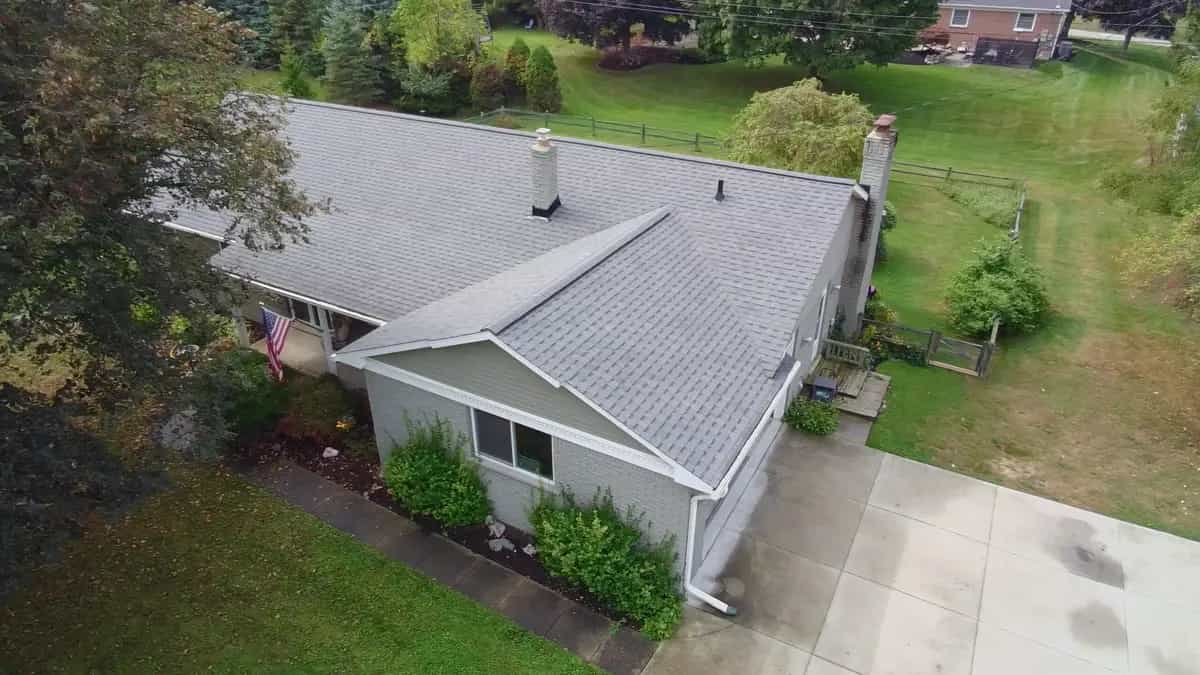
Most Michigan cities and townships require a permit for a full roof replacement, and that permit becomes a public record tied to your address. Start with your city or township's building department, either by phone or through their online permit portal if they have one; many post a parcel or address search that will show a roofing permit by year. A county register of deeds office can also help if the city itself has thin records. We walk through exactly which of our service area cities require a permit, what they charge, and which ones do not require one at all, in our Michigan roof permit guide.
One honest caveat: a permit date is the date the paperwork was filed, not necessarily the exact day the crew finished the job, and older permits are sometimes missing entirely from digital systems that did not exist when the roof went on. Treat it as a strong estimate, not a certified installation date.
Does My Shingle Type Tell Me How Old My Roof Is?
Often, yes. A 3-tab shingle, the flat single-layer style with uniform rectangular tabs, is the biggest tell. Most Michigan roofers, us included, rarely install 3-tab anymore; it has been pushed out of new construction and replacements by architectural (dimensional) shingles for well over a decade. If your roof is 3-tab, it is very likely at least 15 to 20 years old, since a 3-tab roof typically shows real wear in that window anyway. We cover the full difference, including why the switch happened, in our 3-tab vs architectural shingles guide.
The house itself is a clue too. On the roofs we tear off in Ferndale and Royal Oak, a lot of 1950s and 60s bungalows and ranches were reroofed with 3-tab sometime in the 2000s, their second or third roof on a home that has had several. A newer architectural shingle on an older home usually means a more recent reroof, not an original roof. For the full construction-era breakdown of what we see by decade, from 1920s bungalows to 2000s subdivisions, see our guide on how long a roof actually lasts in Michigan.
What Does an Aging Roof Look Like Up Close?
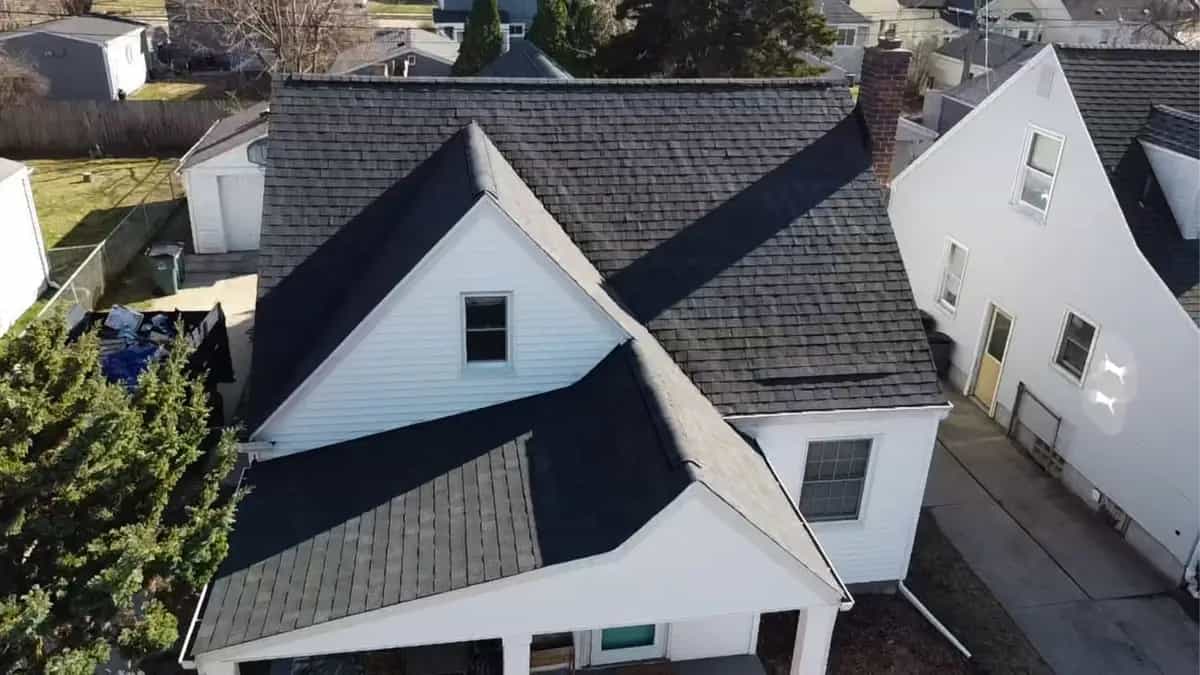
Paperwork and shingle style get you close. Physical wear confirms it. These are the signs we look for walking a roof, in roughly the order they tend to show up:
- Granule loss. Granules protect the asphalt mat from UV light. As a roof ages, they shed, and you will find them piling up in the gutters and at the base of downspouts. Bald, shiny patches on the shingle itself mean significant loss.
- Curling and cupping. Shingle edges lift and the tab bows upward instead of lying flat. This shows up first on south and west facing slopes, which take the most sun.
- Cracking. Hairline cracks across the tab, usually worse on older 3-tab shingles with less material in the mat to begin with.
- Loose or popped nails. Nail heads working their way up through the shingle, visible as small bumps or exposed metal, often from years of freeze and thaw cycling the deck underneath.
- Moss and dark streaking. Moss holds moisture against the shingle surface and accelerates granule loss underneath it; dark streaking is usually algae, which is cosmetic but still a sign of an older roof that has had time to grow it.
None of these show up overnight. A roof with two or three of these signs across multiple slopes is telling you something different than a roof with one small patch near a vent pipe, which is the distinction that actually matters for the next question.
How Many Years Does My Roof Have Left?
Once you know the age, here is roughly how we would read it, based on what we see on the roofs we actually inspect and replace across Southeast Michigan:
| Roof age | What it usually means |
|---|---|
| Under 10 years | Should have most of its life left. Isolated damage is almost always a repair, not a replacement. |
| 10 to 19 years | Still has useful life on a properly vented architectural roof. Watch for the early wear signs above, especially on south facing slopes. |
| 20 to 29 years | The window where most of our replacements actually happen. A well-vented architectural roof can still have years left here; a poorly vented or 3-tab roof usually does not. |
| 30-plus years | Past the expected life of almost any asphalt shingle, even a well-maintained one. Budget for replacement regardless of how it looks from the driveway. |
Material and ventilation move those numbers more than age alone. Our full breakdown of expected lifespan by shingle type, by manufacturer warranty, and by the decade a Michigan home was built lives in how long does a roof last in Michigan, and it is worth reading before you assume a number from age alone.
Should I Replace a Roof That Is Not Leaking?
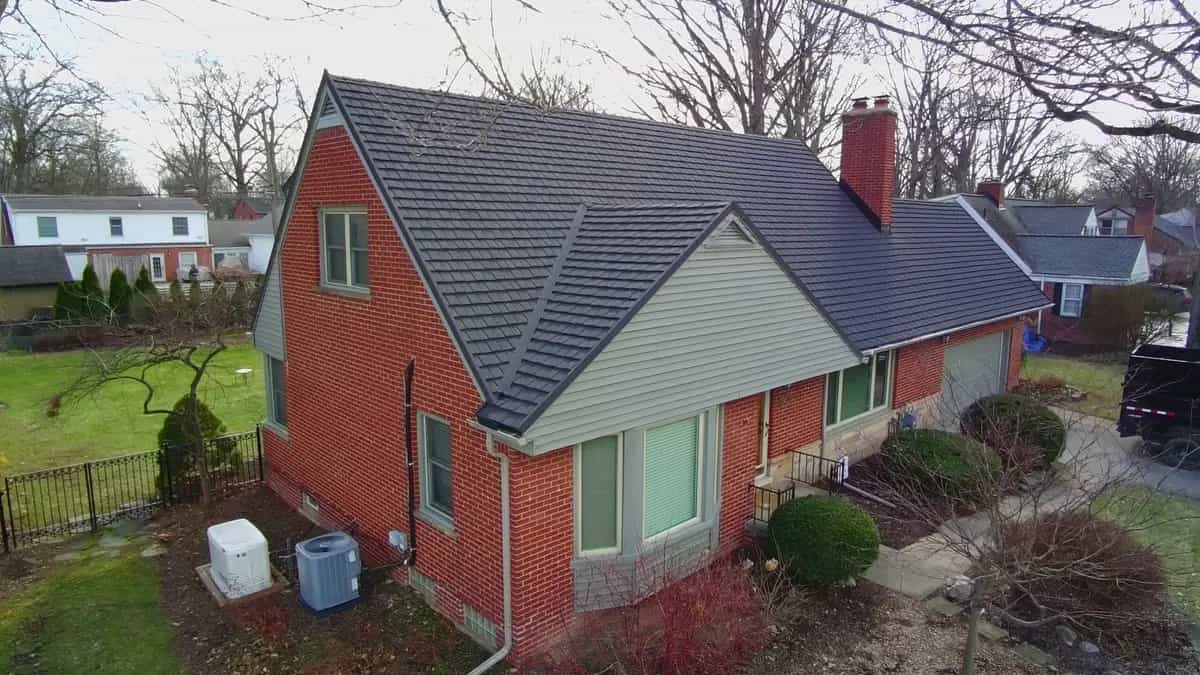
Not automatically, and we will tell you so directly during an inspection. Age and visible wear matter even without an active leak, because a roof that is shedding granules and curling on multiple slopes is close to leaking everywhere at once, not failing in one obvious spot. The more useful question is whether what you are looking at is isolated damage with a clear cause, which almost always gets repaired, or systemic wear across the whole roof, which is a replacement conversation regardless of whether water has made it inside yet. We lay out that full decision framework, including when a repair is genuinely the right call at any age, in our guide on repair or replace your roof.
Does Roof Age Affect My Homeowners Insurance?
Yes, and it is a common enough worry that we hear it directly: about 38 calls a year, homeowners ask us whether their insurer will consider their roof too old to cover or to pay a claim on fairly. Age by itself does not void coverage for sudden storm damage like wind or hail. What changes is how the payout is calculated. Many insurers require an inspection around the 20 year mark, and many pay only actual cash value, not full replacement cost, on older roofs, which means real depreciation comes out of your settlement. We cover the ACV versus RCV difference in detail, including what to check on your declarations page before storm season, in does insurance cover roof replacement in Michigan.
If you are buying or selling a home, roof age gets scrutinized a different way: by a home inspector, not an adjuster. We cover that angle, including what a buyer's inspector actually checks versus what a roofer sees, in our roof inspection checklist for home buyers, and what paperwork actually transfers at closing in our guide on selling a house with a new roof.
Get a Straight Answer on Your Roof
A guess from the driveway is a start. An actual answer takes someone on the roof and in the attic. We serve Southeast Michigan from offices in Oxford, Ferndale, Rochester Hills, Plymouth, and Jenison, and every inspection includes a project manager walking the roof and checking the attic, not just a drive-by estimate. If the roof turns out to be past its years, you can see what a real replacement costs on real Michigan homes in our roof replacement cost guide, browse completed projects with real prices in our job gallery, or look at financing options if the timing is not ideal. Schedule a free inspection and we will tell you honestly whether you are looking at years left or a replacement conversation.
Frequently Asked Questions
How can I find out how old my roof is if I have no paperwork?
Start with the city or township building department for a permit record tied to your address, ask a prior owner or neighbor who may remember the work, or call the shingle manufacturer, since warranties are often registered under the homeowner's name at install. If none of that turns up an answer, a roofer can usually estimate the age within a few years from shingle style, wear, and decking condition.
How do I determine my roof's age for an insurance claim or policy?
Insurers typically accept a permit record, the original installation invoice, or a professional roof inspection report as proof of age. If you cannot produce any of those, a roofing contractor can provide a written age estimate based on shingle condition, which many insurers will accept alongside photos documenting current wear.
Should I replace my roof if it is not leaking yet?
Not automatically. A roof with isolated damage and a clear cause is usually a repair, leak or no leak. A roof showing granule loss, curling, and cracking across multiple slopes is closer to failing everywhere at once, which is a replacement conversation even before water gets inside. The condition matters more than whether you have an active leak today.
Is a 20 year old roof too old?
Not necessarily, but it is the age where we start paying close attention. Twenty years is the low end of the 20 to 29 year window where most of our replacements actually happen, and it is also around the point where many insurers move a roof to actual cash value coverage. A well-vented architectural shingle roof can still have good years left at 20; a poorly vented or 3-tab roof usually does not.
Does a roof permit show the exact installation date?
Usually close, but not exact. A permit record shows the date the paperwork was filed with the city or township, which is typically near the start of the job, not necessarily the day the crew finished. Treat a permit date as a strong estimate rather than a certified completion date.