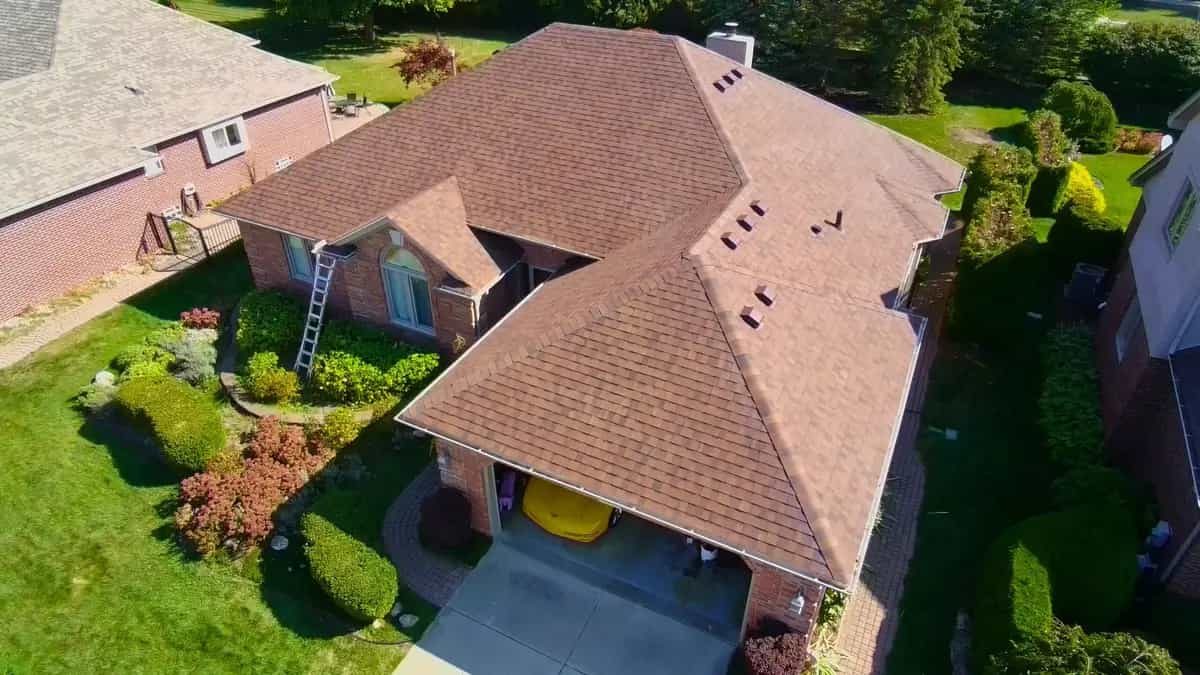
A chimney leak comes from one of four places, and only two of them are a roofer's job. Failed step flashing, counter flashing, or a missing cricket are roofing repairs. A cracked crown or crumbling mortar joints are masonry work. Chimney leaks are the single most reported leak source on our calls, and we rebuild chimney flashing on 54% of the roofs we replace.
I am Aaron Scott, licensed Michigan residential builder and owner of Roofing Army. Chimney leaks come up more than any other leak source we hear about: on our calls this year, 80 homeowners have reported water tracing back to the chimney, ahead of skylights, pipe boots, and wall flashing. Most of those calls start the same way, a brown stain on the ceiling near the chimney chase, and the homeowner assuming it is "the roof" without knowing which of four very different problems is actually causing it.
What Part of the Chimney Is Actually Leaking?
A chimney is really two separate systems bolted together: the masonry stack itself, and the roofing details that seal around it. Water gets in through one of four places.
- The crown. The concrete or mortar cap on top of the chimney, sloped to shed water away from the flue. Crowns crack from age and freeze-thaw cycles, and a cracked crown lets water straight down inside the chimney chase, often showing up as a stain nowhere near the roofline.
- Mortar joints. The brick joints on the sides of the stack. Michigan freeze-thaw cycles push water into hairline cracks, freeze, and widen them a little more every winter. Deteriorated mortar (what a mason calls needing tuckpointing) lets water soak straight through the brick.
- Step flashing and counter flashing. The metal pieces that seal the roof to the masonry: step flashing woven into the shingles up each side, and counter flashing set into a mortar joint or reglet over top of it. This is where most chimney leaks we see actually start, usually because the old flashing was reused instead of replaced, or was never properly stepped in the first place.
- The cricket (or saddle). A small peaked structure built on the uphill side of a wide chimney to split water and snow around it instead of letting it pile up against the brick. A missing cricket on a wide chimney is one of the more common shortcuts we find on older Michigan roofs.
For exact definitions of each term, see our roofing glossary entry on chimney flashing, which also covers crickets, step flashing, and counter flashing individually.
Is a Chimney Leak a Roofer's Job or a Mason's Job?
This is the question that actually matters, because calling the wrong trade wastes a service call.
| Problem | Who fixes it | Why |
|---|---|---|
| Step flashing / counter flashing | Roofer | Metal work tied into the shingles and roof deck |
| Missing or undersized cricket | Roofer | Built from wood framing and the same flashing and underlayment as the roof |
| Cracked crown | Mason (chimney specialist) | Concrete or mortar work on top of the masonry stack |
| Deteriorated mortar joints | Mason (tuckpointing) | Brick and mortar repair, not a roofing material |
A lot of chimneys need both trades at once. It is common for us to rebuild the flashing during a tear-off while telling the homeowner plainly that the crown or mortar joints also need a mason, since new flashing on top of a cracked crown will not stop water that is coming down through the top of the chimney instead of around it.
Why Do We Rebuild Chimney Flashing on More Than Half the Roofs We Replace?
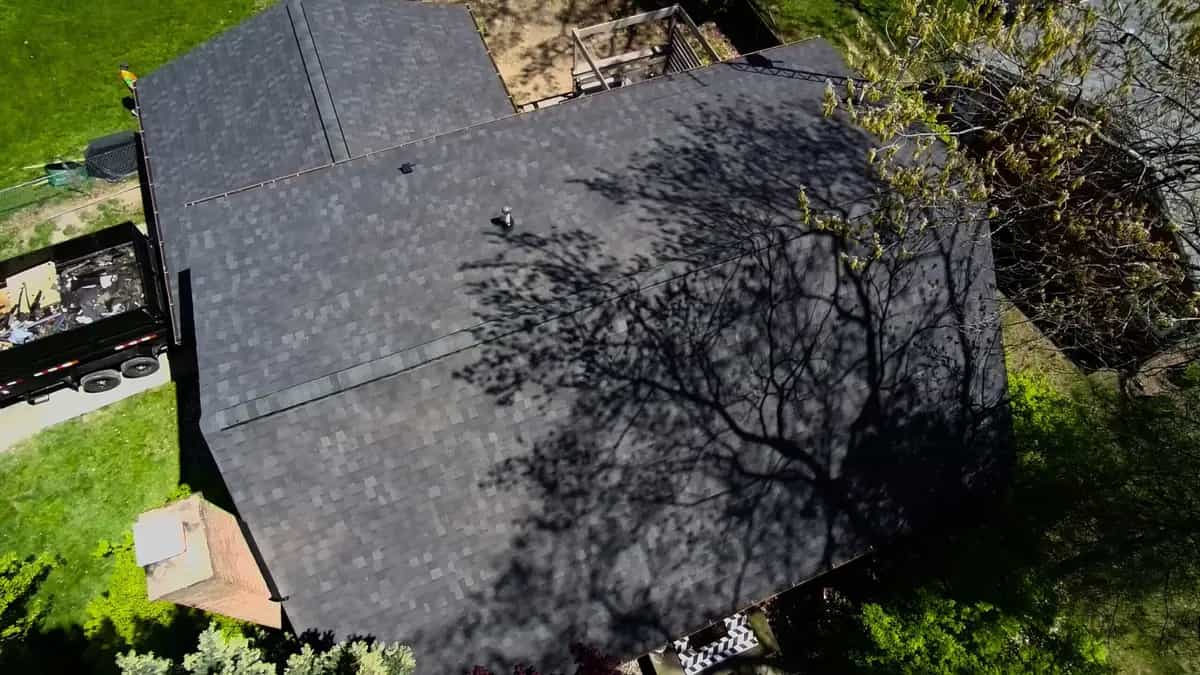
Across the roofs we tore off and replaced this year, chimney flashing was rebuilt on 54% of the jobs, and a cricket was added or rebuilt on 4%. That is a higher share than almost anything else we find during a tear-off besides pipe boots and ridge vent. The reason is simple: reusing old flashing on a new roof is a common shortcut, and flashing that already leaked once rarely seals correctly a second time around new shingles. We would rather rebuild it once, correctly, than have a homeowner call us back after a new roof for the same leak that was there before.
On a full roof replacement, rebuilding chimney flashing is priced as a line item, typically $100 flat in most of our packages, since the labor and material get folded into the same crew and the same trip up the roof. It is a small add to a much larger job, which is part of why we default to rebuilding it rather than reusing questionable flashing to save that $100.
Does Michigan Code Require a Chimney Cricket?
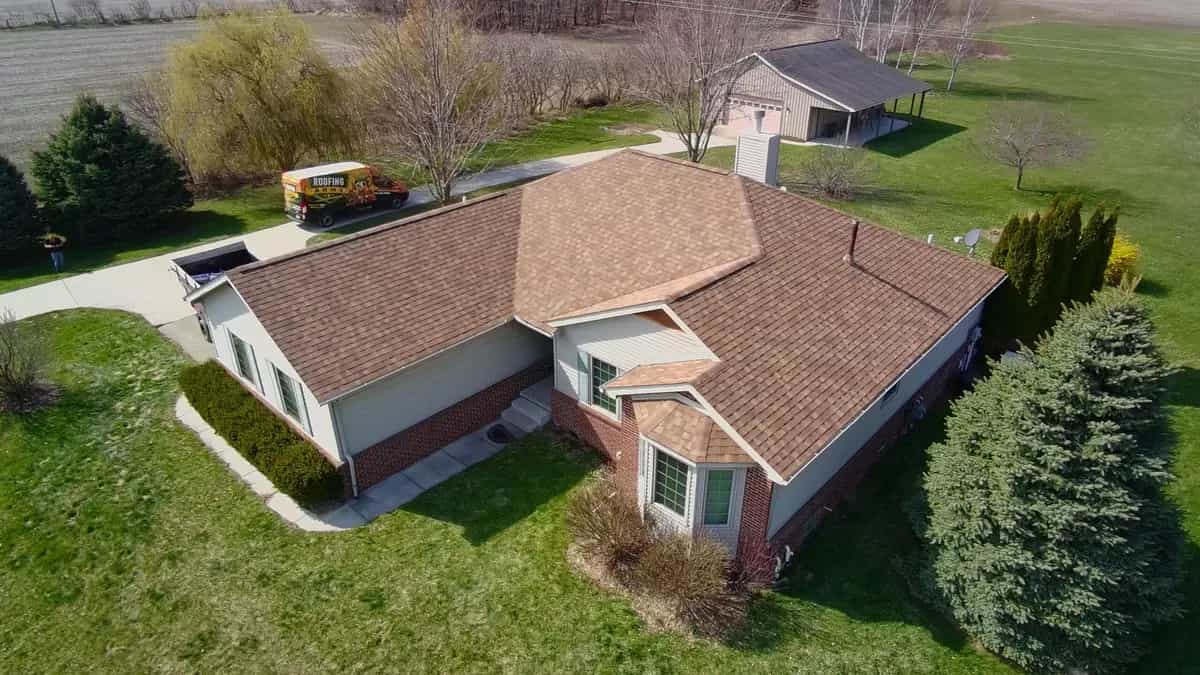
Yes, on wide chimneys. The Michigan Residential Code requires a cricket, also called a saddle, on the uphill side of any chimney wider than 30 inches, measured across the slope (parallel to the ridge). Narrower chimneys generally do not need one, which is part of why only about 4% of our replacement quotes end up building one: most residential chimneys in Southeast Michigan are narrower than that 30 inch threshold. When we do find a wide chimney without a cricket, it is almost always an older roof where the original installer skipped it, and it is one of the more common code shortcuts we run into during a tear-off.
How Can You Tell If It's the Crown, the Mortar, or the Flashing?
A few patterns help narrow it down before anyone gets on a ladder:
- Stain appears at the top of a wall or ceiling near the chimney chase, with no clear connection to the roofline. Points to the crown or the flue itself, since water is coming down inside the chase rather than around the outside of the chimney.
- White, chalky staining on the brick (efflorescence). A sign water is moving through the masonry itself, usually deteriorated mortar joints rather than flashing.
- Leak only during heavy, wind-driven rain, not a steady rain. Often a counter flashing seal that only fails when water is driven sideways under the metal.
- Leak shows up at the base of the chimney, at roof level, especially on the uphill side. Classic step flashing or missing cricket, since that is exactly where water is meant to be diverted around the chimney instead of pooling against it.
- Visible cracks or gaps you can see from the ground with binoculars. A cracked crown or open mortar joint, both masonry repairs, not a roofing fix.
None of these are a substitute for someone actually getting on the roof. A tarred-over flashing joint or a hairline crown crack can both look fine from the ground and still be the exact source of the leak.
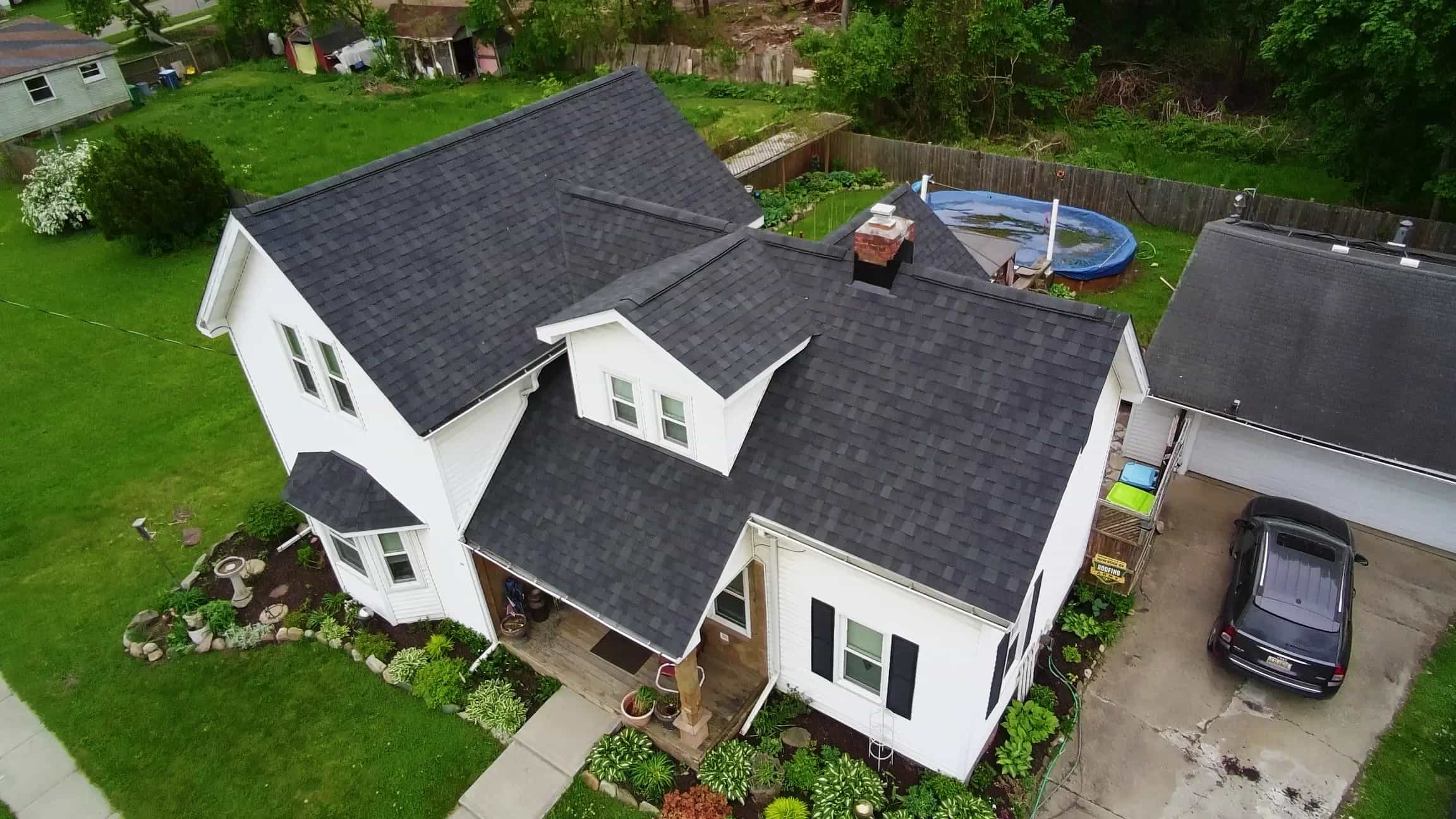
How Much Does It Cost to Fix a Chimney Leak?
Costs depend heavily on which of the four problems it is and how it is being addressed. On our own repair calls, reps commonly quote $250 to $600 for a straightforward flashing reseal or a small section of step flashing, our $250 minimum charge covers most simple visits. Across all 170 repair quotes we wrote this year, the median price was $1,109, with the middle half falling between $600 and $2,658, and the median repair job runs about 4 labor hours with one technician. Sold repairs came in a bit lower, a median of $900. A full chimney flashing rebuild bundled into a roof replacement is different math entirely: it is typically a $100 line item added to the overall project rather than a standalone charge, since the crew is already on the roof.
Masonry work (crown repair or tuckpointing) is priced separately by a chimney or masonry contractor and is not something we quote, since it is outside a roofer's scope.
Can You Just Tar or Caulk a Chimney Leak?
You can, and it is one of the most common things we find already on a chimney when we tear off a roof. It almost never lasts. Roofing tar and caulk are not flashing; they are a temporary patch that shrinks, cracks, and fails within a season or two, especially through a Michigan freeze-thaw winter. If a previous repair on your chimney is a bead of black tar rather than a stepped and counter-flashed metal system, treat it as a sign the leak is likely to come back, not a sign it was fixed.
Get the Leak Diagnosed Correctly the First Time
A chimney leak wastes time and money when it gets sent to the wrong trade, or when a roofer reflashes a chimney whose real problem is a cracked crown above it. Every inspection we do checks the flashing, the cricket, and the visible condition of the masonry, and we will tell you plainly if what you need is a mason instead of, or in addition to, a roofer. For a broader look at whether a leak calls for a repair or points to a roof that is due for full replacement, see our guide to repair versus replacement in Michigan, and for what a full quote includes when a chimney rebuild is part of a larger project, see what is included in a roof replacement quote.
We serve Southeast Michigan from offices in Oxford, Ferndale, and Rochester Hills. See real project pricing, including chimney and flashing work, in our job gallery, or schedule a free inspection to find out which of the four chimney problems you actually have.
Frequently Asked Questions
Is a chimney leak a roofing problem or a chimney problem?
It depends on where the water is getting in. Failed step flashing, counter flashing, or a missing cricket are roofing repairs. A cracked crown or deteriorated mortar joints are masonry work for a chimney specialist. Many older chimneys need both, and we will tell you plainly which one applies before quoting anything.
What is a chimney cricket and does mine need one?
A cricket, also called a saddle, is a small peaked structure built on the uphill side of a chimney to divert water and snow around it. The Michigan Residential Code requires one on any chimney wider than 30 inches measured across the slope. Narrower chimneys generally do not need one, which is why only about 4% of the roofs we replace end up with a new cricket.
How much does it cost to fix a chimney leak in Michigan?
A straightforward flashing reseal or small repair commonly runs $250 to $600 on our calls. Across all the repair quotes we wrote this year, the median price was $1,109, with the middle half between $600 and $2,658. When chimney flashing is rebuilt as part of a full roof replacement, it is typically a $100 line item added to the overall project rather than a standalone charge. Masonry repairs like a new crown or tuckpointing are priced separately by a mason.
Can I use roof cement or caulk to stop a chimney leak?
You can, but it is almost always temporary. Tar and caulk are not flashing; they shrink and crack within a season or two, especially through a Michigan winter. If a chimney leak has already been tarred over once, treat that as a sign the underlying flashing needs to be properly rebuilt, not sealed again.
Why does Roofing Army rebuild chimney flashing on so many roof replacements?
Because reused flashing on a new roof rarely seals correctly. We rebuild chimney flashing on 54% of the roofs we replace, since flashing that already leaked once is unlikely to hold up a second time around new shingles. On a full replacement it is usually a small $100 line item, which is a low cost against having to come back for the same leak on a brand new roof.