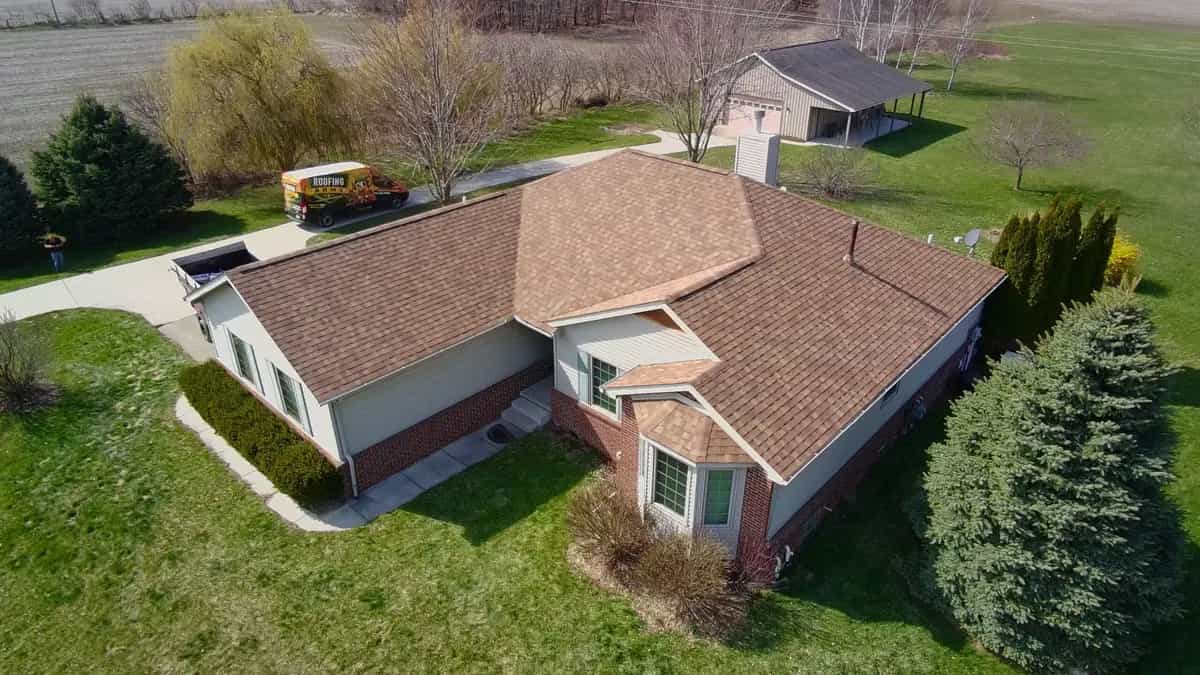
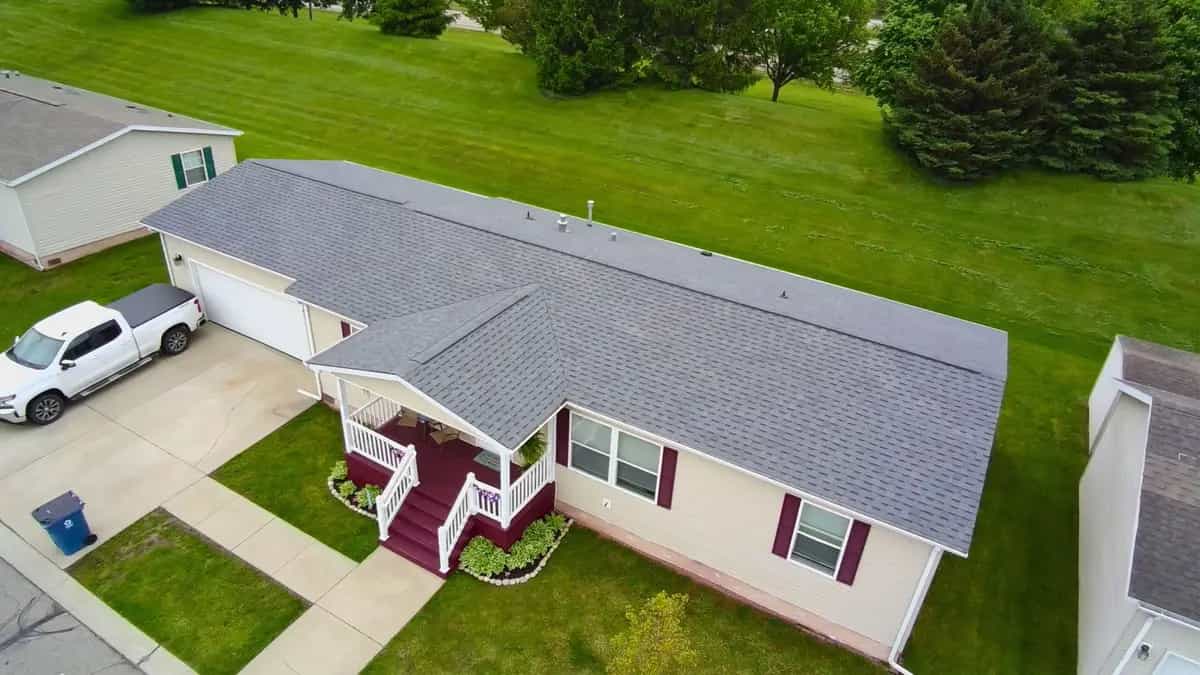
Gutters and gutter guards come off before a reroof and go back on after, not the other way around, because the new shingles have to overlap the drip edge and hang slightly past the fascia for water to land in the gutter correctly. Gutter guards that tuck under the first course of shingles sit in that exact spot, so they have to come off before tear-off starts and get reinstalled once the new roof is done. It is a sequencing question, not a preference, and it is one of the most common questions we get asked once a roof date is actually on the calendar.
I am Aaron Scott, licensed Michigan residential builder and owner of Roofing Army. We do not install, size, or sell gutters ourselves, that work goes to our referral partner, Ackerman Seamless Gutters, run by my brother Shawn. But our crews tear off and reinstall the eave edge on every roof we touch, and coordinating that moment with a gutter crew is something we do every week across Oakland and Macomb County.
Why Do Gutters Have to Come Off Before a Roof Replacement?
They do not always have to come off entirely. If the existing gutters are in good shape, properly fastened, and not in the way, a crew can often work around them, protecting them with tarps or standoffs while shingles come off and new ones go on. What almost always has to come off is anything that sits between the gutter and the roof edge itself, which is where gutter guards come in.
The reason comes down to the order the eave gets built in. A proper roof edge goes down in this sequence: drip edge (or gutter apron) first, then starter strip, then the first course of shingles overlapping both. The shingles need to extend slightly past the fascia so water drips into the gutter trough instead of behind it. A gutter guard that tucks under that first course of shingles occupies the exact space the new drip edge and starter strip need to go into, which means it has to come out before that edge can be rebuilt correctly, not slid back in around it.
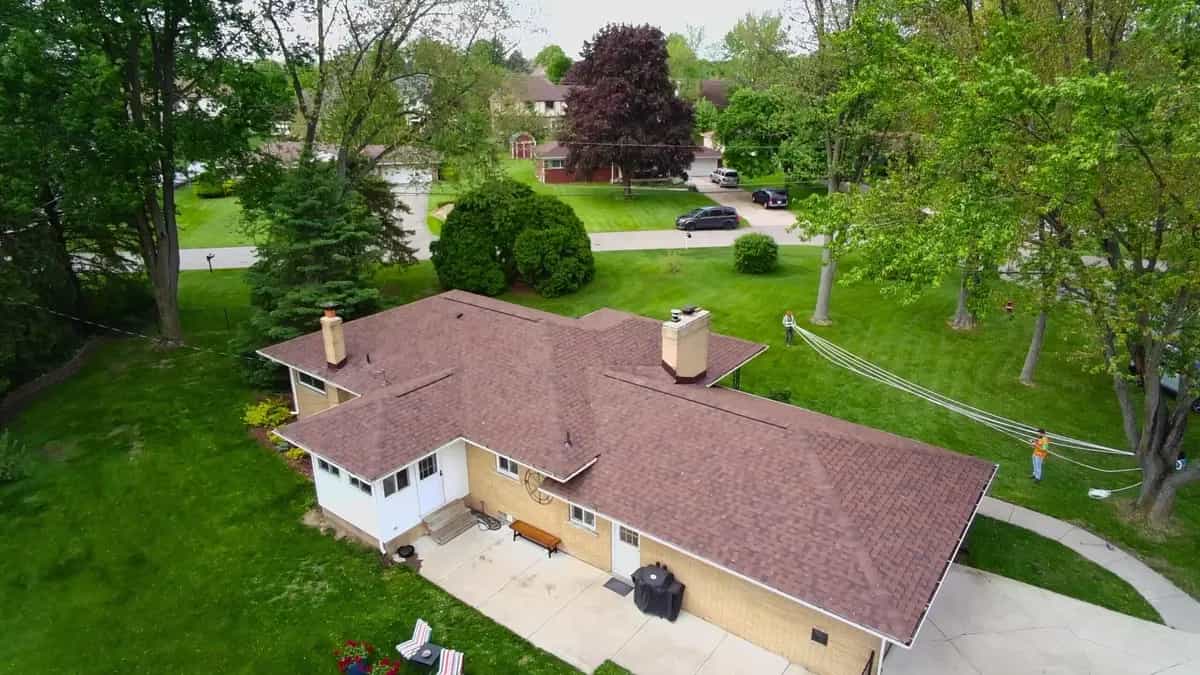
What Happens to Gutter Guards During a Reroof?
It depends on the guard style. Under-shingle guards, the kind with a flange that slides up under the first course, are the ones that create the problem described above. They get removed before tear-off and reinstalled after the new starter course and first course are down. Top-mounted and screen-style guards that sit on top of the gutter trough rather than reaching under the shingles are less likely to be in the way, though a crew will still protect them from falling debris and granules during tear-off.
Leaving an under-shingle guard in place during a reroof causes two real problems we have seen on other crews' work when we are called out for a repair. First, if a crew works around the guard instead of removing it, they sometimes have to cut or notch the new shingle courses to fit, which weakens the seal at the eave, the exact spot that takes the most water. Second, some shingle manufacturers consider lifting or altering the shingle courses to fit an existing accessory an installation that falls outside their written instructions, which can affect a material warranty claim later if a leak traces back to that edge. Neither problem is worth saving the hour or two it takes to pull a guard off and put it back on.
Why Not Install New Gutters Before the Roof Instead?
Because the new gutter would just be in the way of the same edge work, and it would take the brunt of tear-off debris, dropped nails, and ladder traffic for no reason. New drip edge has to tuck under the new shingles, not under an already-hung gutter. Installing gutters first also means a second crew is working underneath an active tear-off, which is a safety problem neither crew wants. The practical order on almost every job where both are happening is: existing gutters and guards come off (or get protected in place), the roof goes on, then new or existing gutters and guards go back up once the edge is finished and clean.
Who Coordinates the Gutter Hand-Off?
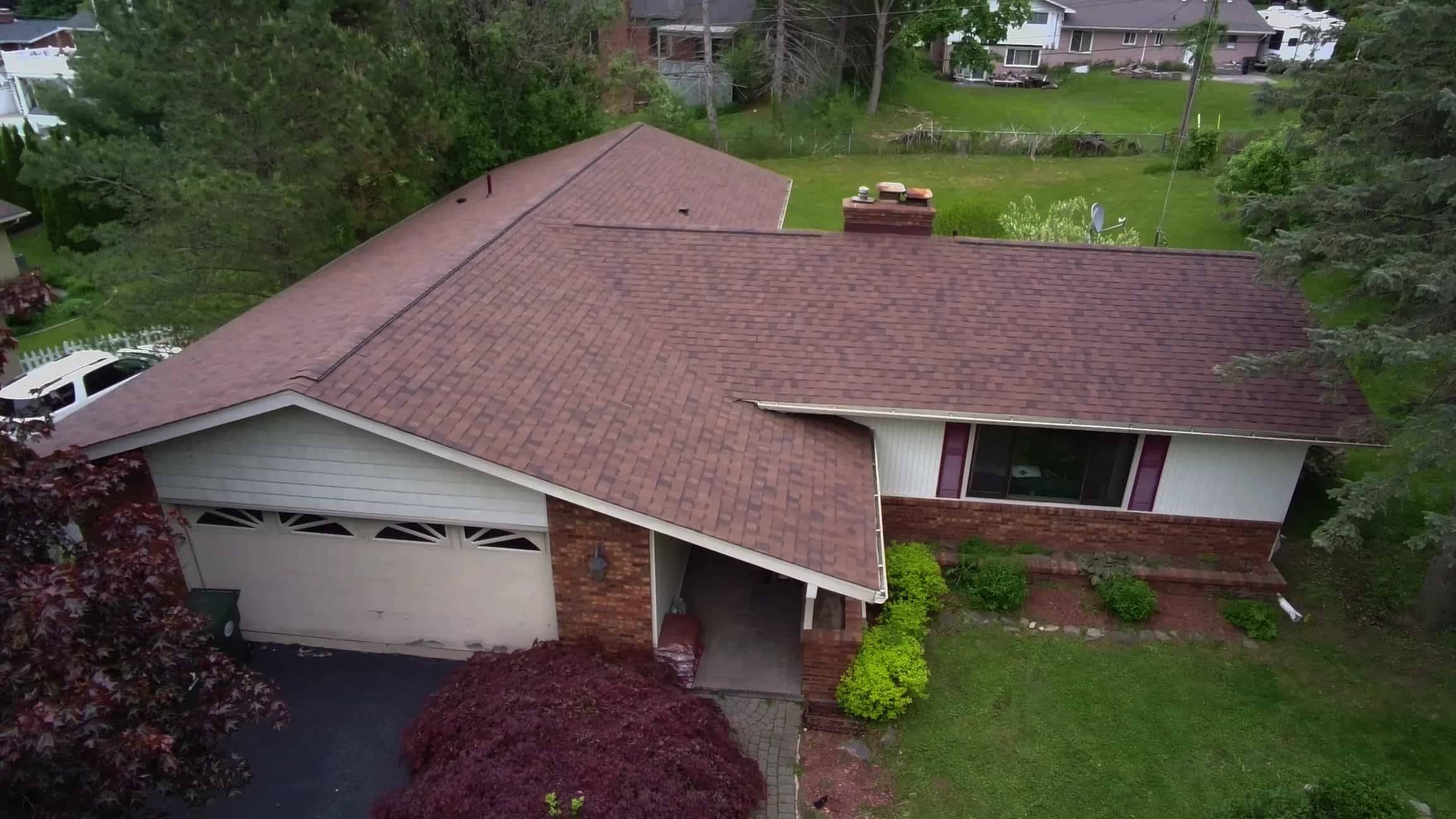
We do, on our side. When a homeowner is having both done, our project manager sets the roof schedule first, since the gutter work depends on the roof being finished, not the other way around. Coordinating that hand-off, letting Shawn's crew at Ackerman know when a roof is wrapping up so they can schedule gutter work right behind it, came up in 32 of the post-job customer texts we tracked over the past year, enough that we built it into how we close out a job rather than leaving the homeowner to manage two separate schedules. If a guard was removed to let the first course sit correctly, it goes back on as part of that same hand-off, not as a separate call the homeowner has to make.
What we do not do is install, size, or sell the gutters or guards themselves. That is Shawn's work, not ours, and you can read more about why we send that work out on our referral partners page. What we do handle is the roof-side half of the eave, drip edge or gutter apron placement, fascia condition, and the valley design that determines how much water actually reaches the gutter, all part of our standard inspection whether or not gutters are part of the conversation.
Do You Need New Gutters If You Are Replacing Your Roof?
Not automatically. If the existing gutters are sized right, pitched correctly, and not pulling away from the fascia, there is no reason to replace them just because the roof is new. A reroof is a good moment to size up if the existing gutters are already overflowing or undersized for the roof, since the edge is already open and it avoids a second service call later. We cover the actual causes of overflow, size, pitch, and splash guards, separately in our guide to why gutters overflow in Michigan, and the fascia-level damage that bad gutters can cause in our guide to rotted fascia and water behind the gutter.
What to Ask Before Roof Replacement Day
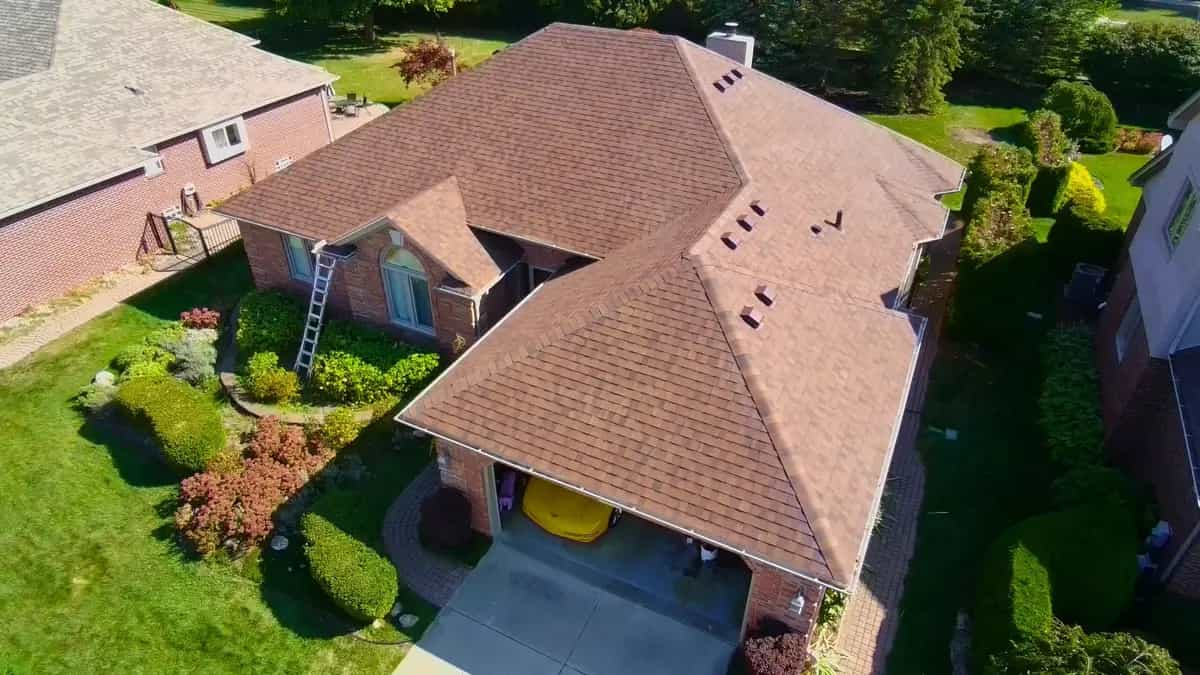
- Will my existing gutters stay up or come down? Ask the roofer directly rather than assuming; it depends on their condition and how close they sit to the roof edge.
- Do I have under-shingle gutter guards? If so, confirm who is removing and reinstalling them, and whether that is included in the roofing quote or billed separately.
- If I am getting new gutters too, who is scheduling the order? The roof has to finish first. Ask how the two crews, and two companies if it is a referral like ours, will coordinate the date.
- Will the drip edge or gutter apron be replaced? This is the piece that actually directs water into the gutter trough; it should go down new with the roof regardless of whether the gutters themselves are replaced.
- What happens to debris in the gutters during tear-off? Old shingle granules and nails can land in an open gutter during tear-off; ask whether the crew covers or cleans the gutters as part of the job.
Get the Sequence Right From the Start
A roof and its gutters are one system built in a specific order, edge first, then gutter. Our project managers plan that sequence on every job, whether gutters are staying, getting reinstalled, or getting replaced by Shawn's crew at Ackerman right behind us. We serve Southeast Michigan from offices in Oxford, Ferndale, and Rochester Hills. See real project pricing on our roof replacement page, or schedule a free inspection and we will walk the eave with you before anything comes off.
Frequently Asked Questions
Do gutters need to come off before a roof replacement?
Not always entirely. Gutters in good condition can sometimes be protected and worked around. What almost always has to come off is an under-shingle gutter guard, since it sits in the exact spot the new drip edge and starter course need to go. Guards get removed before tear-off and reinstalled once the new shingle courses are down.
Why can't gutter guards just stay on during a reroof?
Guards that tuck under the first course of shingles occupy the space the new drip edge and starter strip need. Working around them instead of removing them can mean cutting or notching new shingles to fit, which weakens the seal at the eave, and can affect a shingle manufacturer's material warranty if the installation strays from their written instructions.
Should new gutters go on before or after a new roof?
After. New drip edge has to tuck under the new shingles, not under an already-installed gutter, and a gutter hung before tear-off would take debris, dropped nails, and ladder traffic for no reason. The standard order is roof edge first, gutters last.
Does Roofing Army install the gutters after my roof is done?
No. Gutters, gutter guards, and downspouts are handled by our referral partner, Ackerman Seamless Gutters, run by owner Aaron Scott's brother Shawn. We coordinate the schedule so gutter work can start right after the roof is finished, and if a guard was removed for the roof work, it is reinstalled as part of that hand-off.
Do I need new gutters when I replace my roof?
Not automatically. If your current gutters are the right size, pitched correctly, and fastened well, there is no need to replace them just because the roof is new. It is a reasonable time to size up if they were already undersized or overflowing, since the eave is already open for the roof work.