
Gutters overflow for five reasons: they are undersized for the roof, pitched wrong so water pools instead of draining, overwhelmed by a steep roof dumping water faster than they can carry it, missing a splash guard at an inside corner or valley, or simply clogged. Clogs get blamed most, but on a lot of the roofs we inspect, the gutter is clean and still spilling over. The fix is almost always on the gutter side, not the roof.
I am Aaron Scott, licensed Michigan residential builder and owner of Roofing Army. We do not install gutters ourselves, that work goes to our referral partner, Ackerman Seamless Gutters, run by my brother Shawn. But our crews are on roofs across Oakland and Macomb County every week, and overflow at the gutter line is one of the most common things we get asked about on a free inspection, because homeowners assume it is a roof problem before anyone has actually looked.
Why Do Gutters Overflow Even When They Are Not Clogged?
A clean, empty gutter can still overflow. That surprises most homeowners, but it comes down to the gutter either not being able to hold the water or not being able to move it fast enough. Four things cause that on their own, with no debris involved at all:
- The gutter is undersized for the roof. A standard 5 inch K-style gutter is built for an average-sized roof in average rain. A large roof, a steep roof, or several roof planes draining into one run can simply exceed what a 5 inch trough can carry, even spotless.
- The gutter is pitched wrong. Gutters need a slight, continuous slope toward the downspout, roughly 1/16 inch of drop per foot of run as a minimum per This Old House's repair guidance, more in harder rain. A section that is level or has sagged flat holds water instead of moving it, and once one low spot forms, water backs up behind it and spills over the front edge.
- The roof is shedding water faster than the gutter can accept it. A steep pitch speeds water up before it ever reaches the edge. Water moving fast off a steep slope can shoot past the lip of the gutter entirely, a problem no amount of cleaning fixes, because there was nothing blocking the gutter in the first place.
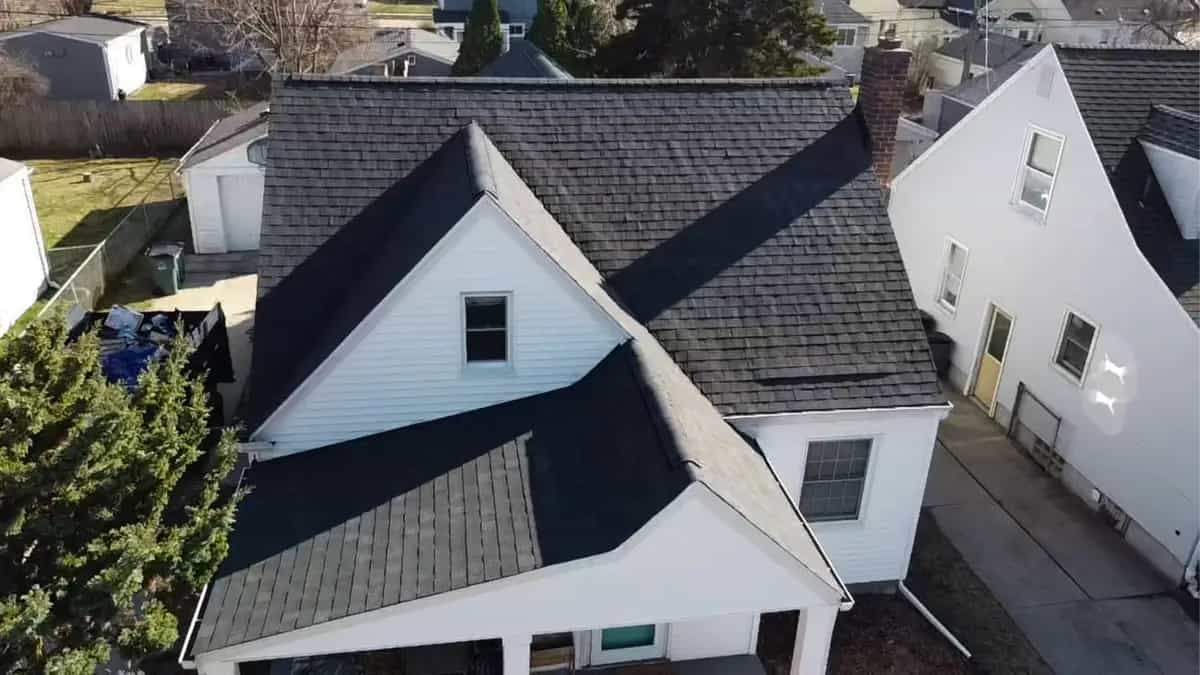
- There is no splash guard where two roof planes meet. Valleys funnel the runoff from two slopes into one concentrated stream right where it dumps into the gutter. Without a splash guard at that point, that concentrated flow jumps the gutter at the exact spot you would expect, the inside corner, not along the straight runs.
Is a 5 Inch or 6 Inch Gutter Right for a Michigan Roof?
Most older Michigan homes still have 5 inch K-style gutters, because that was the builder-grade standard for decades. The widely cited industry rule of thumb puts a 5 inch K-style gutter at roughly 1.2 gallons of water per linear foot and a 6 inch K-style at roughly 2 gallons per linear foot, somewhere around 40 to 50 percent more capacity for the same length of run. Those are rule-of-thumb figures from gutter manufacturers and installers, not a single universal engineering spec, but the direction is consistent everywhere we checked: bigger roofs and steeper pitches want the bigger gutter.
6 inch gutters are typically paired with a 3 by 4 inch downspout instead of the 2 by 3 inch downspout that comes standard with 5 inch gutters. Putting a 6 inch gutter on an old 2 by 3 downspout just moves the bottleneck a few feet down the wall, so if you are upgrading gutter size, the downspout has to go up with it. As a rough guide, a roof over roughly 1,700 to 2,000 square feet in area, a steep pitch (above about 8/12), or a roofline with several valleys feeding one gutter run are the three situations where we see 6 inch gutters earn their cost.
Why Do Gutters Overflow at a Corner or Valley?
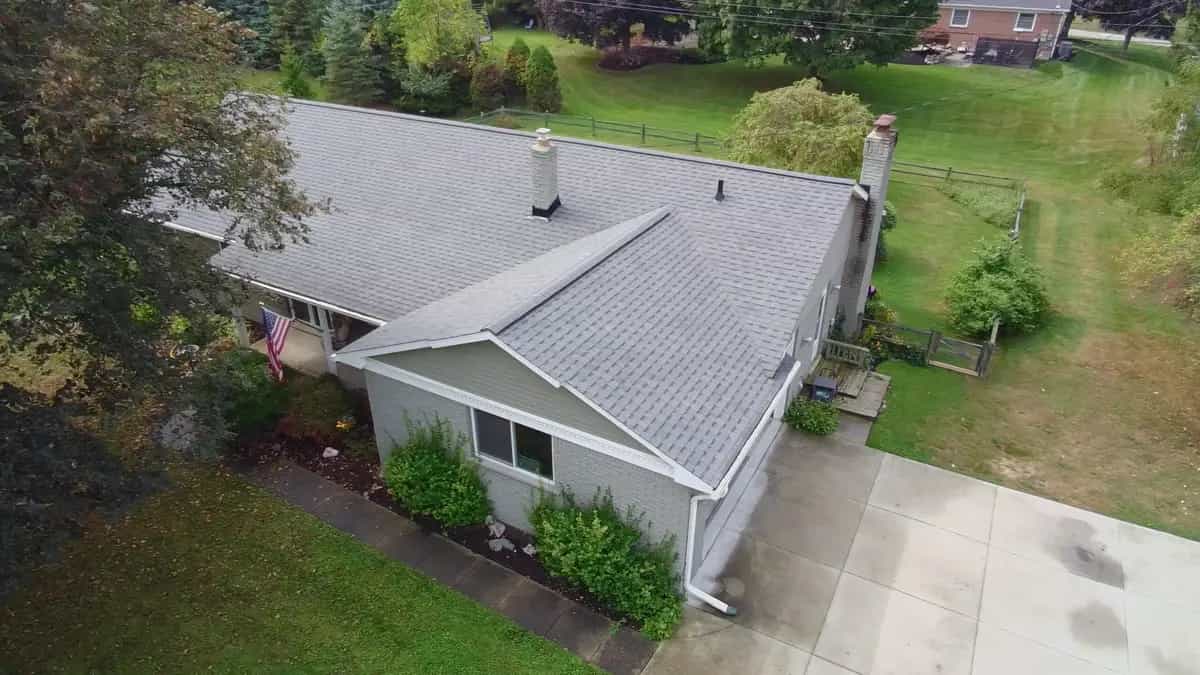
If the overflow happens at one specific spot, almost always an inside corner or directly under a valley, rather than along a straight run, the cause is concentrated flow, not overall capacity. A valley can carry the runoff of two entire roof planes into a gutter section that is only a few feet long. Without a splash guard, that stream hits the gutter corner, and physics does the rest, the water keeps moving forward instead of turning to follow the trough. The fix is a splash guard or a short end dam at that exact corner, not a bigger gutter around the whole house.
Do Gutter Guards Stop Overflow?
Guards stop debris, which is a real problem, but debris is not the only cause of overflow, so a guard will not fix an undersized gutter, a flat pitch, or a missing splash guard at a valley. Manufacturers market different guard styles (mesh, reverse-curve, foam insert) with their own claimed flow rates; we are not the ones installing them, so we will not repeat a specific manufacturer's performance number here as if it were ours to vouch for. What we can say from the roofs we inspect is that guards installed over an already undersized or badly pitched gutter system do not solve the overflow, they just keep leaves out of a gutter that was already going to spill.
What Does Roofing Army Actually Do About Gutters?
Gutters, gutter guards, and downspouts are not a service we install, size, or sell. When an inspection turns up a gutter problem, we refer that work to Ackerman Seamless Gutters, run by my brother Shawn, who installs both 5 inch and 6 inch seamless gutters, guards, and downspouts across Oakland and Macomb County. You can read more about that arrangement, and why it exists, on our referral partners page.
What we do handle is the roof side of the problem: the drip edge or gutter apron under the shingles, the fascia the gutter actually hangs on, and the roof pitch and valley design that determine how fast and how concentrated the water arrives at the gutter in the first place. Across the 836 roofing opportunities we worked over the past year, 23 (about 3%) were pure gutter requests we referred straight out, and the gutter line items we have seen on quotes elsewhere in that work carry a median price of $3,614 (middle half $2,489 to $5,170). After a roof replacement, "gutter hand-off" texts, coordinating the timing between our crew and the gutter crew, came up in 32 of the post-job conversations we tracked, which is why we try to sequence the two jobs rather than leave a homeowner managing two crews on their own.
If your gutter problem is actually a roof problem, water running behind the gutter instead of into it, for example, that is ours to fix, and we cover that specific failure mode in our guide to rotted fascia and water behind the gutter. Overflow caused by ice damming at the eave is a different mechanism again, covered in our guide to ice dams in Southeast Michigan.
What to Check Before You Call Anyone
- Where does it overflow? One corner or valley points to a concentrated-flow problem and a splash guard. Along the whole run points to size, pitch, or a clog.
- Is it actually clogged? Look (safely, from a ladder or with binoculars) for standing debris. If it is clean and still spilling, the problem is size, pitch, or speed, not debris.
- Does the gutter hold water after rain stops? Standing water after the storm has passed means a pitch problem, a low spot, or a sag.
- Is the water coming from the front lip or from behind the gutter? Water coming from behind the gutter, running down the fascia instead of spilling over the front edge, is a drip edge or gutter apron problem, which is roof work, not a gutter capacity problem.
- How old is the roof and the gutter? A roof replacement is the right time to size the new gutters correctly instead of rehanging an undersized system on a freshly reroofed house.
Get the Roof Side Right, Then the Gutter Side
A roof and its gutters work as one system. We check drip edge, gutter apron placement, valley design, and fascia condition on every inspection, because those are the roof-side factors that decide how much work the gutters have to do. We serve Southeast Michigan from offices in Oxford, Ferndale, and Rochester Hills. See real project pricing in our roof replacement and roof repair pages, or schedule a free inspection, and if the real fix turns out to be the gutters themselves, we will tell you that plainly and point you to Shawn's crew instead of guessing.
Frequently Asked Questions
Why are my gutters overflowing if they are not clogged?
A clean gutter can still overflow if it is undersized for the roof, pitched flat or sagging instead of sloping toward the downspout, overwhelmed by water speed off a steep roof, or missing a splash guard where a valley dumps concentrated flow into one spot. Clogs get blamed first, but on plenty of the roofs we inspect, the gutter is empty and still spilling over.
Should I upgrade to 6 inch gutters?
It is worth considering if your roof is large (roughly 1,700 to 2,000+ square feet), has a steep pitch above about 8/12, or has several valleys feeding into one gutter run. A 6 inch K-style gutter carries roughly 40 to 50 percent more water per foot than a standard 5 inch gutter by common industry rule of thumb, but it needs a larger 3 by 4 inch downspout to actually use that extra capacity, not the 2 by 3 inch downspout that comes with most 5 inch systems.
Do gutter guards stop overflow in heavy rain?
Guards stop debris from building up, which prevents one kind of overflow, but they do not fix an undersized gutter, a flat or sagging pitch, or a missing splash guard at a valley. A guard installed on a gutter that was already too small or badly pitched will still overflow in a hard rain, it will just do it with clean gutters.
Does Roofing Army install or repair gutters?
No. Gutters, gutter guards, and downspouts are handled by our referral partner, Ackerman Seamless Gutters, run by owner Aaron Scott's brother Shawn. We never install, size, or sell gutters ourselves. We do handle the roof-side parts of the system, drip edge, gutter apron, fascia, and valley design, since those determine how much work the gutters have to do.
Can overflowing gutters damage my roof or fascia?
Yes, over time. Water that spills over the front of an overflowing gutter mostly lands in the yard or on the siding below, but a gutter that is pulling away from the house or backing up can also push water behind the fascia board, which is a different and more damaging mechanism than front-of-gutter overflow. We cover that specific failure in our guide to rotted fascia and water behind the gutter.