Ice and Water Shield Calculator
How much membrane a roof needs at code minimum versus our 6-foot standard.
Membrane needed
9.6 squares
960 sq ft
Michigan code requires ice barrier from the eave to at least 24 inches inside the exterior wall line, which one 3 ft course usually covers on a shallow overhang. We run 6 ft at every eave because ice dams in Southeast Michigan routinely back water higher than that, and we wrap every valley and penetration.
How much ice and water shield a roof needs depends on the length of its eaves and valleys and how far up the slope you run it. The Michigan Residential Code minimum reaches at least 24 inches inside the exterior wall line, which on most homes means one 3 foot course. Roofing Army installs 6 feet at every eave, two full courses. The calculator above takes your eave and valley lengths and returns squares of membrane, rolls, and material cost at either standard. I am Aaron Scott, a licensed Michigan residential builder and the owner of Roofing Army, and this guide explains why we run twice the minimum.
What does the ice and water shield calculator estimate?
Enter the total length of your eaves in feet, the total length of your valleys in feet, choose a coverage standard, and enter a price per square. The calculator returns the square footage of membrane in squares (100 square feet each), the number of rolls to buy, and the material cost at your price. It does not estimate labor, and it does not include the extra pieces around chimneys, skylights, and pipe penetrations, which we cover below.
How does the calculator get its numbers?
Eaves are priced as a strip along the roof edge. At the code minimum the strip is one 3 foot course; at the Roofing Army standard it is 6 feet, two courses. Valleys get one 3 foot course centered on the valley line at either standard, since a valley concentrates water no matter how you treat the eaves. The tool multiplies each length by its width, adds them together, and divides by 100 to get squares.
Rolls are based on the common 2 square roll: 36 inches wide by about 66.7 feet long, 200 square feet. The calculator divides total square footage by 200 and rounds up, because you cannot buy 2.4 rolls. Price per square is yours to enter; membrane pricing changes by brand and by season, and we would rather you use a current number from a supplier than a stale one from us.
What does the Michigan Residential Code actually require?
The ice barrier rule in the Michigan Residential Code, which follows the International Residential Code, calls for a self-adhering polymer modified bitumen sheet (or two layers of underlayment cemented together) running from the lowest edge of every roof surface to a point at least 24 inches inside the exterior wall line of the building. On roofs of 8/12 pitch or steeper, the barrier must also extend at least 36 inches measured along the slope from the eave edge.
Notice what that means on a real house. The 24 inches is measured horizontally from the inside of the wall, not from the roof edge. Add a 12 to 24 inch overhang and the wall thickness, and the code line usually lands 3 to 4 feet up the slope. One 36 inch course reaches it on a short overhang and comes up short on a deep one. That is the minimum a roof has to have to pass inspection. It is not the amount that keeps a Michigan house dry.
Why does Roofing Army run 6 feet of ice and water shield?
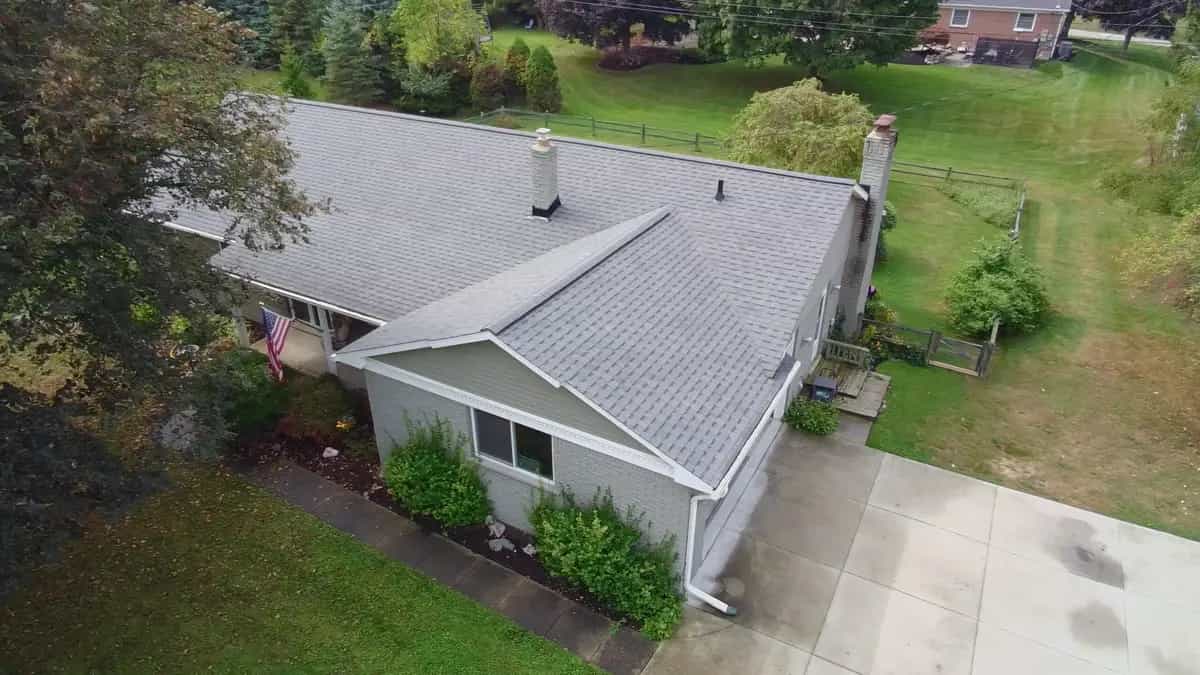
Because ice dams do not stop at the code line. An ice dam forms when heat leaking into the attic melts snow on the upper roof, the meltwater runs down to the cold overhang, and refreezes into a ridge. Water pools behind that ridge and works up under the shingles. In a bad week of January weather the pooled water can back up several feet above the eave, past a single course of membrane, and into the ceiling. Our guide to ice dams in Southeast Michigan explains the full mechanism and why 1950s and 60s ranches get hit hardest.
Two courses put the membrane where the water actually goes. The second course costs one more roll or two on a typical roof, which is cheap insurance against a wet ceiling. We also run full ice and water coverage on any slope under 4/12, where water moves slowly enough that backup is the normal condition, not the exception. And because membrane only stops water that has already gotten under the shingles, we pair it with a ventilation analysis on every estimate; keeping the roof deck cold is what stops the dam from forming in the first place. Our attic ventilation service covers that side.
Worked example: a typical Southeast Michigan colonial
A two-story colonial with an attached garage might have 160 linear feet of eaves and 40 feet of valleys. Here is what the calculator returns at each standard:
| Standard | Eave coverage | Valley coverage | Total | Rolls (2 sq) |
|---|---|---|---|---|
| Code minimum (one 3 ft course) | 480 sq ft | 120 sq ft | 6.0 squares | 3 |
| Roofing Army (6 ft at eaves) | 960 sq ft | 120 sq ft | 10.8 squares | 6 |
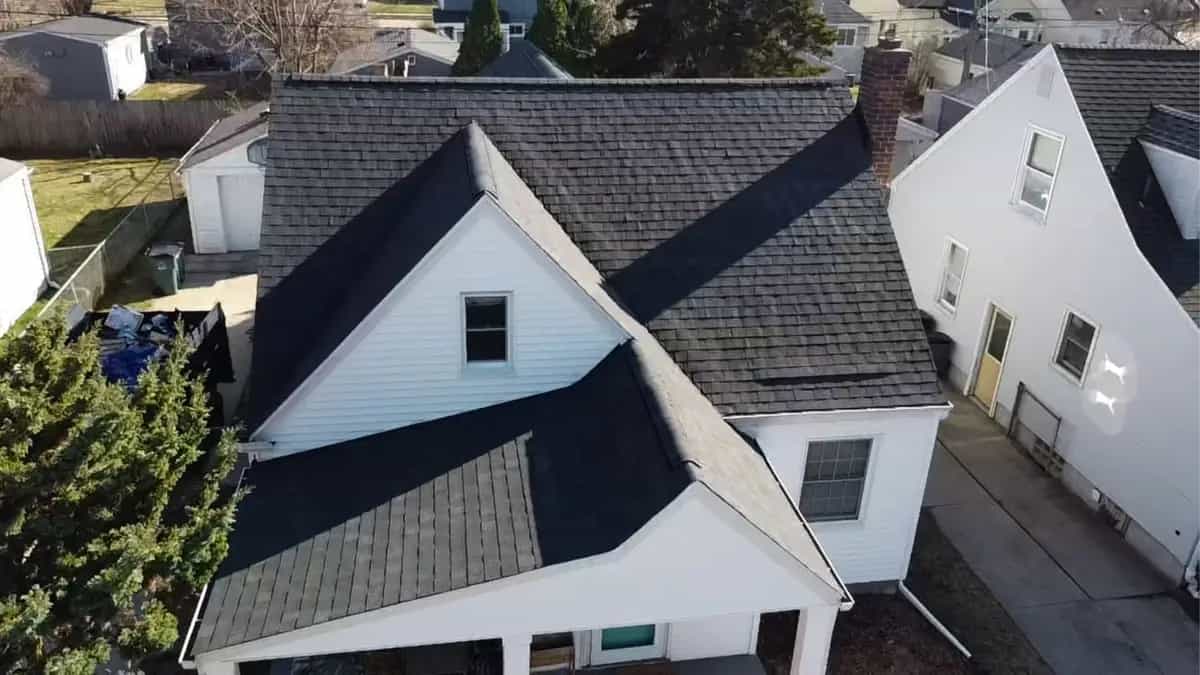
A simple ranch with 120 feet of eaves and no valleys needs 3.6 squares (2 rolls) at code and 7.2 squares (4 rolls) at our standard. Enter your supplier's price per square and the calculator gives the material difference in dollars. On every roof we have priced, that difference is a small fraction of the job. For context, our Oxford replacement on South Glaspie Street, a 2,480 square foot roof, cost $15,689.90 with the full 6 foot standard included, and you can see every published price in our job gallery.
What can the calculator not see?
- Penetrations and walls. We wrap chimneys, skylights, and pipe boots with membrane and run it up sidewalls where a roof meets a wall. Add a few extra squares for a roof with several penetrations.
- Low-slope sections. Any slope under 4/12 gets full coverage on our jobs, which the eave-only math does not capture. Porch roofs and additions are the usual culprits.
- Dead valleys and dormers. Where two slopes drain into a wall, we treat the whole pocket. Measure those as valleys and add margin.
- Waste. Membrane is cut around corners and laps end to end. Round up.
- The rest of the underlayment. Above the membrane, the deck gets synthetic underlayment fastened with cap nails, never staples. Our roofing materials calculator covers those quantities.
Ask any roofer this one question
How many feet of ice and water shield at the eaves, in writing? If the answer is "code" or "standard," that is one course. Every quote we write states the coverage in feet, and a project manager on site checks it before the shingles go on. We replace roofs across Southeast Michigan, including Berkley, Royal Oak, and Livonia, where postwar ranches with shallow attics make this detail matter most. See how we build the whole system on our roof replacement page.
Frequently Asked Questions
How far up the roof should ice and water shield go in Michigan?
The Michigan Residential Code requires the ice barrier to extend from the eave edge to at least 24 inches inside the exterior wall line, which on most homes means one 3 foot course reaches the minimum. Roofing Army installs 6 feet, two courses, at every eave because ice dam backup regularly climbs past a single course.
How many square feet does a roll of ice and water shield cover?
The common roll is 36 inches wide by about 66.7 feet long, covering 200 square feet, or 2 squares. Shorter rolls covering 150 square feet are also sold. The calculator above assumes the 2 square roll and rounds up to whole rolls.
Do valleys need ice and water shield?
Yes. A valley collects water from two slopes and is the most common leak point on a roof. We run a full 3 foot width of membrane centered on every valley, plus membrane around chimneys, skylights, pipe penetrations, and along sidewalls.
Does ice and water shield stop ice dams?
No. It stops the water an ice dam pushes under the shingles from reaching the deck and the ceiling. The dam itself comes from heat escaping into the attic and melting snow, which is fixed with air sealing, insulation, and balanced ventilation. We do a ventilation analysis on every estimate for that reason.
Is 6 feet of ice and water shield worth the extra cost?
On a typical roof the second course adds one to three rolls of membrane. Compared to one wet ceiling, insulation, and drywall repair after a January ice dam, it is the cheapest protection on the roof. Enter your supplier's price per square in the calculator to see the exact material difference for your eave length.