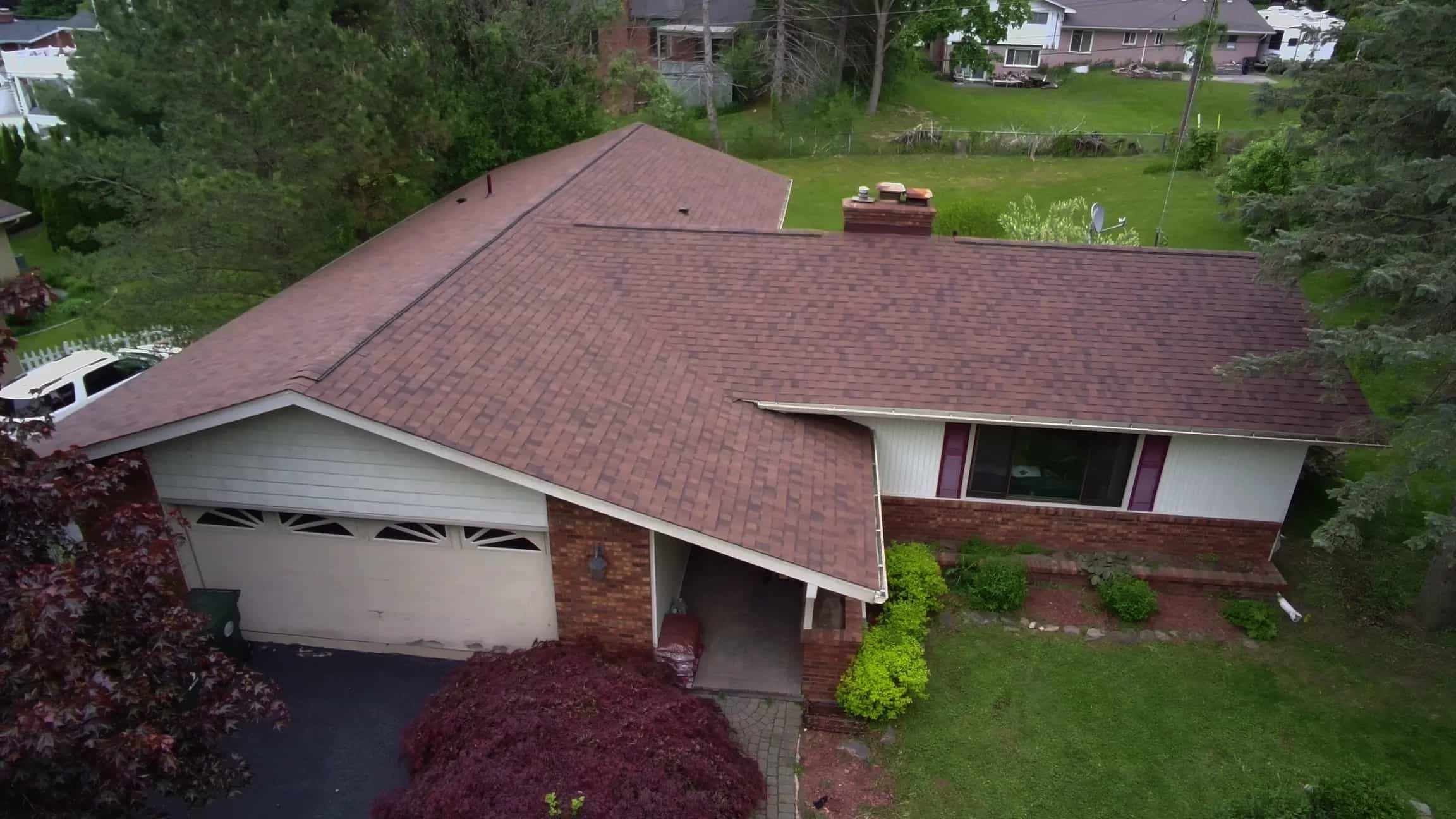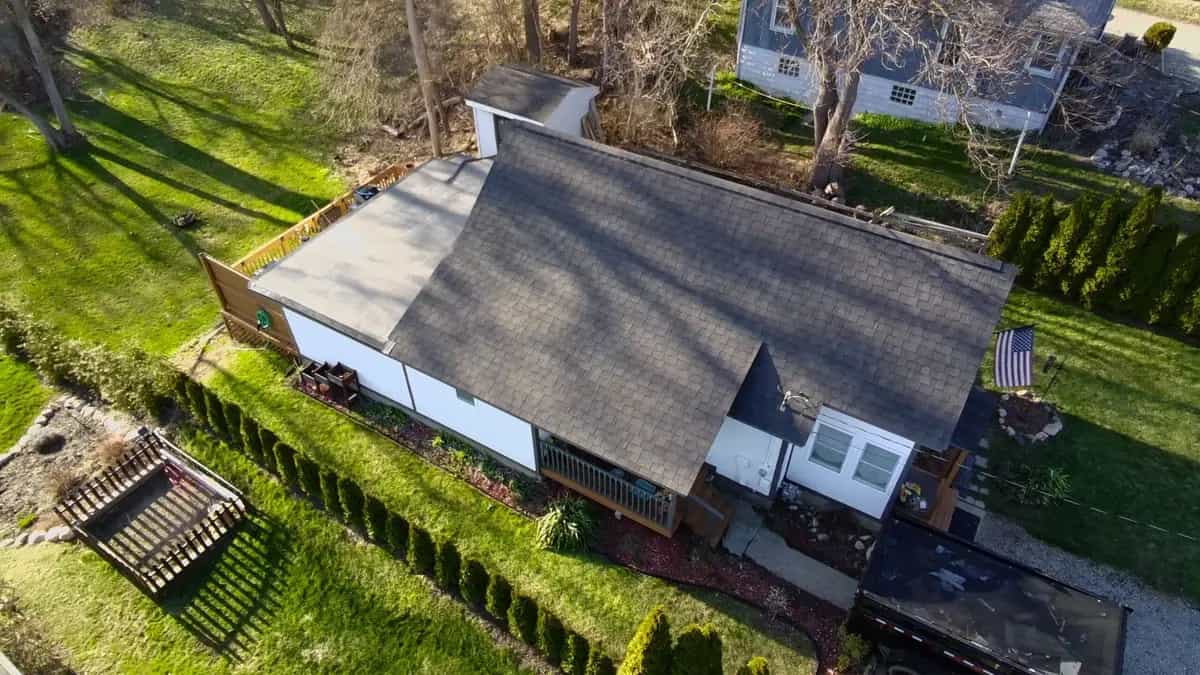
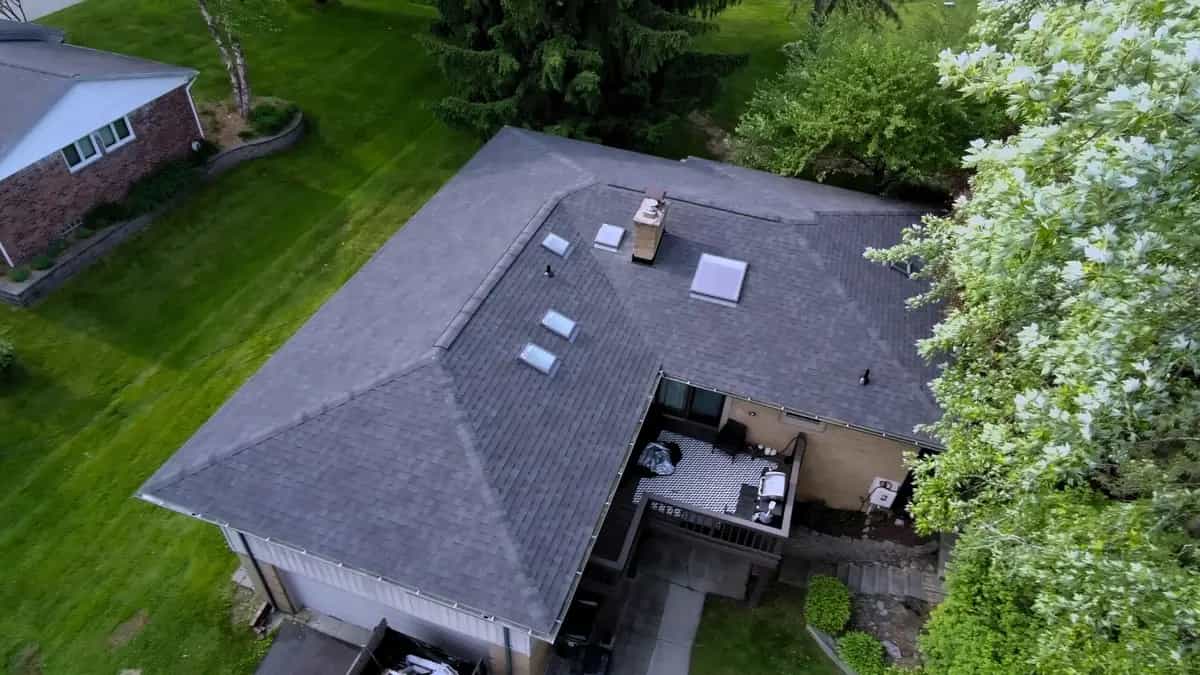
A lakefront home deals with three roofing problems a typical subdivision house does not: sustained wind off open water with nothing to slow it down, moisture that keeps shingles damp longer and feeds algae growth, and a job site where a narrow lake lot, a dock, or a seawall limits where a crew and a dumpster can actually set up. The fix is a higher wind-rated shingle installed to the letter of its warranty, real ventilation, and a crew that plans access before the first shingle comes off.
I am Aaron Scott, licensed Michigan residential builder and owner of Roofing Army. We work on lakefront homes around Lake Orion, Novi, Clarkston, and the inland lakes of western Oakland County from our Oxford and Plymouth offices, and the roofs we tear off out there tell a consistent story about what wind and water do differently.
Why Does a Lakefront Home Need Different Roofing Than an Inland Home?
Three things change once a house sits on open water instead of behind rows of other houses and trees. Wind gets a clear run at the roof. The air stays more humid for more of the year, especially on the shaded, lake-facing slope. And the lot itself is often smaller and harder to stage a job on than it looks from the street, since the backyard is the water. None of that shows up on a quick measurement-only estimate pulled from a satellite photo, which is one reason a lakefront roof deserves an actual walk-through rather than a copy of the quote for the house three streets back from the shore.
How Much Wind Do Lakefront Roofs Actually Take in Michigan?
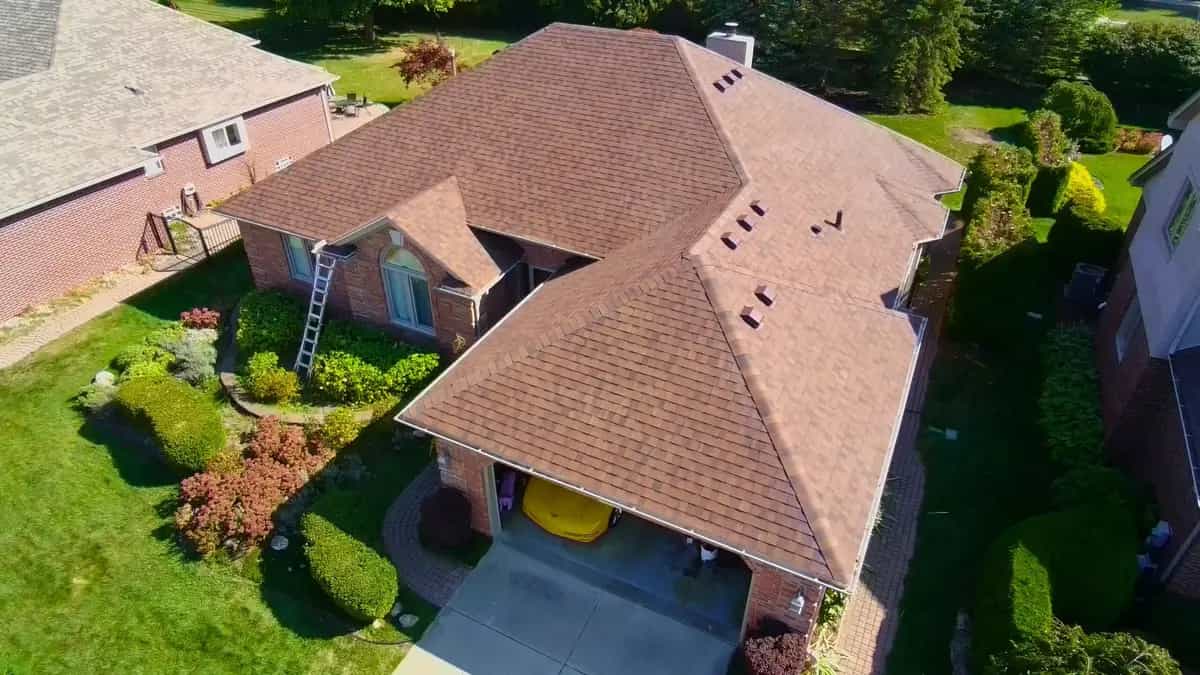
Wind picks up speed moving across open water because there is nothing, no houses, no tree line, to slow it down before it reaches the far shore. That is ordinary meteorology, not a sales pitch, and it is why homes on Walled Lake and Shawood Lake at the north end of Novi, or on Lake Orion, Voorheis Lake, Square Lake, and Long Lake, routinely take a harder hit in the same storm that barely touches a house a half mile inland. On the lakefront roofs we tear off in Lake Orion and Novi, we see more creased tabs and more lifted seal strips on the lake-facing slope than on the three other slopes of the same roof combined.
We install architectural shingles with wind warranties well above the 110 mph standard rating that comes with a basic shingle, and on every lakefront job we confirm the starter strip, ridge cap, and nailing pattern match what the manufacturer actually requires to qualify for that higher wind-rated warranty, not just the number printed on the wrapper. GAF, CertainTeed, and Owens Corning all condition their best wind warranties on using their own matched accessories, so a mismatched starter strip can quietly cut a 160 mph warranty back down to the base rating. See our full comparison in the best Class 4 impact-resistant shingles for Michigan for how the current lineup stacks up on wind terms as well as hail. If wind has already lifted or creased shingles on your lake-facing slope, our guide on what a wind repair actually costs and whether it is worth a claim walks through that decision.
Why Do Lakefront Roofs Grow Algae and Moss Faster?
Moisture off the water keeps a lakefront roof damp longer after every rain, every dew, and every morning fog than a roof the same age a mile inland. Add a mature tree canopy, which most older lakefront lots have, and the lake-facing or north-facing slope can stay shaded and wet for hours longer than the street side. That combination is exactly what blue-green algae needs to take hold, and it is why lakefront roofs streak and discolor years before an identical roof inland. The Atlas shingles we install carry Scotchgard protector granules built in specifically to resist this growth, and for homeowners who want to rule out the problem entirely, stone-coated metal has no granules for algae to colonize in the first place. We cover that full cost and lifespan tradeoff in metal roof vs asphalt shingles in Michigan, including a real metal roof we installed a few miles from Lake Orion.
What Makes Job Access Harder on a Lakefront Reroof?
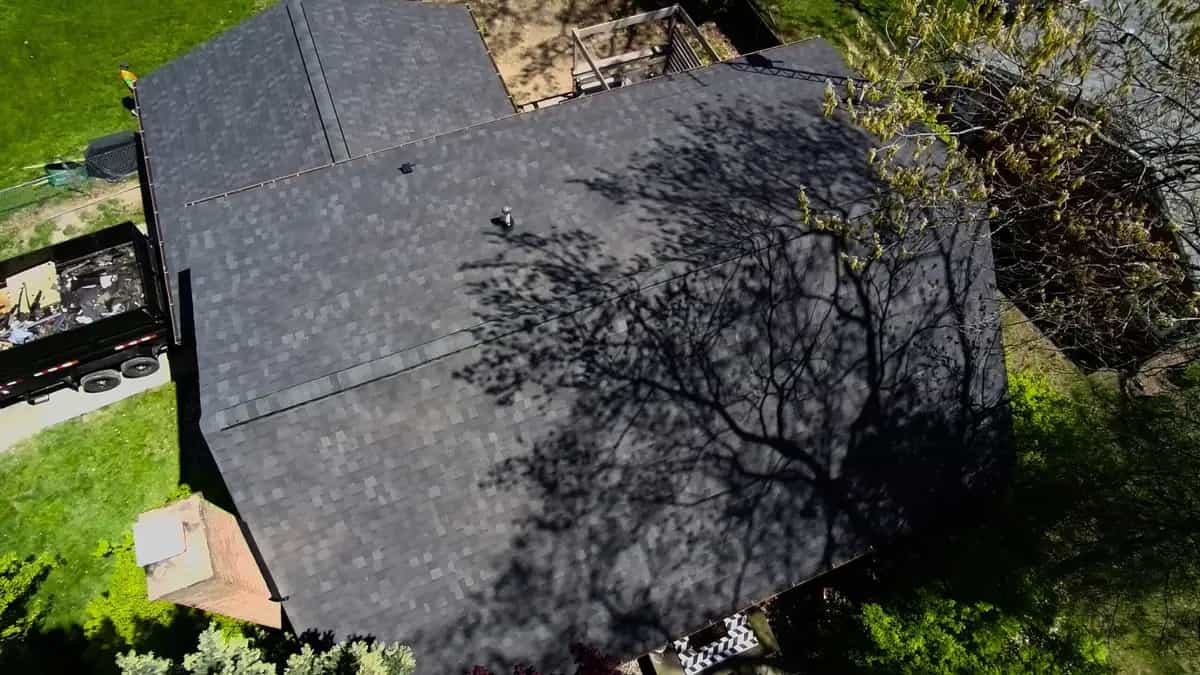
Logistics texts make up a real share of what our crews coordinate with homeowners on every job, dumpster placement and driveway access most of all. Lakefront lots raise the stakes on exactly that. A lot with the house backed up to the water usually has no truck access from the lake side at all, so every bundle of shingles, every piece of equipment, and the dumpster itself has to come in from the street, sometimes down a long, narrow driveway shared with a neighbor. Docks, seawalls, retaining walls, and mature landscaping near the shoreline also need protection that a standard suburban lot does not, and a crew that has not walked the property beforehand can damage something expensive trying to find a path for a ladder or a lift.
One more thing worth knowing before you sign anything: Michigan's Part 91 Soil Erosion and Sedimentation Control rules, administered county by county, require a separate earth change permit for work within 500 feet of a lake or stream that disturbs soil, such as regrading, trenching for new drainage, or digging in a new downspout extension. A standard tear-off and reshingle does not disturb soil and does not trigger this on its own. But if a lakefront reroof is paired with grading, foundation drainage work, or landscaping changes near the water, ask your contractor whether that piece needs its own permit before work starts. We confirm this with the local county drain or building office whenever a lakefront project includes ground work, so it is never a surprise mid-job.
What Does a Lakefront Roof Replacement Cost in Michigan?
Lake proximity itself does not set the price, size, pitch, and complexity still drive the number, but these are real jobs we completed on or near Michigan lakes, pulled straight from our job gallery:
| Location | Roof Size | Real Price | Per Sq Ft |
|---|---|---|---|
| Hi Crest Dr, Lake Orion | 2,646 sq ft | $16,405.48 | $6.20 |
| Strawberry Circle, Commerce Township | 3,736 sq ft | $19,725.40 | $5.28 |
| Lawndale Avenue, West Bloomfield | 2,729 sq ft | $21,300.69 | $7.81 |
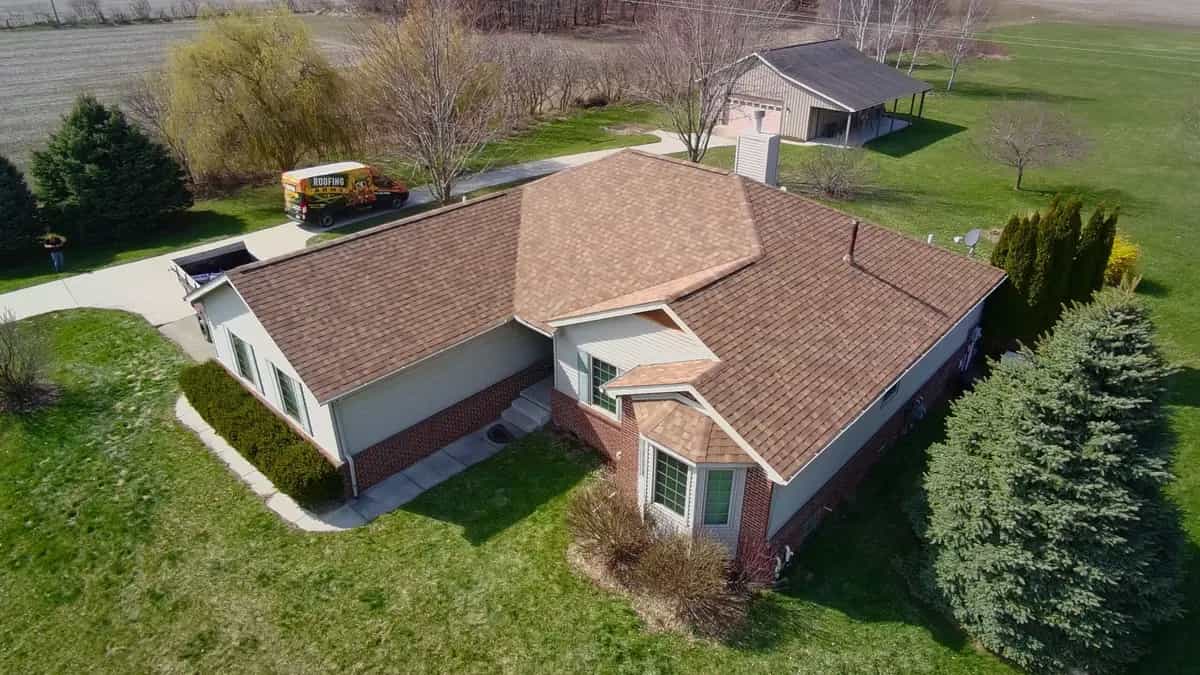
Notice the Lawndale Avenue roof in West Bloomfield cost more per square foot than the larger Strawberry Circle roof in Commerce Township. Pitch and roofline complexity explain that gap, not the lake. For a full statewide breakdown of what drives a roof replacement price up or down, see our Michigan roof replacement cost guide, and our Lake Orion cost guide covers that market specifically.
What Should a Lakefront Roofing Quote Include?
- The actual wind warranty rating in writing, not just "high wind resistant," plus confirmation that the required starter strip, ridge cap, and nailing pattern will be used to qualify for it.
- Algae-resistant granules or a metal option called out specifically if the lake-facing slope stays shaded and damp.
- A ventilation plan for the humidity a lakefront roof deals with beyond a typical Michigan attic.
- Ice and water shield coverage in feet from the eave, since lakefront moisture worsens ice dam formation in winter.
- A written access and staging plan, worked out before the first truck shows up, covering the dumpster location, material drop point, and how docks, seawalls, or landscaping will be protected.
- A straight answer on permits, including whether any grading or drainage work tied to the project needs its own Part 91 earth change permit.
- No deposit. You pay when the roof is done and you are satisfied, the same as any other Roofing Army job.
Get a Lakefront Quote That Accounts for the Lake
We serve lakefront homeowners across Southeast Michigan from our Oxford and Plymouth offices, including the lake communities around Lake Orion, Novi, Clarkston, and Brandon Township. A project manager is on site for every job, we never ask for a deposit, and every estimate includes a real ventilation analysis, not a guess. Schedule a free inspection and we will walk the property, including the access, before we write a number.
Frequently Asked Questions
What roofing material is best for a lakefront home in Michigan?
Architectural asphalt shingles with algae-resistant granules, like the Atlas shingles with Scotchgard protector we install, work well for most lakefront homes and cost a fraction of metal. Stone-coated metal roofing is worth considering if you plan to stay long term, since it has no granules for algae to colonize and carries a higher wind rating, but it runs roughly two to three times the price of asphalt for the same roof area.
Why does a lakefront roof get algae streaking faster than an inland roof?
Moisture off the water keeps the roof damp longer after every rain and morning fog, and mature tree canopy common on older lakefront lots adds shade that slows drying even more. That combination of moisture and shade is exactly what blue-green algae needs to take hold, which is why algae-resistant granules matter more on a lakefront roof than on a dry, sun-exposed roof inland.
Do lakefront homes need a different permit for a roof replacement in Michigan?
A standard tear-off and reshingle follows the same local permit process as any other home. The one extra question to ask is whether the project also involves grading or drainage work within 500 feet of the lake, since Michigan's Part 91 Soil Erosion and Sedimentation Control rules require a separate earth change permit for soil-disturbing work that close to the water, administered county by county. A roof-only job does not disturb soil and does not trigger this on its own.
How much does a roof replacement cost on a lakefront home in Michigan?
Lake proximity itself does not set the price, size, pitch, and roofline complexity still drive the number. Real examples we have completed near Michigan lakes range from $16,405 for a 2,646 sq ft roof in Lake Orion to $21,301 for a 2,729 sq ft roof in West Bloomfield, with the per-square-foot difference coming down to pitch and complexity rather than the lake itself.
What makes a lakefront roofing job site harder to work on?
Many lakefront lots have no truck access from the water side, so every bundle of shingles and the dumpster have to come in from the street, sometimes down a narrow shared driveway. Docks, seawalls, and mature landscaping near the shoreline also need protection a typical suburban lot does not require. A crew that walks the property and plans staging before the job starts avoids damage and delays that a quick drive-by estimate misses.