Filing a roof insurance claim can raise your rates or cost you a claim-free discount, so it is only worth doing when the insurer's payout clearly beats your deductible and the claim-history risk. As a rule of thumb, if the repair cost is at or below your deductible, do not file. I'm Aaron Scott, a licensed Michigan residential builder and owner of Roofing Army, and our crews inspect storm damage across Southeast Michigan every season. Here is the actual math, and a verified Michigan rule most homeowners have never heard of.
Will Filing a Roof Claim Raise My Rates in Michigan?
It can. The Michigan Department of Insurance and Financial Services (DIFS) is the state's authority on homeowners insurance, and its consumer guidance is direct: your claim history, both the type and number of claims you have filed, is something insurers use to decide what to charge for coverage. DIFS also lists claim-free discounts among the common premium discounts available in Michigan, and filing a claim is exactly how you lose one. That is why "will this raise my rates" is one of the first questions worth answering before you call your agent, not after.
This is the single most common insurance question we hear. Out of 216 calls to our office that mention insurance, 107 mention an actual claim, 80 mention an adjuster, and 42 ask specifically whether filing will raise their rates.
Does Simply Asking About a Claim Count Against You?
No, and this is the part almost nobody knows. In June 2021, DIFS issued Bulletin 2021-27-INS specifically on "zero-dollar claims," the calls and inquiries that never actually result in a payout. The bulletin states plainly that a zero-dollar claim is not a "loss" under the terms of an insurance policy, because no reimbursement ever happened. It directly bars insurers from counting a zero-dollar claim as loss history, listing it on a claims information report, or using it as a basis to raise premiums, limit coverage, or decline to renew a policy. Insurers had until July 30, 2021 to bring their underwriting rules into line with that rule.
In practice, that means calling your agent to ask "what would my policy cover here" or having an adjuster come out to look and decide there is nothing to pay is not supposed to follow you. The risk starts when a claim is actually opened and processed, even if the payout ends up small.
What Is a CLUE Report, and How Long Does a Claim Follow You?
Most property insurers in the United States subscribe to the Comprehensive Loss Underwriting Exchange (CLUE), a claims-history database maintained by the consumer reporting agency LexisNexis. When you apply for coverage or renew a policy, your insurer can pull your CLUE report to see your filed claims history. Lookback periods differ by source and insurer, generally landing somewhere in the five to seven year range for property claims. A thin or clean CLUE report is one reason a quote comes back lower; a report with several filed claims is one reason it does not. You are entitled to your own copy under federal law if you want to see what your file shows before you talk to an agent.

When Is a Roof Claim Actually Worth Filing?
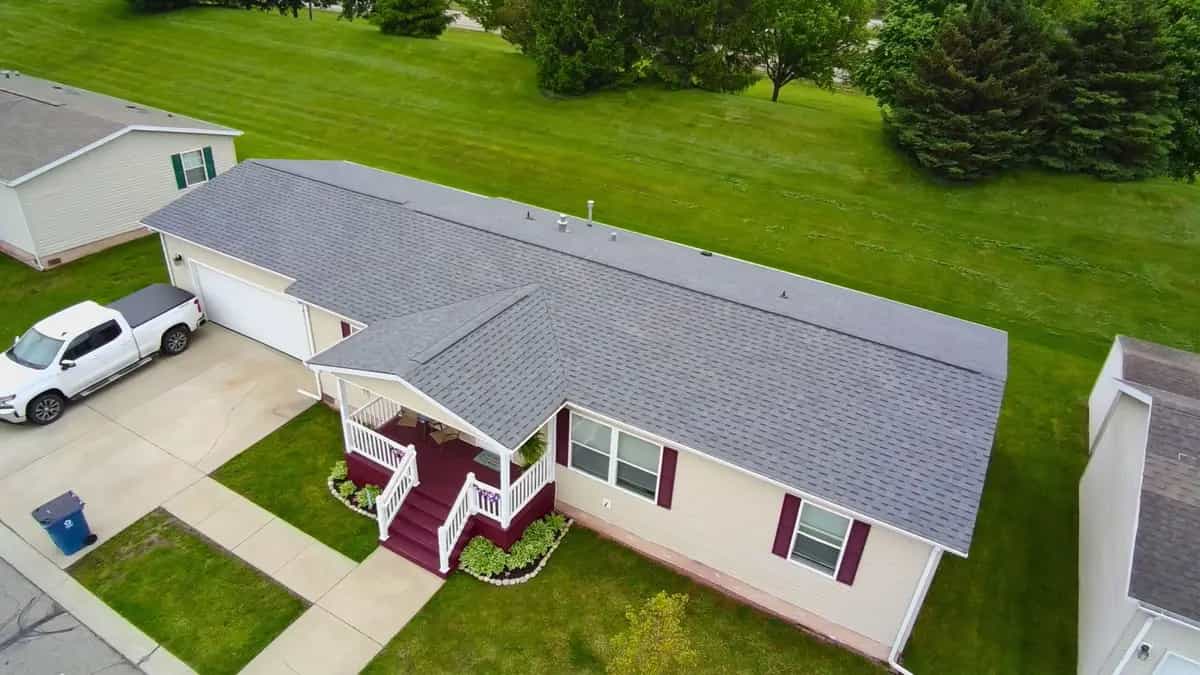
The math is the same whether the cause was hail, wind, or a fallen branch: subtract your deductible from the insurer's approved repair or replacement cost, and compare what is left to the risk of a claim on your record. Here is what that looks like on a real job. We replaced a 2,766 square foot roof in Fenton for a flat $11,736.92, a project you can see in our job gallery with photos and the real invoice. If that exact job were an approved insurance claim instead of a cash sale, here is what three common flat deductibles would leave on the table:
| Deductible | Your share | Insurer pays | Percent covered |
|---|---|---|---|
| $1,000 flat | $1,000 | $10,736.92 | 91.5% |
| $1,500 flat | $1,500 | $10,236.92 | 87.2% |
| $2,500 flat | $2,500 | $9,236.92 | 78.7% |
On a full replacement like this one, every deductible in that table still leaves the insurer covering the large majority of the job. That is the clear case for filing: a big, real loss where the payout dwarfs both the deductible and the claim-history risk. If your policy carries a percentage wind or hail deductible instead of a flat dollar amount, which is common on Michigan homeowners policies, the share you pay can be much larger. Our hail deductible calculator runs that exact math against your own home's insured value.
When Should You Just Pay for the Repair?
Small and mid-sized repairs are where the decision actually gets close. We track what repairs really cost across every job we price, and the median sold repair this year was $900, detailed fully in our roof repair cost guide. Run that figure against a $1,000 flat deductible and the answer is immediate: there is nothing for the insurer to pay, so filing would only add a claim to your history for zero dollars back. Even a larger repair, like the roughly $2,000 our reps quote for a job with two separate leak spots, barely clears a $1,000 deductible and does not clear a $2,500 one at all.
Our rule of thumb after years of storm work: get the actual repair quote first, before you call the insurer. If the number is close to or under your deductible, pay it directly and keep your claim-free discount. If the number is several times your deductible, that is when filing starts to make sense.
How Many of Our Customers Actually File a Claim?
Fewer than you would think. Across 836 roofing opportunities we worked over the past year, only 27, about 3%, were ever filed as an insurance claim. The overwhelming majority of storm-damage calls end up as a paid repair or replacement below the deductible threshold, not a claim. We are not against filing when it is the right call. We just see, call after call, that homeowners assume insurance is the only path to a storm repair, when for most of them the math says otherwise.
If your roof is old enough that you are worried the insurer will call the damage "wear and tear" rather than storm damage regardless of what you decide, that is a separate and real concern; our guide on what homeowners insurance actually covers in Michigan walks through how adjusters draw that line.
What to Do Before You Call Your Insurer
- Get an honest inspection first. We inspect storm damage at no charge and tell you plainly if the cost is likely below your deductible.
- Pull your declarations page. Know your exact deductible, flat or percentage, before you do any math.
- Ask about zero-dollar claims directly. Michigan regulation protects an inquiry that never pays out; a real claim is different.
- If you do file, document everything. Our step-by-step Michigan roof claim guide covers the paperwork and timeline, including how long you realistically have to report a loss.
- Have a project manager on site when the adjuster comes out. On every Roofing Army job, a project manager walks the roof with the adjuster so nothing gets missed or mismeasured.
We serve Southeast Michigan from offices in Oxford, Ferndale, and Rochester Hills. Whether the right move for your roof turns out to be a claim or a paid repair, we give every customer five quotes at different price points and never ask for a deposit, so the only decision left is the insurance math above. Schedule a free inspection to get the real number for your roof.
Frequently Asked Questions
Will filing a roof insurance claim raise my rates in Michigan?
It can. The Michigan Department of Insurance and Financial Services says your claim history, including both the type and number of claims filed, is used by insurers to set what they charge, and filing a claim can cost you an existing claim-free discount. That risk is why the math only favors filing when the insurer's payout clearly exceeds your deductible.
Does asking my insurer about possible roof damage count as a claim?
Not under Michigan rules. DIFS Bulletin 2021-27-INS states that a zero-dollar claim, one that never results in a payout, is not a 'loss' and cannot be counted as claims history, used to raise your premium, or used as grounds to decline renewal. Insurers were required to update their underwriting rules to reflect this in 2021.
How long does a filed roof claim stay on my record?
Most property insurers pull your claims history from the CLUE (Comprehensive Loss Underwriting Exchange) database maintained by LexisNexis, and lookback periods for property claims generally fall in the five to seven year range depending on the insurer. You can request your own CLUE report to see exactly what is on file before you talk to an agent.
Is it worth filing a claim for a small roof repair?
Usually not. The median sold roof repair we price runs about $900, which is below or close to most common deductibles. If the insurer's payout after your deductible would be small, filing adds a claim to your history for little or no money back. Get a real repair quote first and compare it to your deductible before deciding.
How many homeowners actually end up filing an insurance claim on their roof?
Far fewer than most expect. Of 836 roofing opportunities we worked over the past year, only about 3% were ever filed as an insurance claim. Most storm-damage calls end up as a paid repair or replacement below the deductible rather than a formal claim.