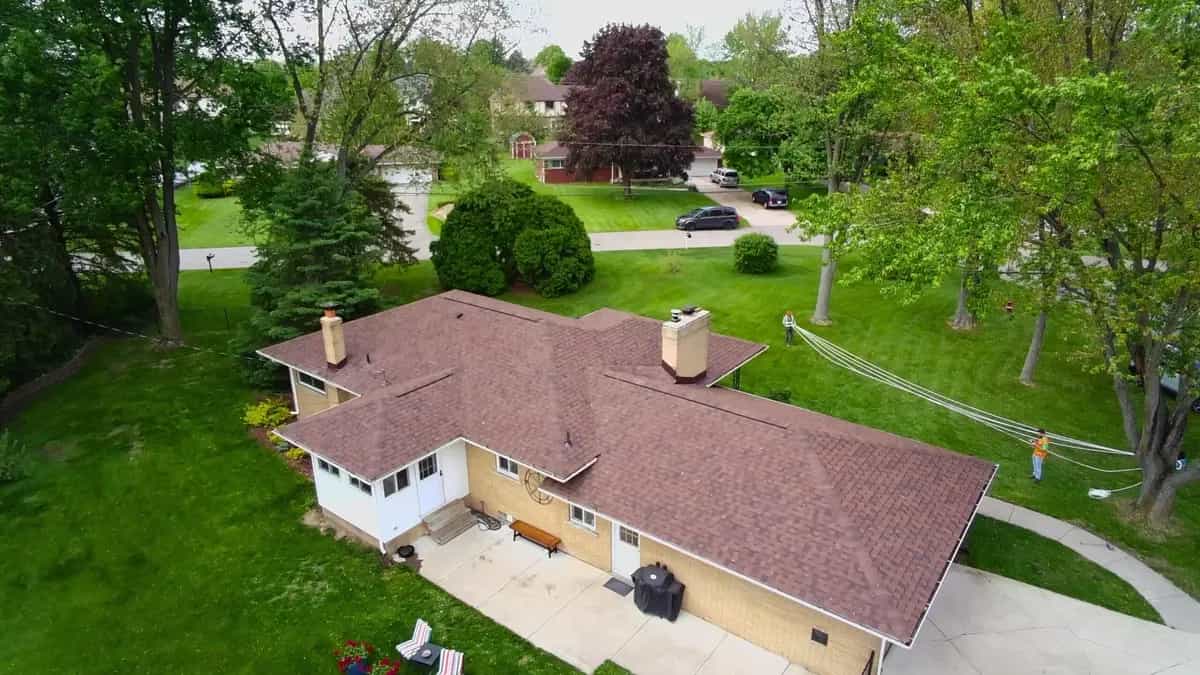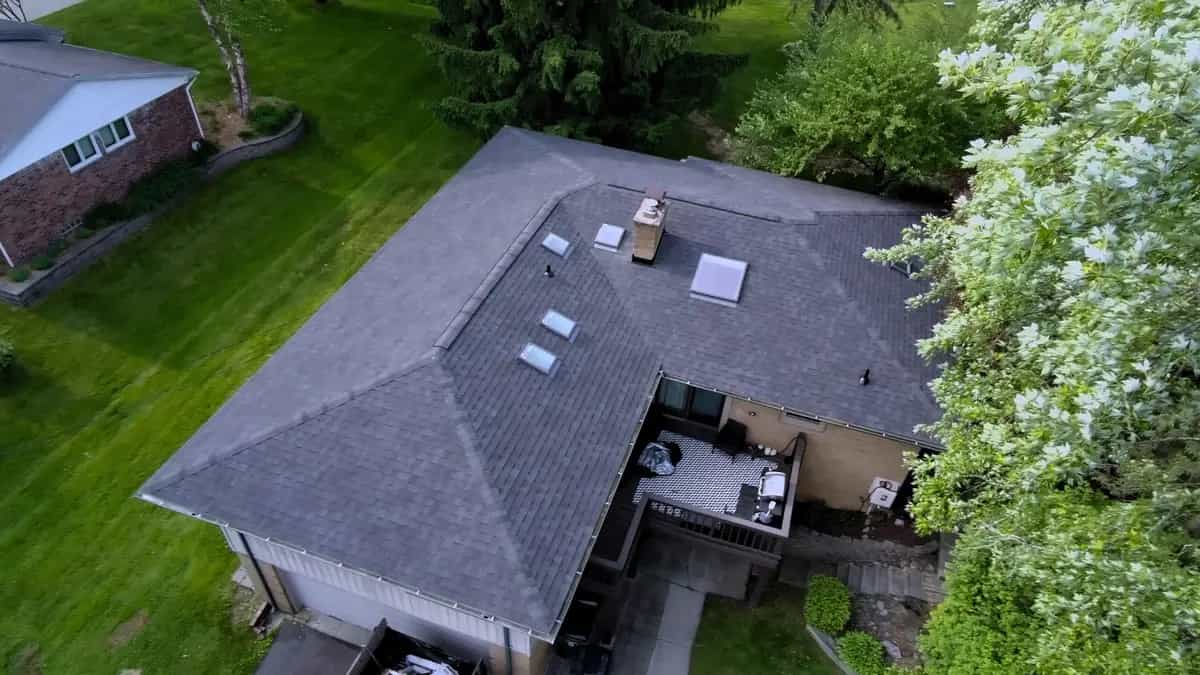
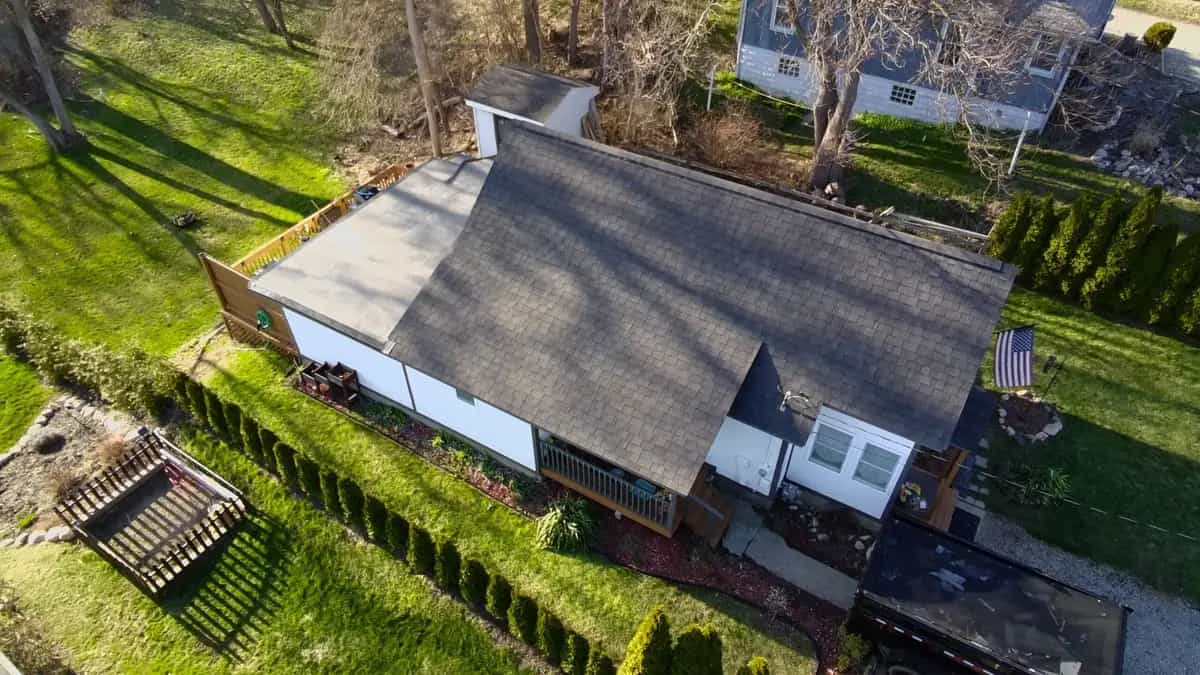
On the night of September 2 and through the afternoon of September 3, 2026, three rounds of severe thunderstorms crossed Oakland, Macomb and Wayne counties. The National Weather Service office in Detroit/Pontiac documented straight-line winds "on the order of 60 to 70+ mph," nearly 300,000 power outages, and an EF-2 tornado on Detroit's east side. If you live anywhere from Holly to Royal Oak to Plymouth, your roof took a beating even if nothing obvious came off. This guide, written by Aaron Scott, licensed Michigan residential builder and owner of Roofing Army, covers exactly where the storm hit, what wind at those speeds does to asphalt shingles, what to check now, and how the insurance timeline works.
Where did the September 2 and 3 storms hit in Oakland, Macomb and Wayne counties?
The NWS Detroit/Pontiac event summary breaks the storm into three waves: early evening on September 2, an overnight round after 10 p.m., and a third round on the afternoon of September 3 that spawned the tornadoes. Its local storm report log for our service area reads like a map of Oakland County:
- Wednesday night, September 2: multiple trees and large branches down 3 miles east of Milford at 10:31 p.m.; multiple trees down around Livonia at 11:03 p.m.; numerous large branches down with power outages around Plymouth at 11:06 p.m. The Detroit News reported the warnings for northern Metro Detroit that night carried the potential for winds up to 70 mph and hail up to 1.5 inches.
- Overnight into September 3: multiple trees down near Center Line at 2:38 a.m.; roof damage to a house in Harper Woods from a large tree branch at 3:42 a.m.
- Thursday morning, September 3: large trees down in Holly (10:53 a.m.), a downed tree closing Sashabaw at Stickney in Independence Township near Clarkston (11:11 a.m.), trees and power lines down east of Auburn Hills (11:25 a.m.), multiple downed trees and wires around Rochester (11:27 a.m.), a large healthy tree down west of Lake Orion (11:27 a.m.), a large pine snapped in half near 21 Mile and Hayes in Macomb Township (11:43 a.m.), trees down on Duck Lake Road near Highland (11:56 a.m.), and numerous large limbs down along Carroll Lake Road in Commerce (12:02 p.m.).
- Thursday afternoon, September 3: a "very large tree limb downed on a house and through a large section of roof" southwest of West Bloomfield at 3:45 p.m.; a large branch snapped across 13 Mile at Main Street in Royal Oak at 4:01 p.m.; a limb down in Ferndale at 4:03 p.m.; a measured 58 mph gust at Detroit Metro Airport at 4:05 p.m.; a measured 60 mph gust at St. Clair Shores; a brief EF-0 tornado (70 mph) in Lincoln Park at 4:12 p.m.; and the EF-2 tornado (115 mph peak winds, 3.5 miles long, half a mile wide, one injury) that touched down 2 miles northeast of Comerica Park at 4:14 p.m. and ran to Belle Isle. NWS notes it was the first confirmed tornado inside Detroit since July 2, 1997.
Every item above comes from the NWS Detroit/Pontiac storm report log for the event. The Storm Prediction Center's preliminary reports for September 2 and September 3 list the same Oakland, Macomb and Wayne County entries. No measured hail was logged inside Oakland or Macomb County in that report list; the large hail that night fell farther north and east, which we cover in our separate Lapeer County hail storm guide.
What do 60 to 70 mph winds do to an asphalt shingle roof?
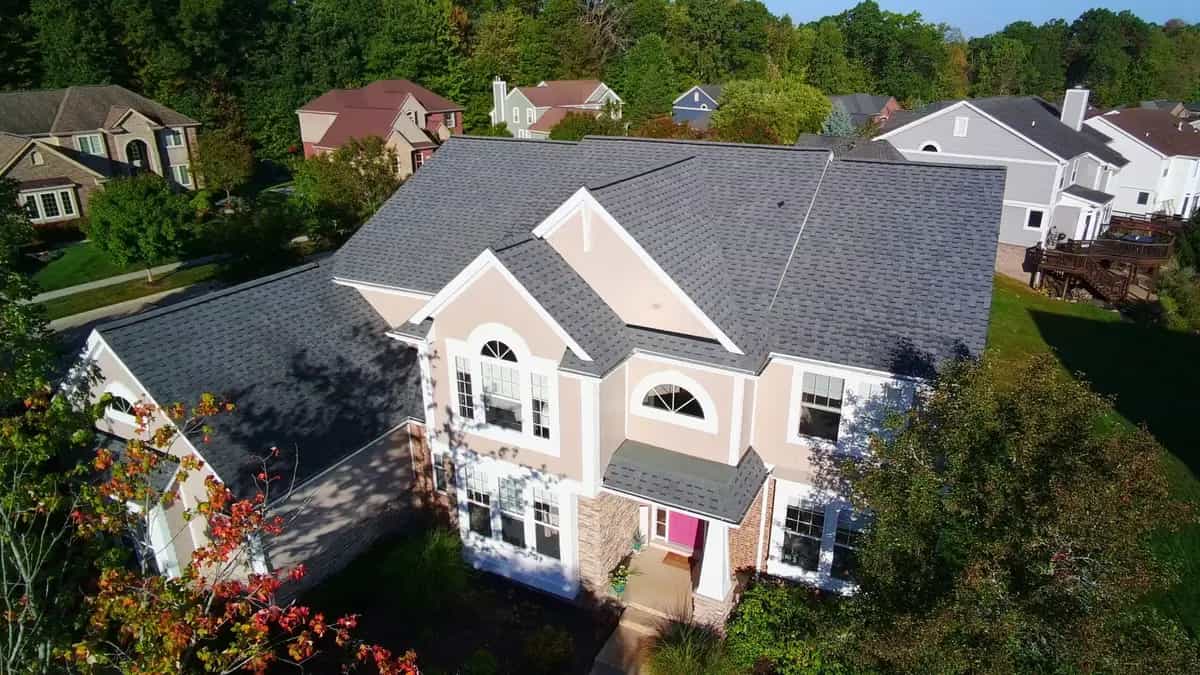
The National Weather Service uses 58 mph as its severe thunderstorm threshold. Its Brownsville office's straight-line wind explainer says most homes will not sustain structural damage at 58 mph, but that damage from falling trees and lines is common, and that at 70 to 80 mph "significant exterior damage can occur, such as damage to roofs, awnings and siding." On the Enhanced Fujita scale that NWS uses to rate tornadoes, EF-0 winds of 65 to 85 mph are associated with chimney damage and uprooted shallow-rooted trees, EF-1 (86 to 110 mph) with "roof surfaces peeled off," and EF-2 (111 to 135 mph) with "roofs torn from frame houses."
Here is what that looks like on the roofs we inspect after a Southeast Michigan wind event:
- Creased shingles. Wind lifts the tab, folds it back on itself, and lets it fall. The shingle looks fine from the ground but the crease line has broken the mat. It will leak later, not today.
- Broken seal strips. The adhesive bond between courses fails, especially on roofs more than about ten years old where the sealant has hardened. Unsealed shingles lift in every subsequent breeze.
- Missing tabs and ridge caps. Ridge and hip caps take the highest wind loads and go first. Check the ridge line from the street.
- Impact damage from limbs. The West Bloomfield and Harper Woods reports above are the obvious version. The less obvious version is a limb that bounced off, cracked shingles and dented the decking underneath, and left almost nothing visible from the ground.
- Flashing and vent damage. Box vents, turbine vents and satellite mounts get rocked loose. Chimney counter-flashing pulls away from the mortar joint.
What should you check on your roof after this storm?
Do this from the ground and from inside the house. Do not climb a roof that just took a storm.
- Walk the yard. Shingle tabs, ridge cap pieces and granule piles below the downspouts are the first sign. Note where you found them.
- Look at the roof from every side with binoculars. You are looking for lifted or missing tabs, exposed black underlayment, a wavy ridge line, and anything sitting on the roof that was not there before.
- Check the attic with a flashlight. Daylight through the deck, wet insulation, water tracks on the rafters, or a musty smell three days after the storm are all leaks.
- Check ceilings near exterior walls and around chimneys and bath fans. Fresh stains show up within a week of a storm, not months later.
- Photograph everything, with a date. Your phone timestamps it. That timestamp matters later.
- If a tree or limb is on the roof, call for emergency tarping first. Getting the hole covered stops the interior damage that is not covered by a slow claim process.
How long do you have to file a storm damage claim in Michigan?
There is no single statewide deadline. The window is written into the conditions section of your own policy. Some policies set it at roughly a year from the date of loss, some longer, so check your policy and read the exact wording. What is not negotiable is the duty to report promptly: the Michigan Department of Insurance and Financial Services (DIFS) tells homeowners to notify their agent or insurer immediately after a loss, and its March 17, 2026 severe weather guidance adds that you should protect the property from further damage, keep receipts for tarps and supplies, photograph or video the damage before repairs, and contact your insurer's claims line before hiring a contractor.
Two other DIFS points worth knowing. First, DIFS says plainly that if hail or wind lifts shingles, a homeowners policy covers the damaged portion of the roof and the insurer is not required to replace the entire roof. That is why documentation of every slope matters. Second, DIFS notes there is no time limit for the insurer to complete its investigation, and if the delay seems unreasonable you can file a complaint with DIFS or call its hotline at 877-999-6442. We wrote a full walkthrough of the process in how to file a roof insurance claim in Michigan, and a plain-English explainer on whether insurance covers roof replacement in Michigan.
What does the Roofing Army free storm inspection include?
We do not charge for storm inspections in Troy, Rochester Hills, Sterling Heights, Shelby Township, Oxford, Lake Orion, Plymouth, or anywhere else in our service area, and there is no obligation attached to it. Here is what you get:
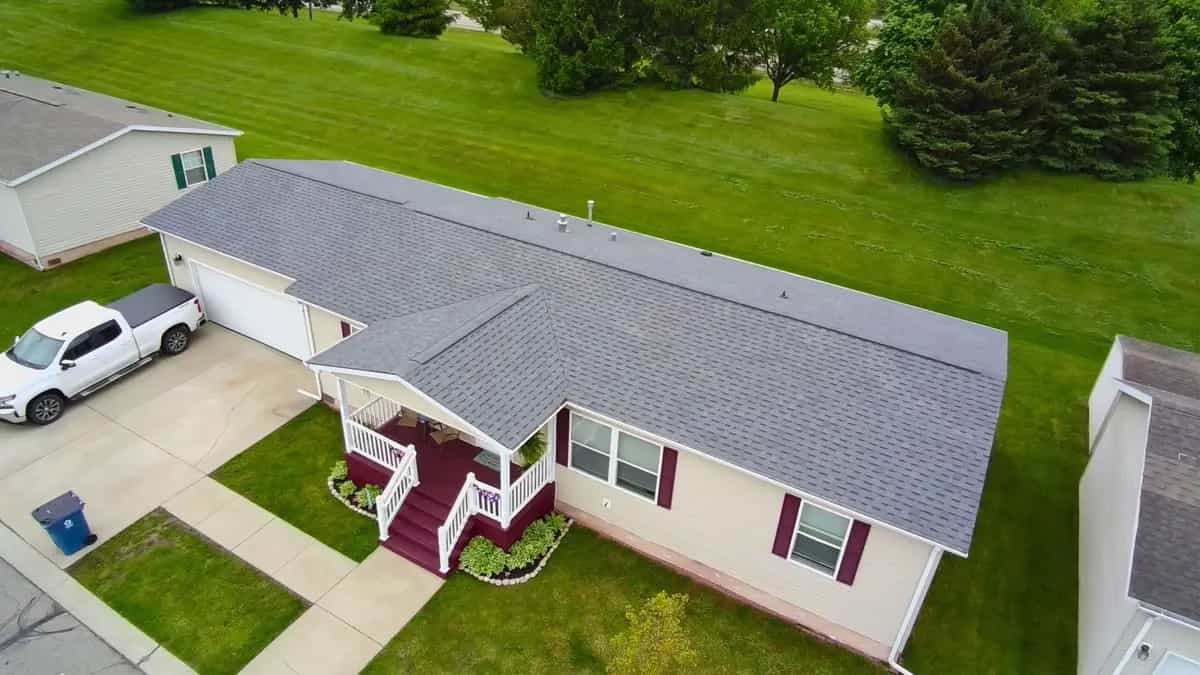
- Drone photo documentation of every slope. High-resolution, timestamped images of the whole roof, uploaded to your job portal so you and your adjuster are looking at the same evidence.
- A written damage summary. Creased shingles, broken seals, impact marks, flashing and vent damage, with photos of each, and an honest call on whether you have a claim or a repair.
- We meet your adjuster on site. Adjusters move fast. Having a roofer on the roof with them, pointing at the creases, changes outcomes.
- Same-day emergency tarping. If there is a hole, we cover it the day you call, and DIFS guidance is to keep those receipts for reimbursement.
- A project manager on every job if a repair or storm damage restoration follows, with no deposit required to get on the schedule.
One honest note. Most roofs in Oakland County came through this storm with tree damage rather than shingle damage, and many need nothing at all. We will tell you that too. What we see after every September storm is a roof that looked fine, leaked in December, and by then the policy window is a lot tighter than it was in September.
Frequently Asked Questions
How strong were the winds in Oakland County on September 3, 2026?
The National Weather Service Detroit/Pontiac event summary describes straight-line winds on the order of 60 to 70+ mph across Southeast Michigan on September 2 and 3, 2026, with measured gusts of 58 mph at Detroit Metro Airport and 60 mph at St. Clair Shores. Oakland County reports were tree and power line damage from Holly and Clarkston through Auburn Hills, Rochester, Lake Orion, Commerce, West Bloomfield, Royal Oak and Ferndale.
Was there hail in Oakland County during the September 2026 storm?
The NWS storm report log for the event lists no measured hail inside Oakland or Macomb County. The measured hail that night fell in Lapeer, St. Clair and Saginaw counties, including 1 inch at Otter Lake and 2 inches near Capac and Birch Run. Wind and falling limbs were the main roof threat in Oakland County.
My roof looks fine from the ground. Should I still get it inspected?
Yes, if you were in the path. Creased shingles and broken seal strips are the most common wind damage we find and neither is visible from the ground. A free inspection with drone photos gives you dated documentation. If nothing is wrong, you have a baseline record and we say so.
How long do I have to file a wind damage claim in Michigan?
It depends on your policy. The reporting window is in the conditions section of your own policy, and some policies set it at about a year from the date of loss. Michigan DIFS tells homeowners to notify their insurer immediately after a loss, document the damage with photos before repairs, and keep receipts for temporary repairs like tarping. Check your policy and call DIFS at 877-999-6442 with questions.
Does insurance replace the whole roof if only one slope was damaged?
Not automatically. Michigan DIFS states that when hail or wind lifts shingles, a homeowners policy covers the portion of the roof that was damaged and the insurer is not required to replace the entire roof. Whether a full replacement is owed depends on the extent of damage across slopes, whether matching shingles are available, and your policy language, which is why slope-by-slope drone documentation matters.