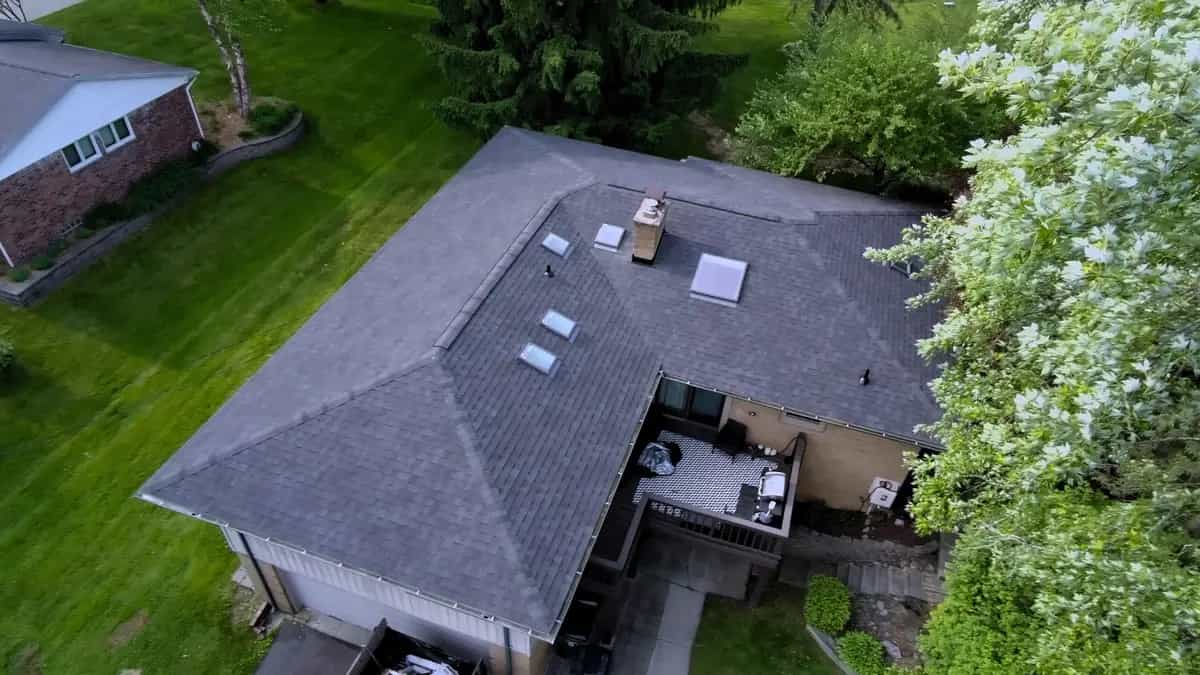
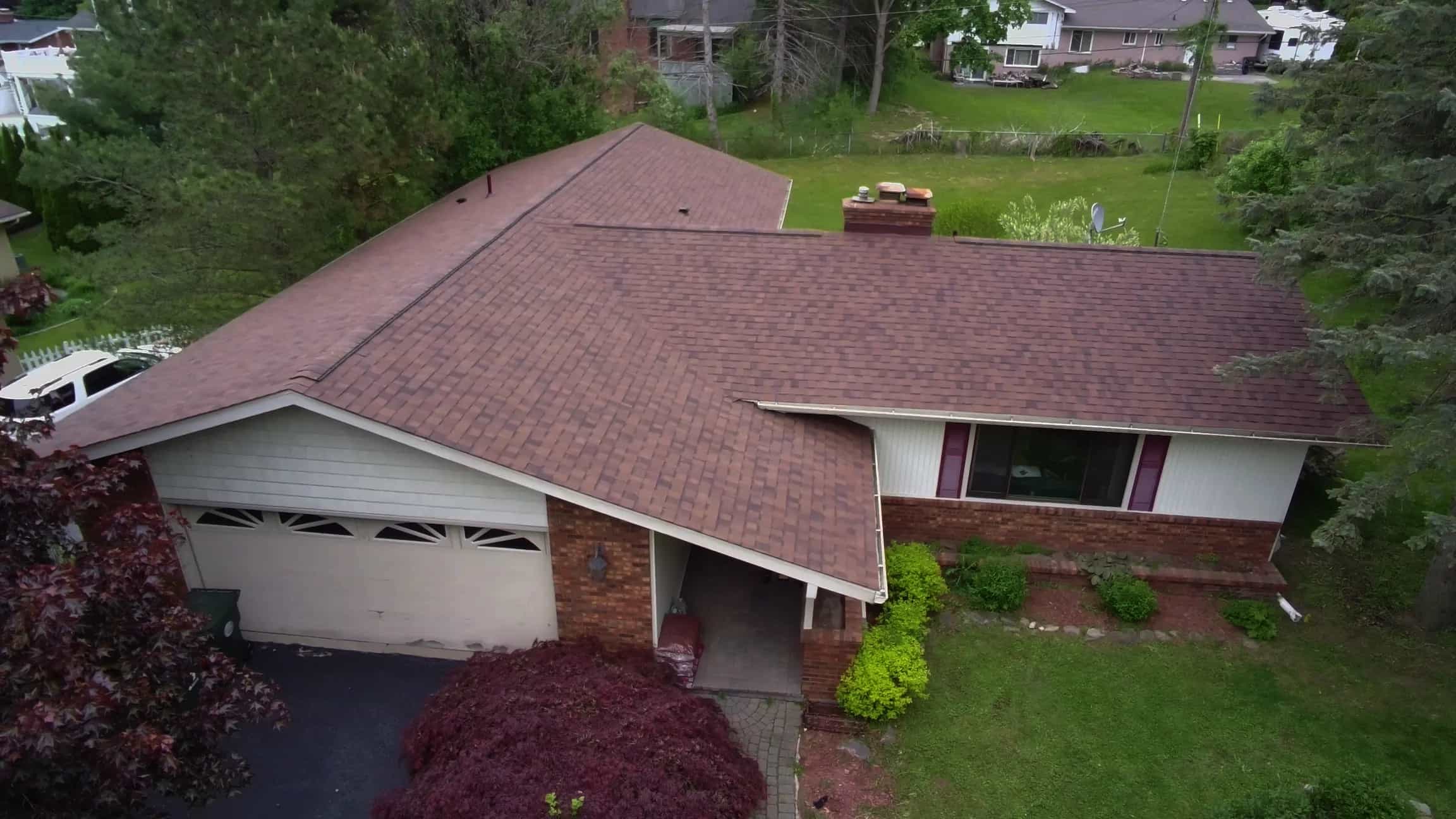
Synthetic underlayment is better than asphalt felt for a Michigan roof, and we install it on every replacement, fastened with plastic cap nails and never staples. It does not tear in wind or wick water like felt, it stays flat through freeze and thaw, and the manufacturers rate it for weeks of sun exposure instead of days. Under it, we run self-adhered ice and water shield 6 feet up from every eave, well past the Michigan Residential Code minimum of 24 inches inside the exterior wall line. Here is what each layer does, what the code and the manufacturers actually say, and what it costs. Written by Aaron Scott, licensed Michigan residential builder and owner of Roofing Army.
What does roof underlayment actually do?
Shingles are the weather surface, but they are not waterproof. Wind-driven rain, snow pushed up under the shingle edges, and water backing up behind an ice dam all get past shingles. The underlayment is the layer on the deck that catches that water and lets it run to the eave. It also protects the deck between tear-off and shingle installation, and it is the surface the crew walks on for a full day. On a one-day replacement that last part sounds minor. It is not; a torn, slippery underlayment is both a leak path and a fall hazard. Our full layer-by-layer system is on the roof replacement page.
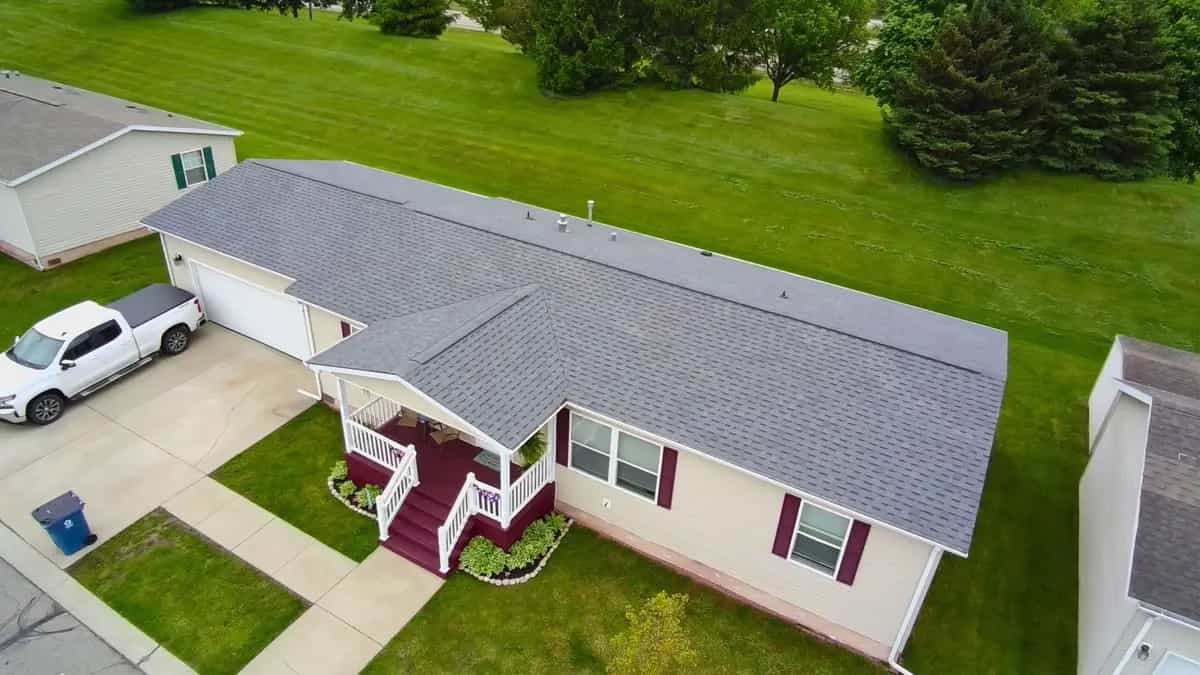
Synthetic vs felt: what is the difference?
Asphalt-saturated felt (#15 or #30 "tar paper") is an organic or fiberglass mat soaked in asphalt. It has been used for a century and it works when it is dry, flat and covered quickly. Its problems show up on a real job: it tears at the fastener heads in wind, absorbs water and wrinkles, gets brittle in cold, and it is rated for only a short exposure to sunlight.
Synthetic underlayment is a woven or spun polymer sheet. The product we use most is Atlas Summit 60, which Atlas describes as a lightweight synthetic designed as an alternative to #15 felt, built on a woven polymeric scrim for strength and reduced slippage, with a textured top surface for walkability and a slip-resistant coating on the bottom. Atlas's data sheet lists a 60-day UV exposure rating, a temperature performance range of minus 40 to 240 degrees Fahrenheit, and states that it will not buckle, warp or crack and will not support mold. It meets ASTM D6757 and, per Atlas, exceeds the performance characteristics of the felt standards ASTM D4869 and D226. Atlas's Summit 180 carries a 180-day exposure rating, and CertainTeed's RoofRunner, which we used on the Sherwood Lane roof in Shelby Township, is the same category of woven synthetic. One 10-square roll of Summit 60 covers 917 square feet with a 4-inch lap, which Atlas notes is more coverage per roll than traditional felt, meaning fewer laps and fewer seams on your roof.
| Property | Asphalt felt (#15) | Synthetic (Atlas Summit 60) |
|---|---|---|
| Material | Asphalt-saturated mat | Woven polymeric scrim with polymer coatings (Atlas) |
| Tear resistance | Tears at fastener heads in wind; brittle in cold | Woven scrim resists tearing; passes ASTM D228 and D1922 tear testing per Atlas |
| Water behavior | Absorbs water, wrinkles and telegraphs through shingles | Water resistant, lays flat, will not buckle or warp (Atlas) |
| UV exposure rating | Days | 60 days for Summit 60, 180 days for Summit 180 (Atlas) |
| Temperature range | Stiffens in cold | Minus 40 to 240 degrees F (Atlas) |
| Walkability | Slick when wet or dusty | Textured top surface and slip-resistant underside (Atlas) |
| Fastening | Often stapled by low-bid crews | Plastic cap fasteners, 1-inch minimum cap, 9 inches on center at laps and 12 inches in the field (Atlas instructions) |
| Roll coverage | Less per roll, so more laps and seams | 10 squares per roll, 917 sq ft with a 4-inch lap (Atlas) |
Why cap nails and never staples?
Because the fastener is what holds the underlayment through the one thing it has to survive: wind between tear-off and shingles, and wind under the shingles for the next 30 years. A staple is a thin wire with no head; under load, synthetic underlayment tears right over it. A cap nail has a 1-inch plastic or metal cap that spreads the load across the sheet. Atlas's Summit 60 installation instructions require plastic cap fasteners with a 1-inch minimum length and 1-inch minimum cap diameter, spaced 9 inches on center along the top and bottom laps and 12 inches on center through the field. Staples do not meet that instruction. That is the pattern our crews use.
The Michigan Residential Code only spells out an underlayment fastening schedule for high-wind regions: for asphalt shingles where the ultimate design wind speed is 140 mph or more, its Table R905.1.1(3) calls for cap nails or cap staples with a nominal cap diameter of not less than 1 inch, in a grid of 12 inches with 6-inch spacing at the side laps. Below that speed, which covers all of Southeast Michigan, the code says underlayment must be fastened sufficiently to hold in place and defers to the manufacturer's instructions. So staples are not a code violation here; they are just a bad installation, and the manufacturer's instructions rule them out. We cap nail every roof, from Oxford to Rochester Hills, because that is the only way the underlayment is still doing its job when the shingle above it lifts in a storm.
How much ice and water shield does Michigan code require?
Ice and water shield is a self-adhering, polymer-modified bitumen membrane that seals to the deck and seals around every nail driven through it. It is the layer that stops an ice dam from becoming a ceiling stain. The Michigan Residential Code, section R905.1.2, requires an ice barrier for asphalt shingle roofs in areas with a history of ice forming along the eaves, and it must extend from the lowest edge of the roof to a point not less than 24 inches inside the exterior wall line of the building. On roofs 8:12 and steeper, Michigan's code adds that the barrier must extend at least 36 inches measured along the slope from the eave edge.
Notice what that means on a real house. The membrane is measured from the inside of the wall, not from the edge of the roof. On a ranch with a 12-inch overhang, 24 inches inside the wall line is about 3 feet of membrane at the eave. On a colonial with wider overhangs it is closer to 4 feet. That is the minimum, and it is where the low-bid roofers stop.
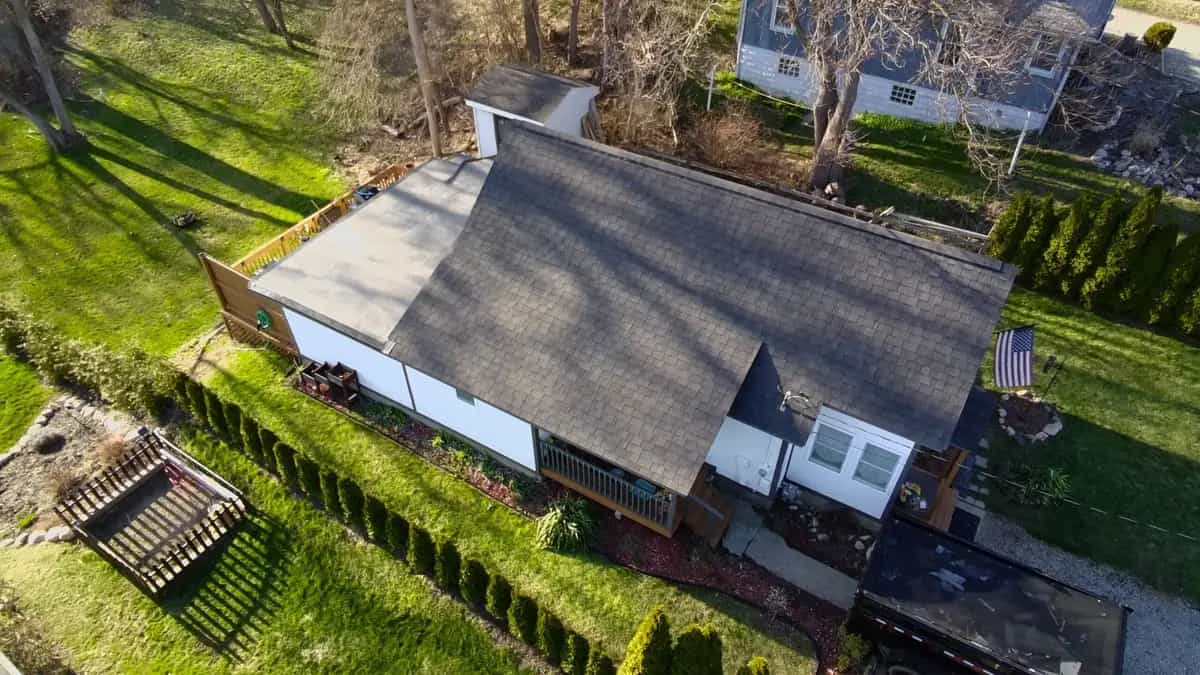
We install 6 feet of ice and water shield up from every eave, full coverage on any slope under 4:12, and membrane in every valley and around every penetration and wall intersection. Our job descriptions call it two rows at the eaves, and it is the same on every gallery job, including the Judy Lane roof in Shelby Township. The reason is Michigan-specific: on the 1950s and 60s ranches we work on, ice dams routinely build several feet up the slope, and meltwater backs up behind the dam farther than that. The ice dam guide explains why those houses get hit and why attic air sealing and ventilation are the permanent fix. The membrane is the insurance for the years before the attic gets fixed, and 6 feet is where the water actually is. Ask any contractor quoting your roof exactly how many feet of ice and water are in the price, measured from the eave edge.
What does synthetic underlayment add to the cost?
On a Roofing Army quote, nothing, because there is no felt option to compare against. Synthetic underlayment, cap nails and 6 feet of ice and water shield are in every one of the five packages we quote, from the base package up. We do not sell a felt-and-staples version of the roof, so there is no delta to show you. Where you will see a difference is between our quote and a low bid that lists "felt underlayment" or does not list the underlayment at all; that bid is cheaper partly because the layer under the shingles is cheaper, and you will not see the difference until a February thaw.
For what the whole roof costs, look at real invoices in the job gallery, for example 3719 Hi Crest Drive in Lake Orion, 2,646 square feet for $16,405.48, or read our Michigan roof replacement cost guide. Every price includes the underlayment system described here, no deposit, a project manager on site all day, and a 50-year workmanship warranty, which is only possible because we control every layer under the shingle (see the warranty page).
What to ask any roofer about underlayment
- Is it synthetic or felt, and which product? A brand and product name should be on the quote.
- Cap nails or staples? If the answer is staples, or a shrug, that tells you how the rest of the roof will be done.
- How many feet of ice and water shield from the eave edge? Code minimum is 24 inches inside the wall line. We install 6 feet.
- Is ice and water in the valleys and around penetrations? It should be.
- What is the low-slope plan? Anything under 4:12 should get full ice and water coverage or a doubled underlayment lap, which Atlas's instructions also call for.
- Does the underlayment qualify for the shingle system warranty? Atlas Summit 60 is a Signature Select component; using the matching underlayment is one of the requirements for the enhanced manufacturer warranty.
The underlayment is the part of your roof you will never see again once the shingles go on. That is exactly why it is where corners get cut, and exactly why we photograph it in your job portal before a single shingle is laid.
Sources: Atlas Roofing Summit 60 synthetic underlayment data sheet and installation instructions, Atlas product reference guide (Summit 180 exposure rating); Michigan Residential Code 2015 sections R905.1.1 and R905.1.2 and Table R905.1.1(3); Roofing Army installation standards and published job descriptions. Code and product terms change; verify current editions.
Frequently Asked Questions
Is synthetic underlayment better than felt?
Yes for a Michigan roof. Atlas rates its Summit 60 synthetic for 60 days of UV exposure and a temperature range of minus 40 to 240 degrees, states it will not buckle, warp or crack, and says it exceeds the performance of the felt standards ASTM D4869 and D226. Felt absorbs water, wrinkles, tears at fastener heads in wind and gets brittle in cold. We install synthetic on every roof.
Should roof underlayment be stapled or nailed?
Nailed with cap nails. Atlas's instructions for Summit 60 require plastic cap fasteners with a 1-inch minimum cap, 9 inches on center at the laps and 12 inches in the field. A staple has no head and lets synthetic underlayment tear over it in wind. Staples are not a code violation in Southeast Michigan, but they are the wrong fastener, and we never use them.
How far up the roof does ice and water shield need to go in Michigan?
The Michigan Residential Code requires the ice barrier to extend from the lowest edge of the roof to at least 24 inches inside the exterior wall line, and at least 36 inches along the slope on roofs 8:12 and steeper. On a typical house that is 3 to 4 feet of membrane. Roofing Army installs 6 feet up from every eave, plus valleys, penetrations and wall intersections, because Michigan ice dams routinely back water up farther than the minimum.
How much does synthetic underlayment add to a roof replacement cost?
On our quotes there is no separate charge, because synthetic underlayment, cap nails and 6 feet of ice and water shield are included in every package. Against a low bid that uses felt and staples, the difference is one of the reasons that bid is cheaper, and it is the first thing that shows up as a leak during a February thaw.
Does the underlayment affect the shingle warranty?
It can. Atlas Summit 60 is a qualifying component of the Atlas Signature Select system warranty, and GAF's WindProven warranty requires GAF roof deck protection as one of its four accessories. Using the manufacturer's underlayment with its shingles is part of what unlocks the enhanced coverage on every major brand.