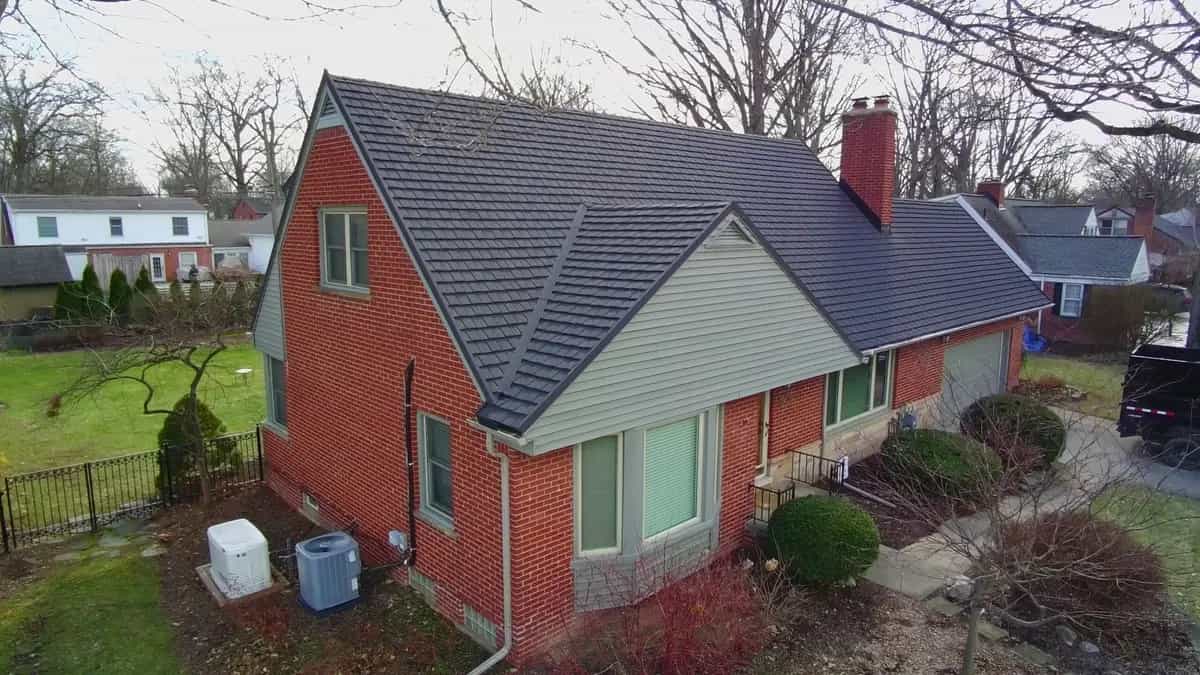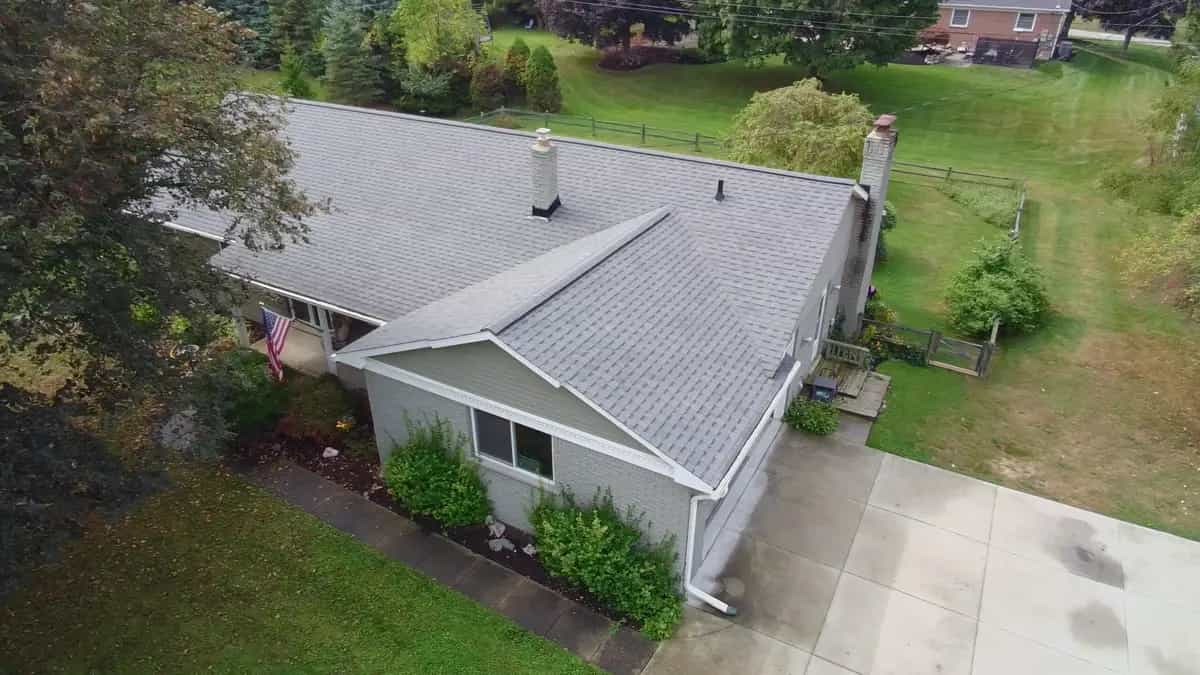
Atlas Pinnacle Burnt Hickory is a warm brown roof with a red undertone. From the street it reads as cinnamon to russet brown depending on the light, closer to the color of a red brick wall than to a chocolate brown, and up close the tabs mix tan, red-brown and dark brown granules. It is the brown we install most, almost always on brick homes, and the Atlas Burnt Hickory photo page shows every roof we have published in the color, with the price of each. Written by Aaron Scott, licensed Michigan residential builder and owner of Roofing Army, an Atlas Pro+ Diamond contractor.
What does Atlas Pinnacle Burnt Hickory look like on a real roof?
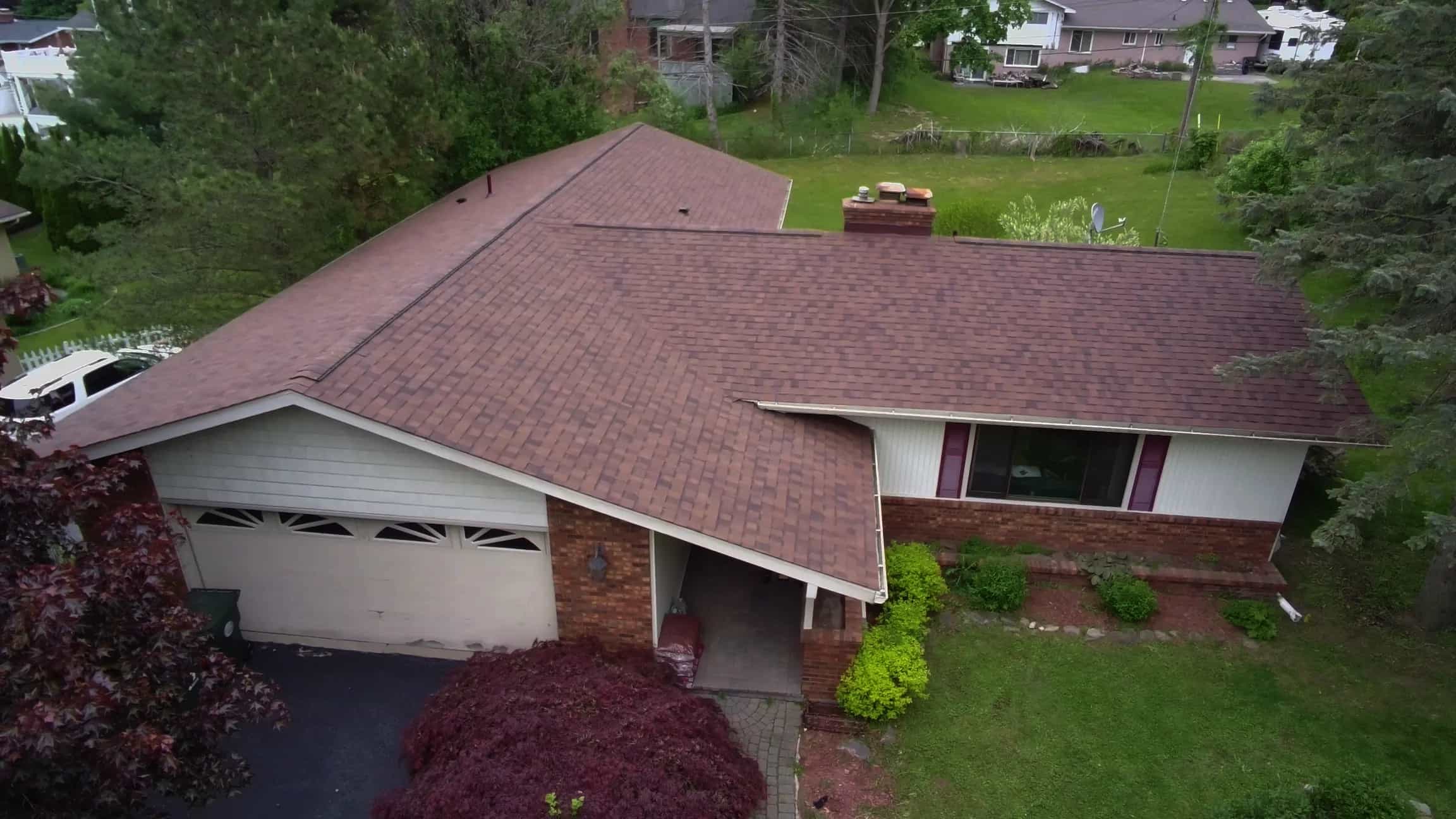
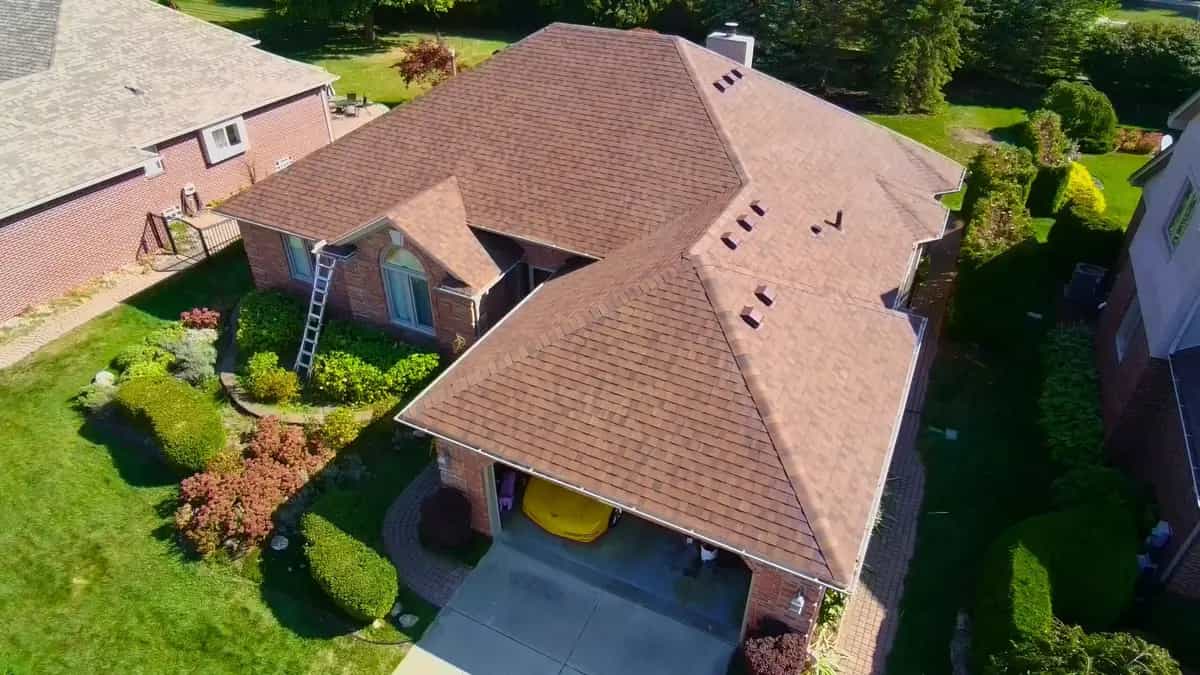
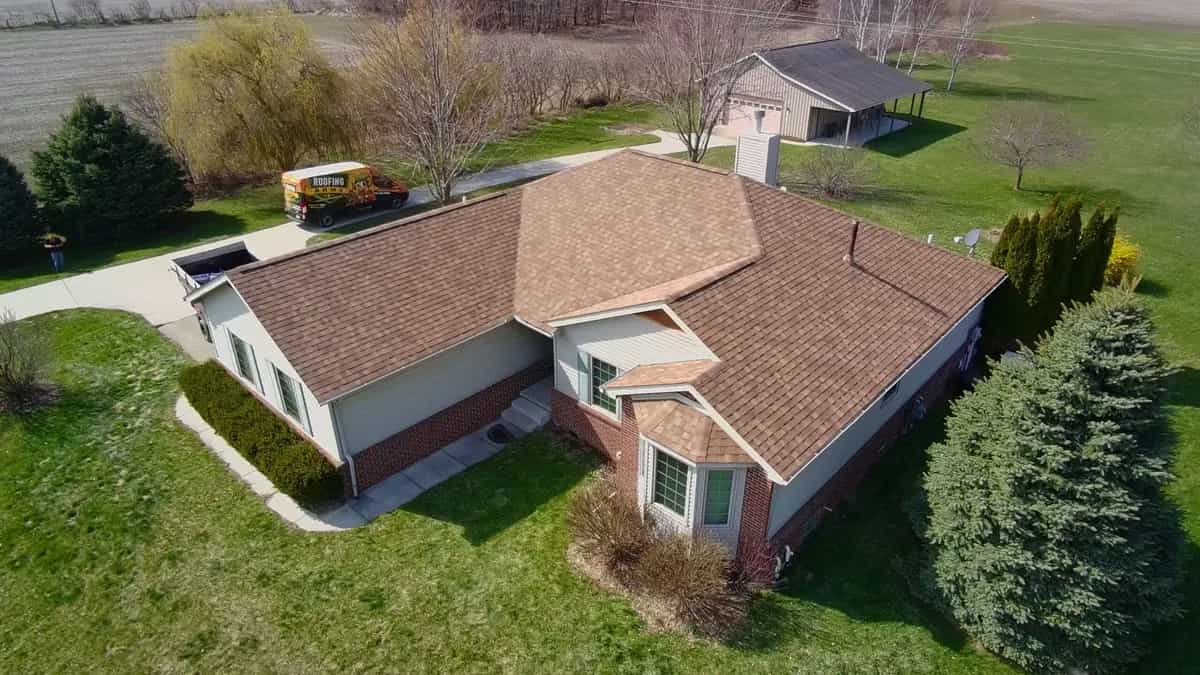
The word "hickory" makes people expect a gray-brown. Burnt Hickory is warmer than that. On the split-level at 3719 Hi Crest Dr in Lake Orion, photographed under an overcast sky, the roof reads as a deep russet brown, nearly the color of the red brick on the lower walls, with lighter tan tabs scattered through it. On the brick ranch at 48282 Sherringham Drive in Macomb, shot in full afternoon sun, the same shingle reads lighter and more orange-brown, with more contrast between the tan and dark brown tabs.
That swing between overcast and sun is the thing to understand about this color. It is the most light-sensitive of the three Atlas colors we install most, more than Pewter and far more than Black Shadow. Atlas does not publish a granule recipe for Burnt Hickory; these descriptions come from the drone photos of our own work. Atlas's advice matches ours: look at full size shingles in the light your house actually gets, because blends vary shingle to shingle.
What brick, siding and trim colors pair with Burnt Hickory?
Guidance, not a rule. A brown that fights the brick is the most common color mistake we see on Michigan streets.
- Red and orange brick is the natural home for Burnt Hickory. The roof picks up the red in the wall instead of competing with it; nearly all of our Burnt Hickory installs are on brick ranches and split-levels in Lake Orion, Shelby Township and Macomb Township.
- Cream, almond and light tan siding on the upper story, as on the Hi Crest house, lets roof and brick read as one warm family.
- Burgundy, dark green or black shutters and doors all sit comfortably against it; Hi Crest uses burgundy, which echoes the red in the blend.
- Where to be careful: pink-toned brick, and cool gray or blue siding. A red-brown roof over blue-gray walls rarely looks intentional; those houses usually want a gray roof, and we will say so at the estimate.
We only do the roof. Siding and exterior painting go to our referral partner The Exterior Painters (see our referral partners page). For HOA approvals, sample chips and matching a detached garage, our shingle color guide covers it.
How does Burnt Hickory compare with Atlas Weathered Wood and the other browns?
Atlas lists several browns and tans in the Pinnacle Pristine line: Weathered Wood, Chestnut, Rustic Highland, Tan Mist, and Copper Canyon from the Natural Expressions palette, which Atlas says looks like it "came directly from the rugged landscapes of the Old West." The one we install often enough to compare from experience is Atlas Weathered Wood, and the difference is simple: Weathered Wood is a gray-brown and Burnt Hickory is a red-brown. On red brick, Burnt Hickory blends in and Weathered Wood contrasts; on tan brick or beige siding, Weathered Wood is usually the safer choice. Both are on our shingle colors page, on real houses.
What are the closest GAF Timberline HDZ and Owens Corning Duration colors?
Brown is where cross-brand names are least reliable, so treat the table as a starting point for a sample comparison, not a match list.
| Line | Nearest colors | What the manufacturer says |
|---|---|---|
| Atlas Pinnacle Pristine | Burnt Hickory | No published blend description; 3M Scotchgard Protector; Lifetime Algae Resistance Limited Warranty with Atlas hip and ridge |
| GAF Timberline HDZ | Hickory, Barkwood, Shakewood | All three are among GAF's nine nationwide High Definition colors; GAF's 2026 Bold Definition color Chestnut Valley is described as its bolder take on Barkwood |
| Owens Corning TruDefinition Duration | Teak, Brownwood | Owens Corning describes Teak as a dark brown made from golden tan, warm brown and gray granules, and Brownwood as a dark warm brown |
GAF Hickory shares the word, not the blend, so do not assume it will match an Atlas Burnt Hickory garage. Of the Owens Corning names, Teak is the one homeowners most often bring us, and the gray in its granule mix means it reads cooler than Burnt Hickory on the same brick. We install GAF and Owens Corning on request and quote them against Atlas on the same five-option estimate; our Atlas vs GAF vs CertainTeed comparison and our Owens Corning vs GAF guide cover the warranty and nailing-zone differences.
Does a brown roof affect attic temperature in Michigan?
Brown is a mid-to-dark tone, so it behaves closer to black than to white in the research, and the research says color is a small lever in a cold climate. The Florida Solar Energy Center's 2000 test of six identical homes in Fort Myers measured the dark-shingle control attic at 40 degrees F above outdoor air at the summer peak, with highly reflective white roofs holding the attic at outdoor temperature. White shingles reflected 24 percent of sunlight against 8.2 percent for dark gray, yet saved only 3 to 5 percent on cooling. Oak Ridge National Laboratory measured a dark roof surface at more than 75 degrees F above the air on a sunny day versus about 5 degrees F for a highly reflective one.
The U.S. Department of Energy says reflective roofs save the most "in hot and warm climates" and that a cool roof "may increase the need for heating energy in winter." Atlas's own color guidance says darker colors may be more energy efficient in cold climates. Our position, from the attics we open on tear-off day across Oakland and Macomb County: the hot attics are the ones with no intake, soffits painted shut or insulation stuffed into the eaves, under light roofs and dark roofs alike. Fix the airflow and the color stops mattering, which is why a ventilation analysis comes with every estimate we write. Our attic ventilation page explains what we check, and our roof ventilation guide covers intake, exhaust and baffles.
How does Burnt Hickory age and resist algae streaks?
A brown blend sits in the middle for streak visibility: dark algae streaks show less than on gray or tan, more than on black. Pinnacle Pristine carries 3M Scotchgard Protector on every color, which Atlas describes as copper-containing granules, blended at a minimum of 10 percent, that release copper ions slowly to help prevent the black streaks caused by blue-green algae. Atlas backs it with a Lifetime Algae Resistance Limited Warranty, but only when the roof is finished with Atlas hip and ridge shingles that also carry Scotchgard Protector. Our Atlas quotes include that hip and ridge; a roof finished with generic ridge cap does not carry the algae warranty. On aging, old brown roofs we tear off have usually lost some of their red as surface granules thinned, drifting toward a flatter tan-brown; the shingles fail from heat and age, and heat in a Michigan attic is a ventilation problem before it is a color problem.
What have real Burnt Hickory roofs cost in Michigan?
Three Burnt Hickory roofs we installed, from our job gallery, where every project is published with its real price and drone photos. Each address links to the full project.
| Address | City | Roof size | Price | Per sq ft |
|---|---|---|---|---|
| 3719 Hi Crest Dr | Lake Orion | 2,646 sq ft | $16,405.48 | $6.20 |
| 48282 Sherringham Drive | Macomb | 3,362 sq ft | $16,500.00 | $4.91 |
| 53495 Hillside Dr | Shelby Township | 2,692 sq ft | $16,890.38 | $6.27 |
Reading the table: roof area, not living area; the last column is price divided by that area. All three landed within $500 of each other despite more than 700 square feet of difference in size, which says in numbers what the cost guide says in words: pitch, valleys, layers and decking move the price as much as area does. The Michigan roof replacement cost guide breaks down every factor, with local numbers for Lake Orion, Macomb Township and Shelby Township.
See Burnt Hickory on brick before you commit
Open the Atlas Burnt Hickory photo page, find the house with brick closest to yours, and look at it in both the overcast and the sunny photos. If it still looks right, book a free inspection: five written quotes at different price points with the shingle line and color named on each, no deposit, our own in-house crew, a project manager on site for the entire job, drone photos in your customer portal, and a 50-year workmanship warranty. How we build the roof is on our roof replacement page; every line we install is on our brands page.
Frequently Asked Questions
Is Atlas Burnt Hickory a red roof or a brown roof?
Brown, with a red undertone. From the street it reads russet to cinnamon brown depending on the light, close to the color of red brick, and up close the tabs mix tan, red-brown and dark brown granules. It is warmer than Atlas Weathered Wood, which is a gray-brown. See both on real homes on our shingle colors page.
What brick colors go best with Atlas Burnt Hickory?
Red and orange brick, which is where nearly all of our Burnt Hickory installs are. The roof picks up the red in the wall instead of fighting it. Be cautious with pink-toned brick and with cool gray or blue siding, where a gray roof like Atlas Pewter usually looks more intentional. This is general guidance; look at full shingles against your own wall first.
Does Atlas Burnt Hickory have algae protection?
Yes. Every Pinnacle Pristine color carries 3M Scotchgard Protector, copper-containing granules that Atlas says release copper ions slowly to help prevent black algae streaks. Atlas's Lifetime Algae Resistance Limited Warranty applies only when the roof is finished with Atlas hip and ridge shingles that also carry Scotchgard Protector, so confirm that line is on your quote.
Will a dark brown roof make my attic hotter in Michigan?
Slightly, and it is not the thing to worry about. Florida Solar Energy Center testing measured a dark-shingle attic at 40 degrees F above outdoor air at the summer peak, but white shingles saved only 3 to 5 percent on cooling, and the Department of Energy notes reflective roofs can raise winter heating needs. In Michigan, intake and exhaust ventilation decides attic temperature far more than shingle color.