In a Michigan condominium, the master deed and bylaws decide who pays for the roof, not a general rule. If the roof is a general common element, the association pays from its reserve fund or a special assessment. If it is a limited common element or part of your unit, as in most site condos, you pay. I am Aaron Scott, licensed Michigan residential builder and owner of Roofing Army, and this is how it works for boards and unit owners. It is contractor guidance, not legal advice; have a Michigan condominium attorney read your documents before you act on a dispute.
Who Is Responsible for the Roof in a Michigan Condominium?
Michigan condominiums are governed by the Michigan Condominium Act, Public Act 59 of 1978. Four of its definitions decide your roof:
- Condominium unit. The portion of the project designed for separate ownership and use, as described in the master deed.
- Common elements. Everything in the project that is not a unit.
- Limited common elements. Common elements the master deed reserves for the exclusive use of fewer than all co-owners. Decks and patios are typical; some master deeds put a building's roof here too.
- General common elements. All common elements that are not limited.
The master deed is the recorded document that creates the project, with the bylaws and subdivision plan attached. The Act requires it to say which units each limited common element serves and to give every unit a percentage of value, its share of common expenses. Pull the recorded master deed and read the article listing the common elements and the bylaw article assigning maintenance, repair and replacement.
In most attached Michigan condos the roof is a general common element, the association replaces it, and every unit pays by percentage of value. The Act's default for a limited common element runs the other way: unless the documents say otherwise, its repair and replacement cost is specially assessed to the unit or units it serves. Plenty of master deeds override that default for roofs, which is why your own documents matter more than any article.
Does It Matter If You Live in a Site Condo, an Attached Condo, a Townhouse or an HOA?
Yes, and the sign at the entrance does not always match the legal structure:
- Attached condominium. Several units under one roof, with the unit defined as the interior. The roof is almost always a common element the association replaces, building by building, on one contract.
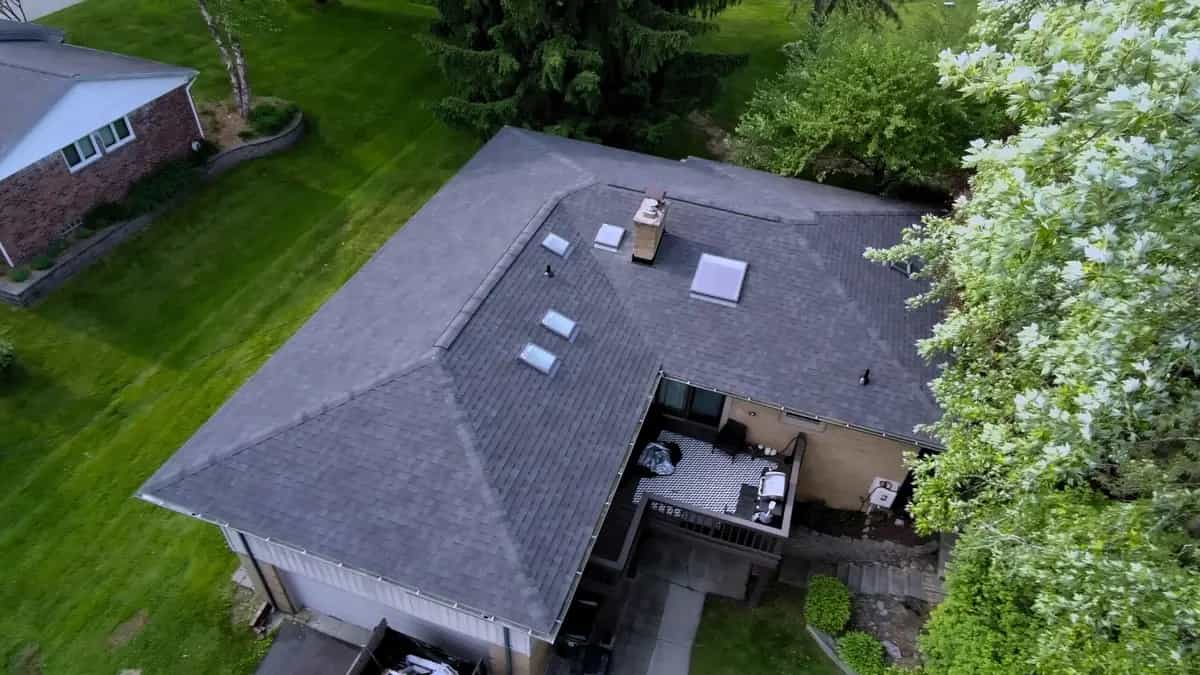
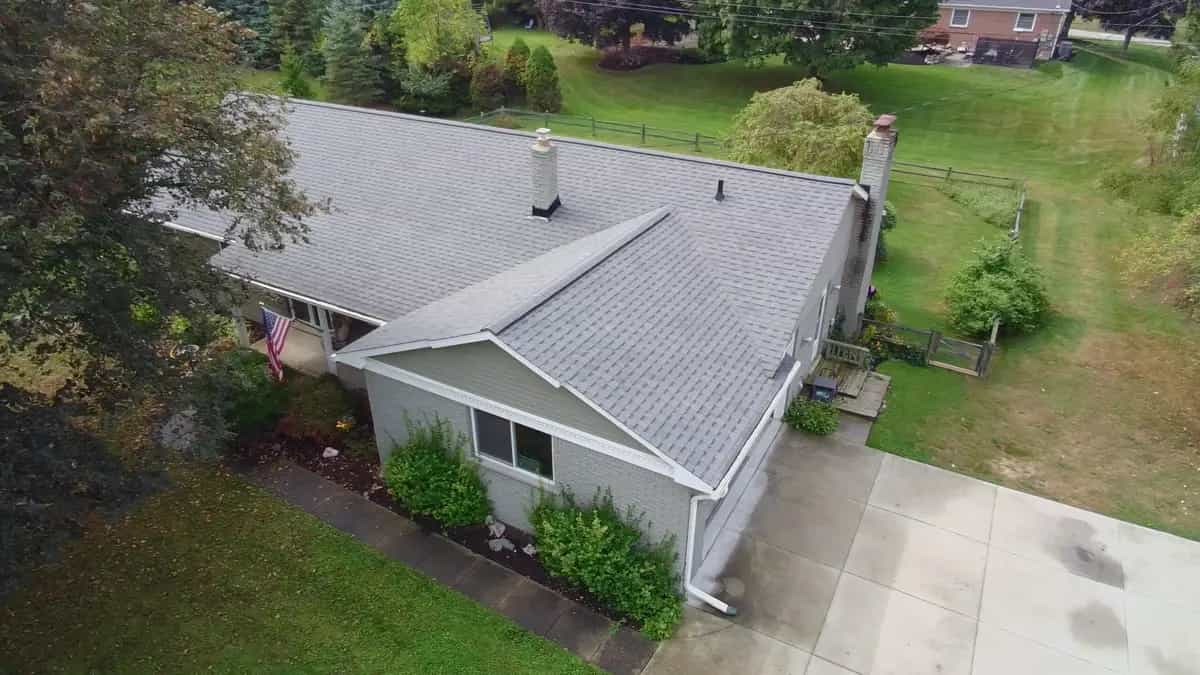
- Site condominium. Detached homes on a condominium plan instead of a platted subdivision. Each unit is a parcel of land plus the air above it. The co-owner typically owns, insures and replaces the house and its roof; the association handles private roads, the entrance and open space.
- Townhouse. Either a condominium unit, so everything above applies, or a fee-simple home on its own lot with a party wall. Your deed says which. Fee-simple townhouses usually leave the roof to each owner, but the declaration can require matching materials and colors.
- Single-family HOA. Michigan has no standalone HOA statute; a subdivision association runs on its recorded declaration and bylaws, with the Nonprofit Corporation Act covering corporate housekeeping if it is incorporated. The roof is yours, but the declaration can restrict color and material and may require architectural approval first.
Who Handles What on a Condo Roof?
This is the arrangement we see most often.
| Component | Attached condo (typical) | Site condo or HOA (typical) |
|---|---|---|
| Roof deck (sheathing) | Association, general common element | Homeowner |
| Shingles and underlayment | Association | Homeowner, often from an approved color list |
| Flashing (chimney, wall, pipe boots) | Association | Homeowner |
| Skylights | Varies; often the co-owner if it was an owner upgrade or is a listed limited common element | Homeowner |
| Gutters and downspouts | Association | Homeowner |
| Attic ventilation | Association, as part of the roof system | Homeowner |
| Interior damage from a leak | Co-owner's HO-6 for contents and upgrades; drywall and finishes depend on the bylaws' casualty article and the cause | Homeowner's policy |
The master deed overrides every row of this table. If your documents say the roof over Building 4 is a limited common element assigned to Units 12 through 15, those four owners pay.
Gutters are usually replaced with the roof; we do not install them, and our referral partner Ackerman Seamless Gutters works under its own agreement with the association. Ventilation is the item most often missing from a condo bid, so we run an attic ventilation analysis on every building we price.
How Do Condo Associations Pay for a Roof Replacement?
Two sources: the reserve fund and a special assessment. The Act requires every association to maintain a reserve fund for major repairs and replacement of common elements, and Michigan's condominium administrative rules set the floor at 10 percent of the association's current annual budget, noncumulative, spendable only on major repairs and replacement of common elements. The same rule requires the bylaws to warn that this minimum may be inadequate, and for a roof it almost always is.
That is where a reserve study comes in. It has two halves: a physical analysis, where someone inspects the components the association is responsible for and estimates remaining life and replacement cost, and a financial analysis that turns those numbers into a funding plan. Michigan does not currently require one. A House bill introduced in April 2026 would add a reserve study requirement to the Act, but as of this writing it has not moved past committee. Michigan condo attorneys commonly recommend an update every 3 to 5 years.
When the reserve does not cover the job, the board levies a special assessment, a one-time charge spread across the units by percentage of value, with the approval procedure set by the bylaws. In a site condo or HOA, where the roof is yours, our roof financing works the same as on any single-family home.
How Does a Condo Board Roof Project Usually Run?
- Inspect every building, not a sample. The roofs went on the same year, but exposure, trees and attic ventilation make them wear differently. Each building gets priced on its own condition.
- Bid one written scope. The mistake is comparing bottom lines on different scopes. Write the scope first (tear-off, deck price per sheet, ice and water shield in feet, underlayment, ventilation, flashing, warranty years) and make every bidder price that list. Our guide on comparing roofing quotes covers the line items.
- Sign one contract with the association. Owners do not pick their own shingle or pay the roofer directly.
- Lock one shingle and one color. Most bylaws require a uniform exterior, and the Act bars a co-owner from changing the exterior appearance of a unit or any other part of the project except as the documents allow. Choose one manufacturer, line and color, record it in the minutes, and keep the spec on file so later buildings match (our shingle colors on real homes page helps).
- Phase by condition. Phasing works when buildings are ranked by condition, the spec is locked, and the contract says how later phases are priced. It fails when the worst buildings get pushed back to spread cost evenly.
- Permits. The contractor should pull the permit for the association and include the fee in the bid; our Michigan roof permit guide covers what communities require and charge.
What Can a Unit Owner Do About a Leak Over Their Own Unit?
- Notify the board and property manager in writing the same day, and photograph everything. A common element roof is the association's to repair, and its response clock starts when it knows.
- Call your HO-6 insurer. Your policy is usually the first stop for contents, upgrades and finishes; the master policy typically covers the roof and structure. After a storm the association files on the master policy; our storm damage team meets the adjuster.
- Do not open a common element yourself. Cutting into the association's roof without approval breaches the documents and can jeopardize the roof's warranty. If the board will not act, the remedy is the bylaws' dispute process and eventually an attorney, not a ladder.
- Ask the board to authorize a tarp. We provide same-day emergency tarping and roof repair under the association's authorization, so nobody waits for a replacement vote while the ceiling drips.
Two leak sources keep coming up on attached buildings: ice dams at north-facing eaves, covered in our ice dam guide, and owner-added skylights that nobody now claims; see our skylight leak guide.
What Should a Board Ask a Roofer Before Signing?
- What is your Michigan residential builder license number? (Ours is 262400936; verify any number at michigan.gov/lara.)
- Can we have liability and workers compensation certificates naming the association?
- Will you inspect and price every building separately, with photos?
- Who is our single point of contact, and is that person on site every day?
- What is the deck replacement price per sheet, in writing, before work starts?
- How many feet of ice and water shield at the eaves, and what goes in valleys and around penetrations?
- Is the ventilation plan for each building in the bid?
- Are the manufacturer and workmanship warranties in the association's name, and for how many years?
- Do you require a deposit?
For the single-family version, see questions to ask a roofer before you sign and what is included in a roof replacement quote.
How Does Roofing Army Work With Condo and HOA Boards?
- One project manager, on site every day. The board and property manager get one name and one number.
- Drone photos of every building, before and after. Our customer portal holds before, during and after drone photos of every job, so a board can show owners what their money bought.
- Five quotes at different price points. Every replacement we price comes with five written options, so a board can match shingle tier and scope to the reserve.
- Published prices. Every project we complete is in our job gallery with its real price. The single-family asphalt roofs there run roughly $6 to $10 per square foot of roof area, a sanity check before bids arrive; our Michigan roof replacement cost guide explains what moves that number.
- No deposits, in-house crews. The association pays when the work is complete and the board is satisfied, and the crew that tears off Building 1 is the crew that finishes Building 6.
- The same spec on every building. Full tear-off, 6 feet of ice and water shield at every eave, synthetic underlayment with cap nails, a ventilation analysis per building, and a 50-year workmanship warranty backed by Roofing Army.
We work with associations across Southeast and West Michigan, including Rochester Hills, Troy, Novi and Canton. If your board is preparing to bid a roof, start with a free inspection of every building. See how we build a roof on our roof replacement page, or read what customers say on our reviews page.
Frequently Asked Questions
Who pays for a new roof in a Michigan condo?
The master deed and bylaws decide. In most attached condos the roof is a general common element, so the association pays from its reserve fund or a special assessment and every unit contributes by its percentage of value. If the documents make the roof a limited common element, the Michigan Condominium Act's default is that the unit or units it serves pay, unless the documents say otherwise.
Can a condo association make me pay a special assessment for the roof?
Yes, if the roof is a common element and the bylaws allow it, which nearly all do. A special assessment is a one-time charge spread across the units, usually by percentage of value, with the approval steps set by the bylaws. The Act also says a co-owner cannot avoid contributing by not using a common element or by abandoning the unit.
Does Michigan require condo associations to have a reserve study?
Not as of October 2026. Michigan requires a reserve fund of at least 10 percent of the association's annual budget for major repairs and replacement of common elements, and the rule itself warns that this minimum may be inadequate. A reserve study is recommended, typically every 3 to 5 years, and a 2026 House bill would make one mandatory, but it had not advanced past committee when this was written.
Can I hire my own roofer to fix a leak over my condo unit?
Not on a roof that is a common element. You can repair what you are responsible for inside your unit, but opening the association's roof without approval breaches the documents and can jeopardize the roof's warranty. Notify the board and manager in writing, call your HO-6 insurer, and ask the board to authorize a tarp or repair right away.
Who pays for the roof in a site condominium?
Usually the co-owner. In a site condo the unit is the land and the home on it, so the owner typically insures and replaces the house and its roof, while the association maintains roads, the entrance and common open space. Confirm it in your master deed, and check the bylaws for any approved shingle colors before you order material.