On the evening of Friday, July 3, 2026, a line of thunderstorms ran across Metro Detroit with what the National Weather Service Detroit/Pontiac office called "widespread 60 to 70 mph thunderstorm wind gusts" that "had an outsized impact on Metro Detroit and Ann Arbor." NWS logged measured gusts of 62 mph at Oakland County International Airport, 63 mph at Detroit Metro Airport and 63 mph in Chesterfield, and says nearly 400,000 Southeast Michigan utility customers lost power at the peak, over the holiday weekend. Nearly three months later, this is the storm behind a lot of the "it only started leaking in September" calls we are getting. Written by Aaron Scott, licensed Michigan residential builder and owner of Roofing Army, this guide covers where the wind hit, what it does to shingles, what to check, and how the claim window works if you have not filed yet.
Where did the July 3 wind storm hit in Oakland, Macomb and Wayne counties?
The NWS Detroit/Pontiac event summary logs no hail and no tornadoes for July 3. It was a straight-line wind event, and the storm report list for our service area runs west to east in about an hour:
| Time (EDT) | Location | County | Report |
|---|---|---|---|
| 5:59 p.m. | Willow Run Airport | Wayne | Measured 59 mph gust |
| 6:06 p.m. | Plymouth Township | Wayne | Multiple trees and power lines down across the township |
| 6:23 p.m. | Wayne | Wayne | Numerous large trees and wires down |
| 6:26 p.m. | Detroit Metro Airport | Wayne | Measured 63 mph gust |
| 6:36 p.m. | Oakland County International Airport | Oakland | Measured 62 mph gust |
| 6:48 p.m. | Berkley | Oakland | Numerous large trees down, some on homes and vehicles |
| 6:49 p.m. | Royal Oak | Oakland | Numerous large trees and wires down |
| 7:13 p.m. | Chesterfield | Macomb | Measured 63 mph gust (handheld anemometer) |
Marine stations on the Detroit River and Lake St. Clair measured 58 mph at the Grosse Pointe Yacht Club and 64 mph at Peche Island Light. The Storm Prediction Center's preliminary report list for July 3 carries the same 62 mph Oakland County Airport and 63 mph Chesterfield and Detroit Metro readings. The airports are the only places with calibrated anemometers; the tree damage in Plymouth, Berkley and Royal Oak tells you the same winds ran through the neighborhoods between them, which means Canton, Livonia, Northville, Ferndale, Huntington Woods, Troy and the Macomb Township and Shelby Township corridor all sat under the same line.
What do 60 to 70 mph winds do to a shingle roof?
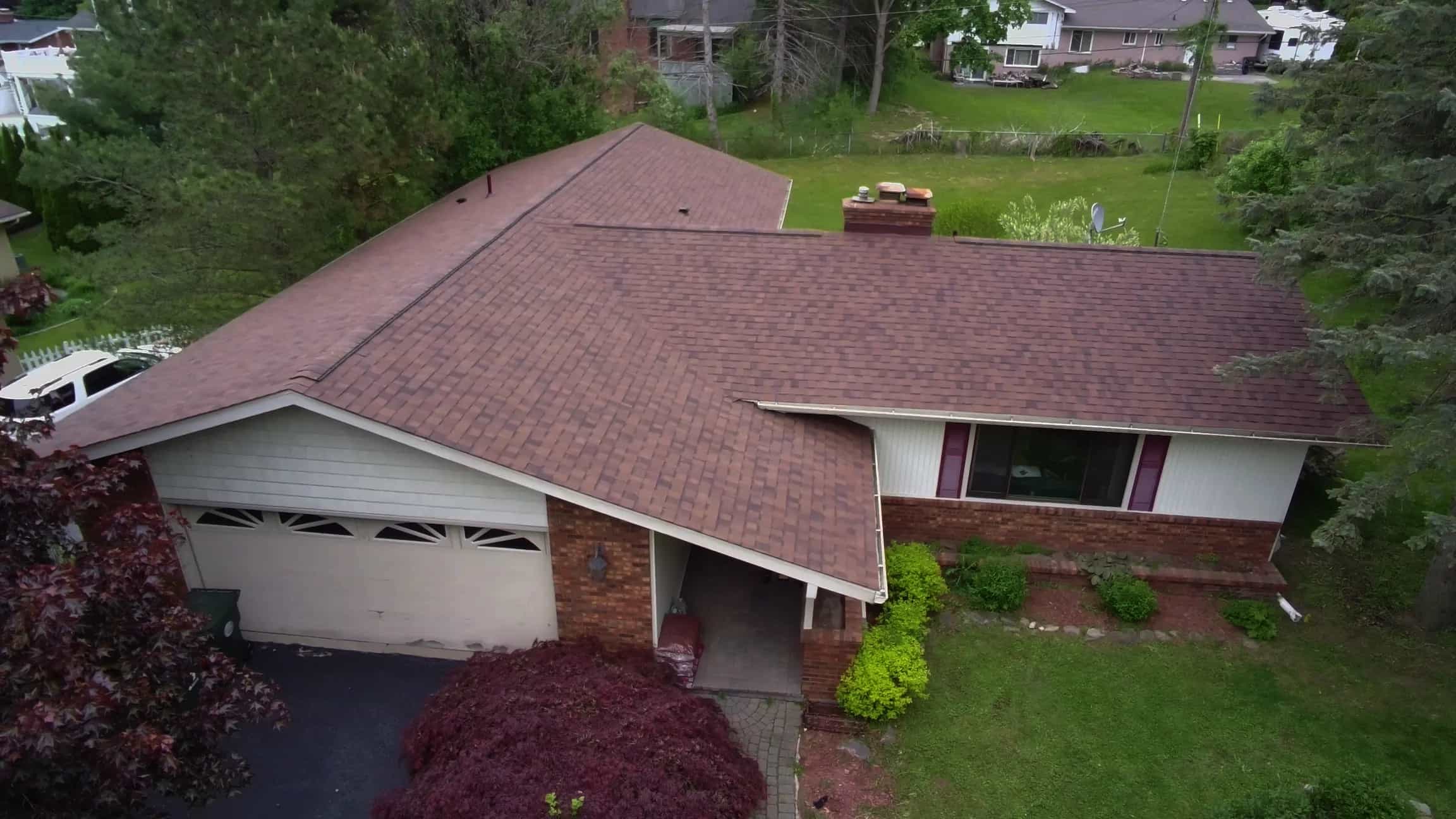
The National Weather Service severe thunderstorm threshold is 58 mph, and every measured gust above came in over it. The NWS Brownsville office's straight-line wind explainer is candid about what that means: at 58 mph most homes do not suffer structural damage, but damage from trees and power lines is common, and at 70 to 80 mph "significant exterior damage can occur, such as damage to roofs, awnings and siding." On the Beaufort scale NWS publishes, a 55 to 63 mph wind is Force 10: "trees uprooted; considerable structural damage occurs."
What that translates to on asphalt shingles, based on what we have found on Berkley and Plymouth roofs since July:
- Creased tabs. The wind lifts a tab, folds it back, and drops it. From the ground it lies flat again. The crease is a fractured mat that opens up a little more with every freeze and thaw, which is why July creases become December leaks.
- Broken seal strips along the windward slopes. On roofs past about ten years, the factory sealant has hardened and does not re-bond. Those tabs now lift in 30 mph wind.
- Missing ridge caps and hip caps. Highest point, highest load, first to go. Look at the ridge line against the sky.
- Limb strikes. The Berkley report of trees "on homes and vehicles" is the visible kind. The invisible kind is a limb that hit, bounced, cracked shingles and dented the deck, and left a scuff you cannot see from the yard.
- Vents, flashing and gutters. Box vents rocked loose, chimney counter-flashing pulled out of the mortar joint, gutters twisted at the hangers.
What should you check on your roof now, almost three months later?
If you did not get up there in July, it is not too late, but the checklist changes a little because water has had a season to work.
- Ceiling stains and paint bubbling, especially near exterior walls, around chimneys, and below bathroom fans. Late-summer thunderstorms will have found any July crease by now.
- The attic after a hard rain. Bring a flashlight. Look for dark water tracks on the rafters, damp insulation, and daylight at the deck.
- The ridge line and the windward slopes from the street with binoculars. Missing caps, lifted tabs, exposed underlayment.
- The yard and gutters. Tabs and ridge cap pieces may be long gone, but a stripe of granules at the downspout outlets stays.
- Your photos from July. If you took any of the tree damage or the yard, keep them. They establish the date of loss.
- Anything still on the roof. If a limb is still resting on it, call for emergency tarping and an inspection before the next storm moves it.
Can you still file an insurance claim for July 3 storm damage?
In most cases, yes, but check your policy now. The deadline to report a loss and the deadline to file suit are both written into the conditions section of your policy, and they vary by carrier; some are about a year from the date of loss, some longer. With a July 3 date of loss, a one-year window would run into early July 2027, and that is not a lot of time once you subtract the inspection, the adjuster visit, and any dispute. The Michigan Department of Insurance and Financial Services (DIFS) is the authority here, and its guidance is the same in every storm release: notify your agent or insurer immediately after a loss, photograph or video the damage before repairs, make only temporary repairs and keep the receipts, and contact your insurer before you hire a contractor. DIFS also says a homeowners policy covers the portion of the roof that was damaged and the insurer is not required to replace the whole roof, and that there is no time limit on the insurer to finish its investigation, so stay in contact and call DIFS at 877-999-6442 if the delay seems unreasonable.
We laid out the whole process in how to file a roof insurance claim in Michigan and covered the coverage questions in does insurance cover roof replacement in Michigan. The short version: a late claim with dated photos and a contractor's written inspection is a normal claim. A late claim with nothing but a wet ceiling is a fight.
What does the Roofing Army free storm inspection include?
Our Plymouth office sits in the middle of the July 3 wind path, and our Rochester Hills and Oxford offices cover the rest of the line. A recent 1,567 square foot Berkley roof at $13,968.47 gives you a real number if it turns out you need one. The inspection is free, no obligation, and includes:
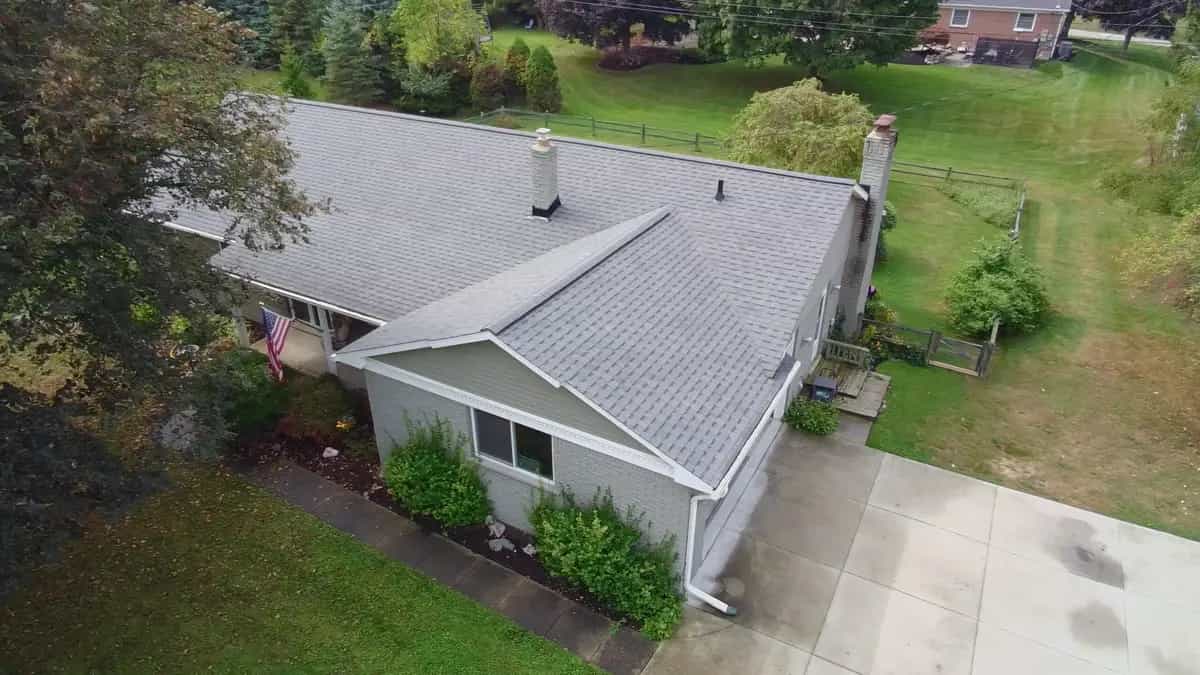
- Drone photo documentation of every slope, timestamped and uploaded to your job portal, so the creases and lifted tabs are on record whether you file now or later.
- A written damage summary with photos of each finding and a straight answer on repair versus replacement versus nothing.
- We meet your adjuster on site. A roofer on the roof with the adjuster, pointing at creases and broken seals, is the difference between a denied "wear and tear" finding and an approved wind claim.
- Same-day emergency tarping for active leaks, with the receipt DIFS tells you to keep.
- A project manager on site for any storm damage repair or replacement that follows, no deposit required.
We will also tell you when a roof is fine. Plenty of them are. The ones that worry us are the 12 to 20 year old roofs on the windward side of the July 3 line that nobody has looked at since, because those creases do not heal.
Frequently Asked Questions
How strong were the winds in Metro Detroit on July 3, 2026?
The National Weather Service Detroit/Pontiac office documented widespread 60 to 70 mph thunderstorm wind gusts, with measured readings of 62 mph at Oakland County International Airport, 63 mph at Detroit Metro Airport, 63 mph in Chesterfield, and 59 mph at Willow Run. Nearly 400,000 utility customers lost power at the peak.
Was there hail or a tornado on July 3, 2026 in Metro Detroit?
No. The NWS event summary for July 3, 2026 lists no hail reports and no tornadoes. It was a straight-line wind event, and the roof damage from it is wind damage: creased and lifted shingles, broken seal strips, missing ridge caps, and limb strikes.
Is it too late to file a claim for July 2026 wind damage?
Usually not, but check your policy today. Reporting and suit deadlines are set by your policy's conditions section and vary by carrier; some run about a year from the date of loss. Michigan DIFS advises notifying your insurer immediately once you know of damage and documenting it with photos before repairs. Dated drone photos and a written inspection make a late claim a normal claim.
Why would a roof that survived July start leaking in the fall?
Wind creases the shingle mat without tearing the tab off. The crease looks flat and dry in July, then expands with heat, rain and the first freezes until water gets through. Broken seal strips work the same way: the tab lies down after the storm but lifts in every later wind, driving rain under it. This is the most common wind damage we find and it is not visible from the ground.
What does a free storm inspection from Roofing Army involve?
Drone photos of every slope, a written summary of creased or lifted shingles, broken seals, impact marks and flashing damage, and an honest repair-or-replace-or-nothing recommendation. If you file, we meet your adjuster on the roof. If there is an active leak we tarp it the same day. There is no charge and no obligation.