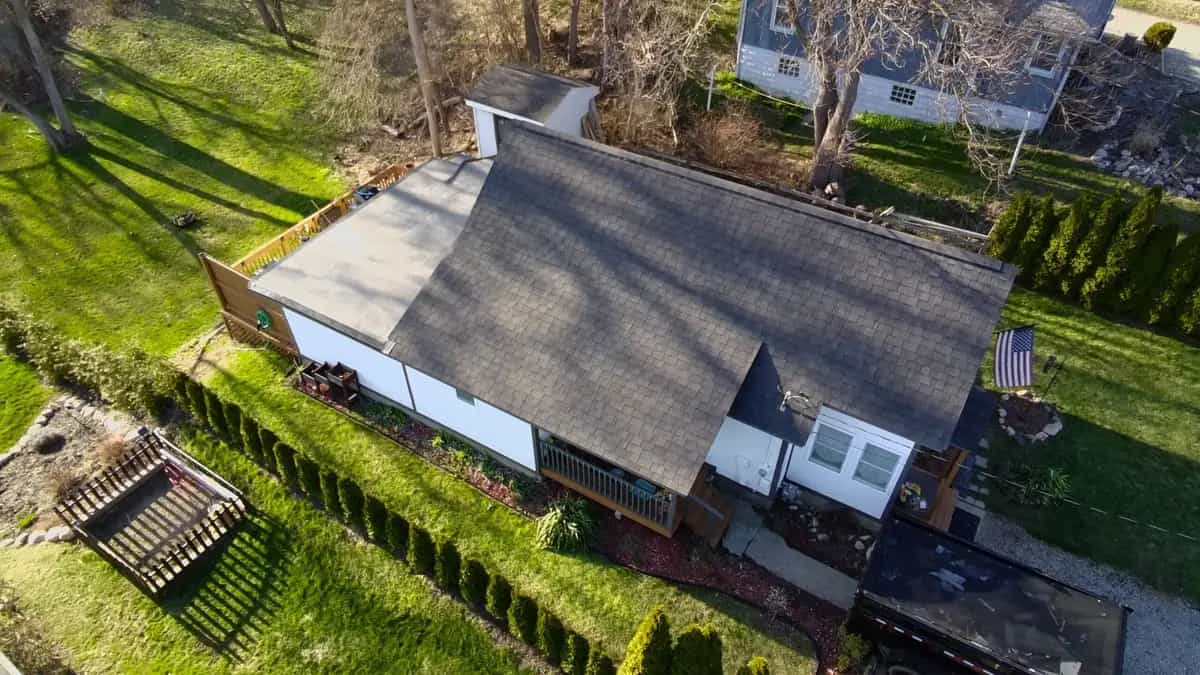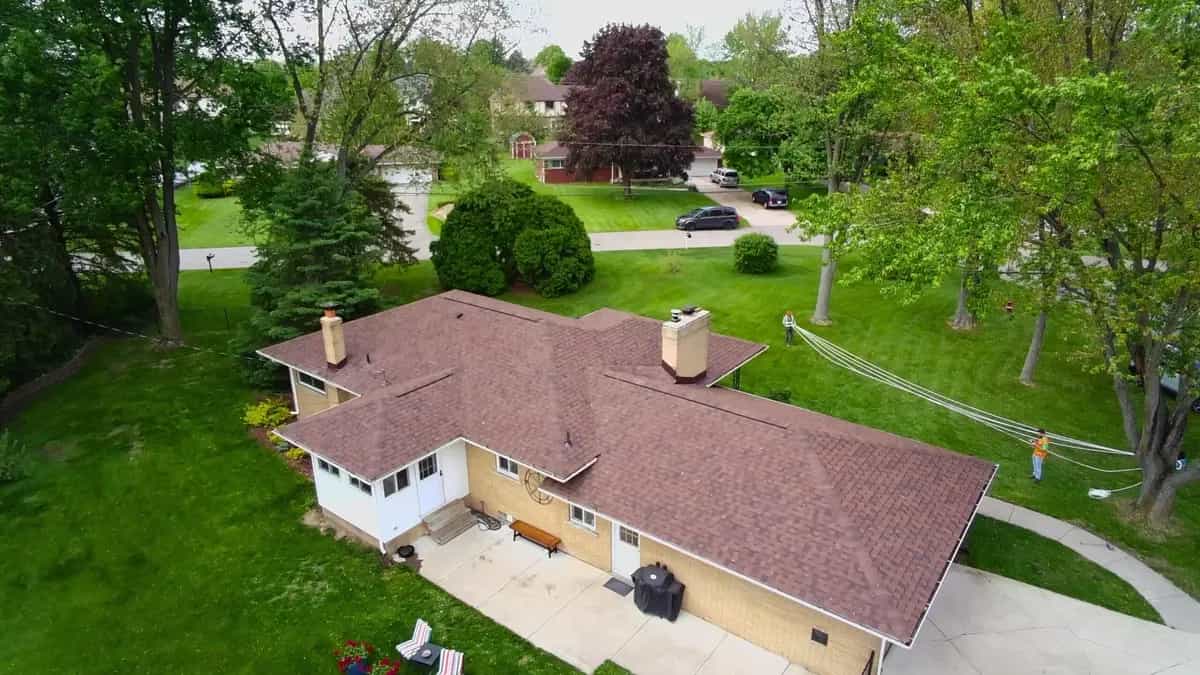
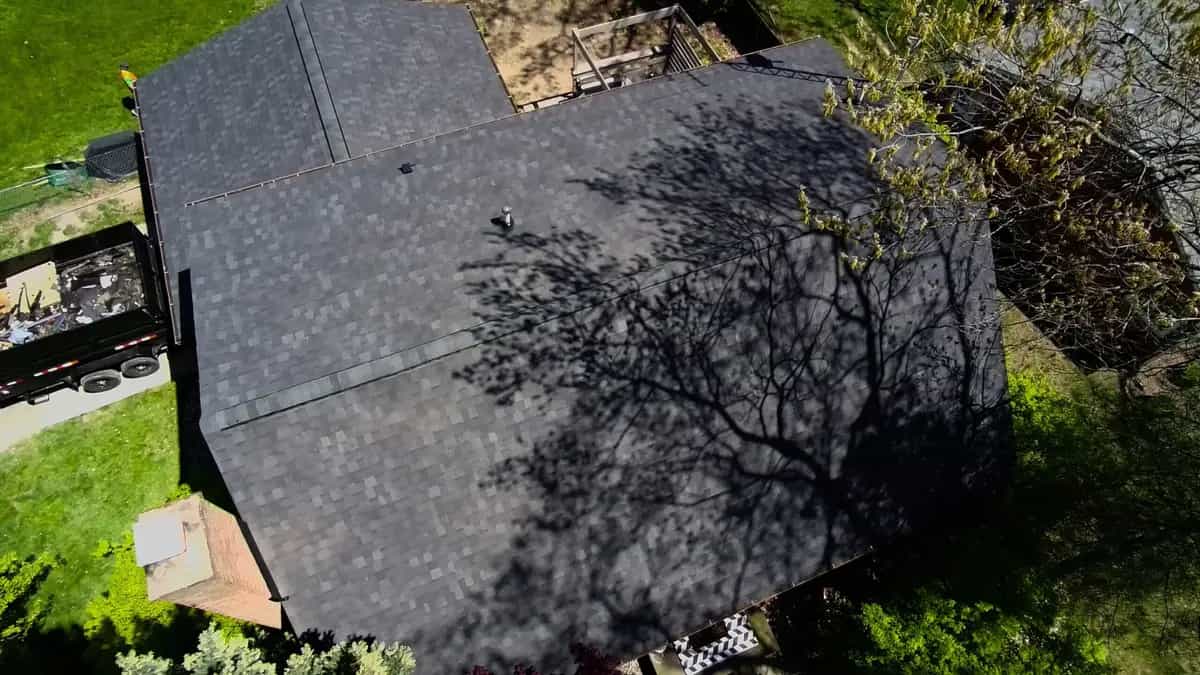
Adjusters identify hail damage by bruises and fractures in the shingle mat, counted inside 10 foot by 10 foot test squares on each slope, and confirmed by dents in soft metals like gutters and vents. They identify wind damage by creased, lifted, torn, or missing shingles with broken seal strips, usually concentrated on the slopes facing the storm. Both are covered perils; the argument is whether the marks are storm damage or wear. I'm Aaron Scott, a licensed Michigan residential builder and owner of Roofing Army, and our inspectors document both kinds of damage on Southeast Michigan roofs every storm season.
How Are Hail and Wind Damage Different on a Shingle Roof?
| Hail damage | Wind damage | |
|---|---|---|
| Primary sign | Bruises and fractures in the shingle mat, granule loss in a round spot | Creased, lifted, torn, or missing shingles; broken seal strips |
| Where it shows | Randomly across a slope, heavier on the slope facing the storm | Edges, rakes, ridges, and the windward slope; often in rows |
| Supporting evidence | Dents in gutters, vents, flashing, screens, AC fins, mailboxes | Debris, downed limbs, neighbors' missing shingles, shingles in the yard |
| How it is measured | Hits counted per test square, extrapolated to the slope | Damaged shingles located and counted per slope |
| Commonly confused with | Blisters, foot traffic scuffs, manufacturing defects | Thermal cracking, nail pops, improper installation |
What Is a Hail Test Square?
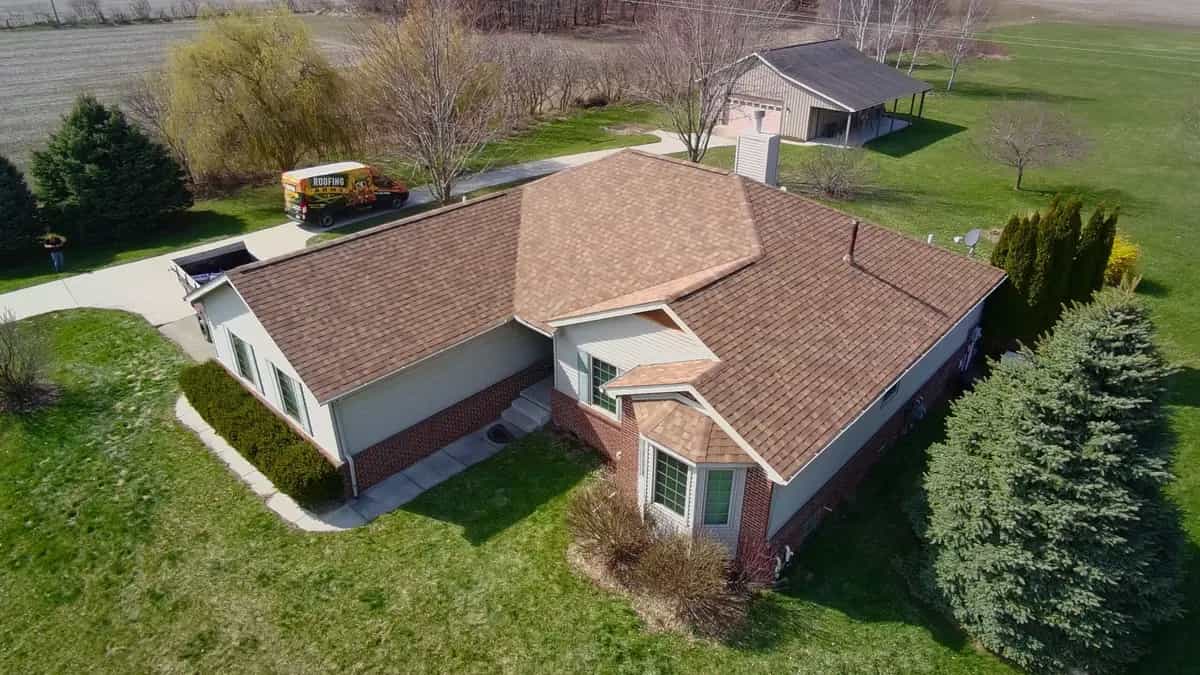
The test square is the standard method for quantifying hail damage on a shingle roof. According to Haag, the engineering firm whose hail assessment protocol most adjusters follow, a test square is a 10 foot by 10 foot area, one roofing square, drawn on each directional slope, avoiding overhanging trees and areas of concentrated foot traffic where possible. The inspector examines every shingle inside the square closely, including hand-manipulating the shingles to check for creases, breaks, soft spots, and bruising, and records the type and count of damage found.
The count is then extrapolated: the number of damaged shingles in the square multiplied by the number of squares on that slope gives an estimate of damaged shingles for the whole slope. Many carriers apply an internal threshold, often in the range of eight to ten qualifying hail hits per test square, to approve replacement of a slope rather than repair. That threshold is a carrier practice, not a rule, and it varies, so ask what standard your adjuster is applying.
What Does Hail Bruising Look Like?
A hail bruise is a spot where the impact fractured the fiberglass mat under the granules. From a distance it may look like a small dark circle of granule loss. Up close, the giveaway is tactile: press the spot with a thumb and it feels soft, like a bruise on an apple, because the mat underneath is broken. A fresh hit often shows exposed black asphalt with a shiny look, and the damaged area is round or slightly oval with no directional pattern, though hits tend to be heavier on the slope that faced the storm.
Adjusters distinguish true hail bruises from look-alikes, and so do we:
- Blisters are raised bumps from manufacturing or heat, often with a small crater and no soft mat underneath.
- Foot traffic and mechanical damage produce scuffs, scrapes, and crescent shapes rather than round bruises, often near walkways, satellite dishes, and chimneys.
- Age-related granule loss is uniform across the slope, heaviest in drainage paths, with no fracture in the mat.
Why Do Adjusters Check Gutters and Vents for Hail?
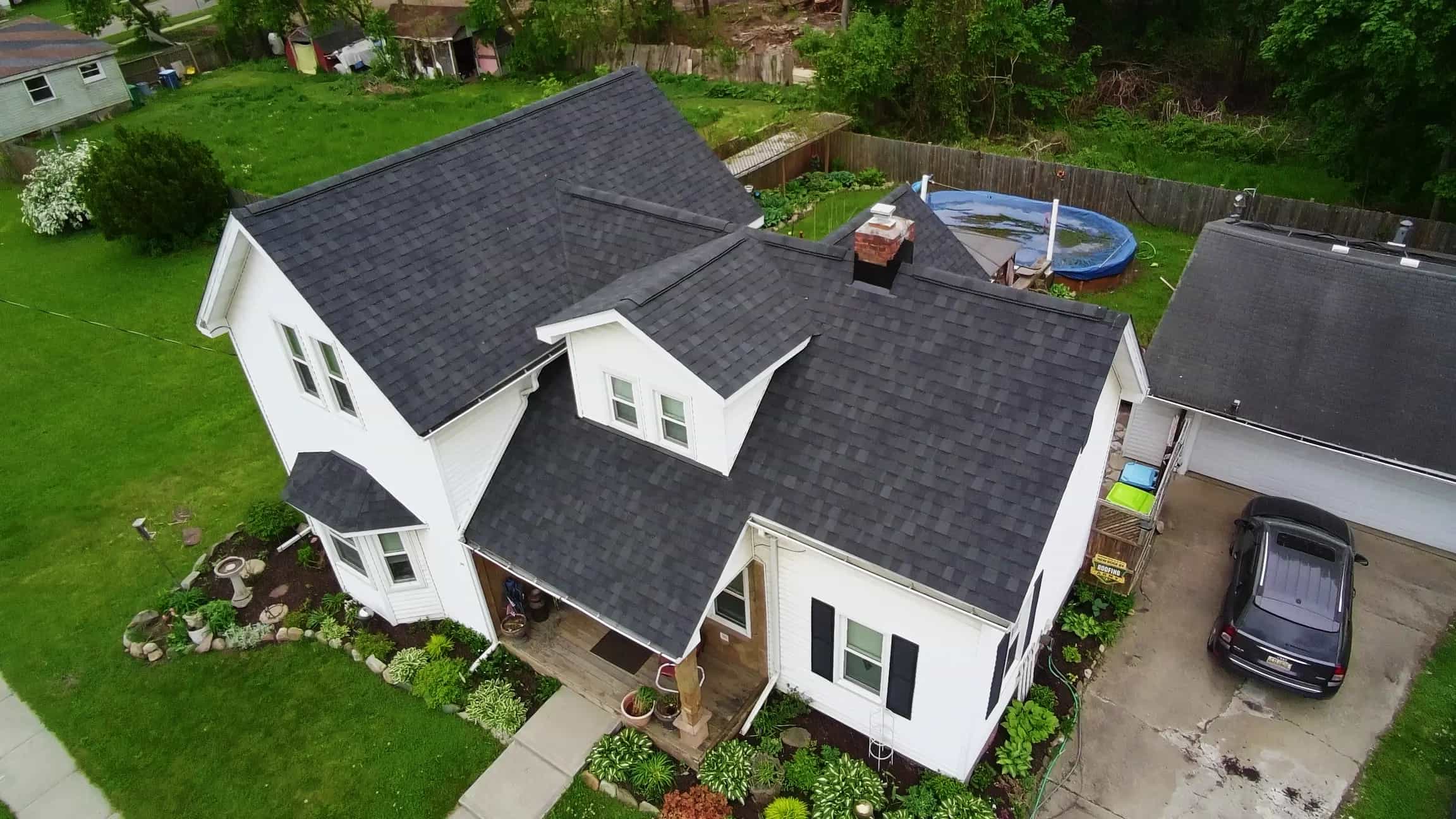
Because soft metals are the record of the storm. Hail large enough to bruise a shingle will dent aluminum gutters, downspouts, box vents, turtle vents, chimney flashing, window screens, and the fins on an air conditioner condenser. Adjusters use these collateral marks to confirm that hail of damaging size actually fell on this house, on this date, and from which direction. A roof with claimed hail damage and no dents anywhere on the property invites doubt; a roof with dented gutters on the north and west sides and bruised shingles concentrated on those same slopes tells a consistent story. We photograph every soft metal on the property before anyone looks at the shingles.
What Does Wind Damage Look Like to an Adjuster?
Asphalt shingles resist wind because of the factory seal strip that bonds each course to the one below it. According to the Insurance Institute for Business and Home Safety, its wind testing shows the strength of that seal is the most important factor in a shingle's high-wind performance. Once wind breaks the seal, the shingle can lift, flex, and crease. Adjusters look for:
- Creased shingles: a horizontal line across the shingle face where it folded back and cracked the mat. Invisible from the driveway; on the roof it shows as a faint line, often with lighter color where granules broke loose along the fold.
- Lifted or unsealed shingles: tabs that can be raised freely by hand because the seal strip failed.
- Torn and missing shingles: the obvious kind, usually along rakes, eaves, and ridges where wind pressure is highest.
- Directional pattern: damage concentrated on the slopes and edges that faced the wind, matching the storm's recorded direction.
- Collateral evidence: shingles or ridge cap in the yard, downed limbs, damaged fencing, and similar damage on neighboring roofs.
Wind damage is regularly missed from the ground and even from a ladder. The creases and broken seals that lead to future blow-offs require lifting shingles by hand, which is why we walk every slope rather than photograph from the driveway.
What Do Adjusters Decide Is Not Storm Damage?
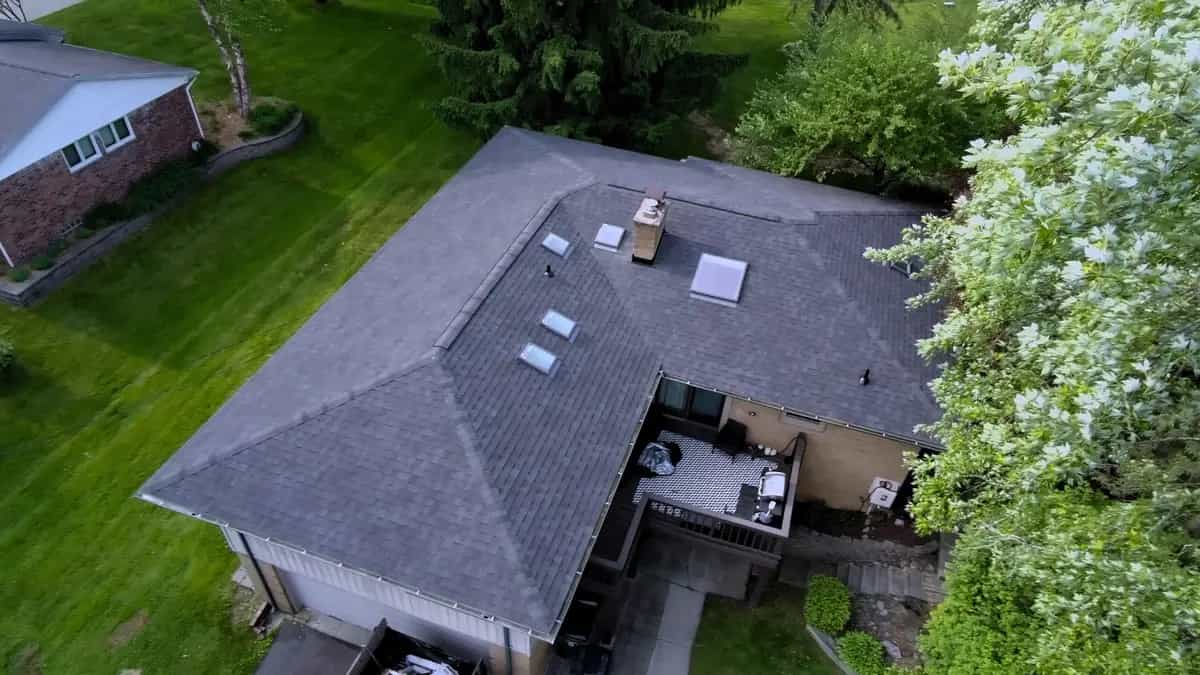
This is where claims are lost. Adjusters are trained to separate sudden storm damage from conditions that were already there:
- Thermal cracking and craze cracking from years of sun exposure.
- Nail pops and high nails from the original installation.
- Curling, cupping, and brittle shingles from age.
- Uniform granule loss with no mat fracture.
- Previous repairs that failed.
A roof can have both. An 18 year old roof with real hail bruises is still a storm claim for the storm damage; the age affects how the claim is valued, not whether it is covered. Our guide to whether homeowners insurance covers roof replacement in Michigan covers that distinction, and if the answer comes back as wear and tear, our guide to what to do when a Michigan roof claim is denied covers the appeal.
Why Does Documentation Decide the Claim?
Because the adjuster's report is the insurer's evidence, and your evidence has to be at least as good. On the roofs we inspect in Troy, Shelby Township, and Oxford, the documentation package looks like this:
- Drone overview of every slope, showing damage distribution and direction.
- On-roof close-ups of each test square with hits marked, and each creased or lifted shingle with a hand lifting it to show the broken seal.
- Soft metal photos with a reference for scale, on every side of the house.
- Ground and interior photos of debris, stains, and attic evidence.
- Storm date and direction from weather records, matched to the pattern on the roof.
All of it lives in the job portal, so the homeowner, our office, and the adjuster are working from the same photos. Then we meet the adjuster on site and walk the roof together, which is where most disagreements about what counts get settled before they become a denial. Full replacements on the roofs we document run in the range of our published prices, for example our $20,706 replacement at 40637 Malvern Drive in Sterling Heights and our $15,000 replacement at 11660 Lennry Avenue in Shelby Township, and every one is listed in our job gallery.
What Should You Do After a Hail or Wind Storm?
Stay off the roof, photograph what you can see from the ground, and get an inspection before you call the insurer so you know whether a claim is justified. If shingles are missing or the deck is exposed, emergency tarping protects the house and is usually part of the same claim. Our storm damage inspections are free across Southeast Michigan, and if the roof needs a full replacement, it is installed with a project manager on site every day, 6 feet of ice and water shield at the eaves, and no deposit. For the claim process itself, from the first call through supplements and final payment, read our step-by-step guide to filing a roof insurance claim in Michigan.
Frequently Asked Questions
How many hail hits does it take to get a roof replaced?
There is no universal number. Adjusters count qualifying hail hits inside 10 by 10 foot test squares on each slope, and many carriers apply an internal threshold, commonly around eight to ten hits per square, to approve replacement of that slope. The threshold varies by carrier and is a practice rather than a rule, so ask your adjuster which standard they applied and how many hits they counted.
Can hail damage be invisible from the ground?
Yes. Hail bruises are often small spots of granule loss that can only be confirmed by pressing the shingle to feel the fractured mat underneath. Dented gutters, vents, and window screens are usually the first visible sign from the ground. If the soft metals on your property are dented after a storm, have the roof inspected even if it looks fine.
Are creased shingles covered by insurance?
Creased shingles are a recognized form of wind damage: the shingle lifted, folded, and fractured its mat, which will eventually leak or blow off. They are generally covered as wind damage under a standard homeowners policy. Because creases are hard to see without lifting the shingle by hand, they are frequently missed in ground-level inspections, which is a reason to have your own contractor present when the adjuster inspects.
Why did my adjuster say my roof damage is wear and tear?
The adjuster concluded the marks were age-related: uniform granule loss, blistering, thermal cracking, or curling rather than mat fractures from hail or creases from wind. Sometimes that is correct. When it is not, a licensed contractor's inspection with close-up photos of bruised or creased shingles, dented soft metals, and a matching storm date is the evidence for a re-inspection or appeal.
Does wind damage always show as missing shingles?
No. Missing shingles are the obvious case, but most wind damage is creased or unsealed shingles that are still in place. The seal strip is what holds a shingle down in high wind, and once it breaks the shingle is damaged even if it has not blown off yet. An inspection that only looks for gaps will miss most of it.