Black streaks on a Michigan roof are almost always Gloeocapsa magma, a blue-green algae that thrives on shaded, humid shingles and is mostly a cosmetic problem. Green moss is the one to actually worry about, because it holds water against the shingle and can lift the edges, and in a Michigan winter that trapped water freezes and makes the lift worse. Never pressure wash either one off; it strips the granules that protect the shingle and can shorten the roof's life more than the algae ever would.
I am Aaron Scott, licensed Michigan residential builder and owner of Roofing Army. Our crews walk roofs across Oakland and Macomb County every week, and on the older, tree-shaded streets we serve, from Ferndale bungalows to the wooded lots around Leonard, black streaking and patchy moss are some of the most common things homeowners point out and ask us about. Here is what is actually happening, what is worth fixing, and what to leave alone.
What Causes Black Streaks on a Michigan Roof?
The streaks are a living organism, not dirt or mold. Gloeocapsa magma is a blue-green algae (some sources classify it as cyanobacteria) that spreads by airborne spores and settles into asphalt shingles wherever moisture lingers long enough for it to take hold. The Asphalt Roofing Manufacturers Association (ARMA), the industry's own trade group, explains that the organism develops a dark pigmented sheath to protect itself from UV rays, which is exactly the black coloring homeowners see creeping down a north-facing slope. It is also commonly described as feeding on the limestone filler mixed into shingle granules, which is part of why it took off once manufacturers started using more limestone filler decades ago. Humid summers, shaded roof sections, and anything that keeps a shingle damp longer than normal, overhanging branches, a north exposure, a low-slope section, are the conditions it needs.
Is Roof Algae Actually Harmful, or Just Ugly?
Mostly just ugly. ARMA states there is no scientific evidence that algae staining structurally damages an asphalt shingle, though it does reduce the reflectivity of lighter "cool roof" shingle colors over time and it is the number one reason we hear "my roof looks old" from homeowners whose shingles are otherwise fine. We treat it as a cosmetic and resale issue, not a reason by itself to replace a roof. Our own glossary entry on moss and algae staining says the same thing plainly: algae is cosmetic, but moss is the one that actually speeds up wear.
Is Moss Worse Than Algae on a Michigan Roof?
Yes, and Michigan's climate makes it worse than it would be further south. Moss grows shallow, root-like structures called rhizoids that work their way under the bottom edge of a shingle as the moss cushion thickens, lifting the edge slightly off the roof deck. That small gap holds water. In a warm climate, that water just evaporates. In a Michigan winter, it freezes, expands, and widens the gap a little more with every freeze-thaw cycle, the same mechanism that drives ice dams elsewhere on the roof. A lifted shingle edge is also more exposed to wind, so a mossy, lifted roof is more likely to lose shingles in a storm than a merely streaked one. Moss favors the same shaded, damp, north-facing conditions as algae, so the two commonly show up on the same roof, but moss is the one we actually flag as a problem during an inspection, not just a cosmetic note.
Why Do Some Michigan Neighborhoods Get It Worse Than Others?
Shade is the single biggest variable, and it is not evenly distributed across our service area. In Ferndale, the tight lots and mature street trees common on blocks like Woodward Heights and West Lewiston shade large sections of roof for most of the day, and we see dark algae streaking show up significantly faster there than on a sun-exposed roof of the same age. Royal Oak's tree-lined residential streets create the same effect, dense enough that falling leaves also clog gutters and trap moisture in valleys on top of the shade problem. Leonard, out in Addison Township, has some of the heaviest tree coverage in Oakland County, and overhanging branches there both drop debris that traps moisture and feed algae growth directly. Lakefront and wooded subdivisions around Lake Orion see the same tree-driven moisture pattern, just with the added wind exposure of being near water.
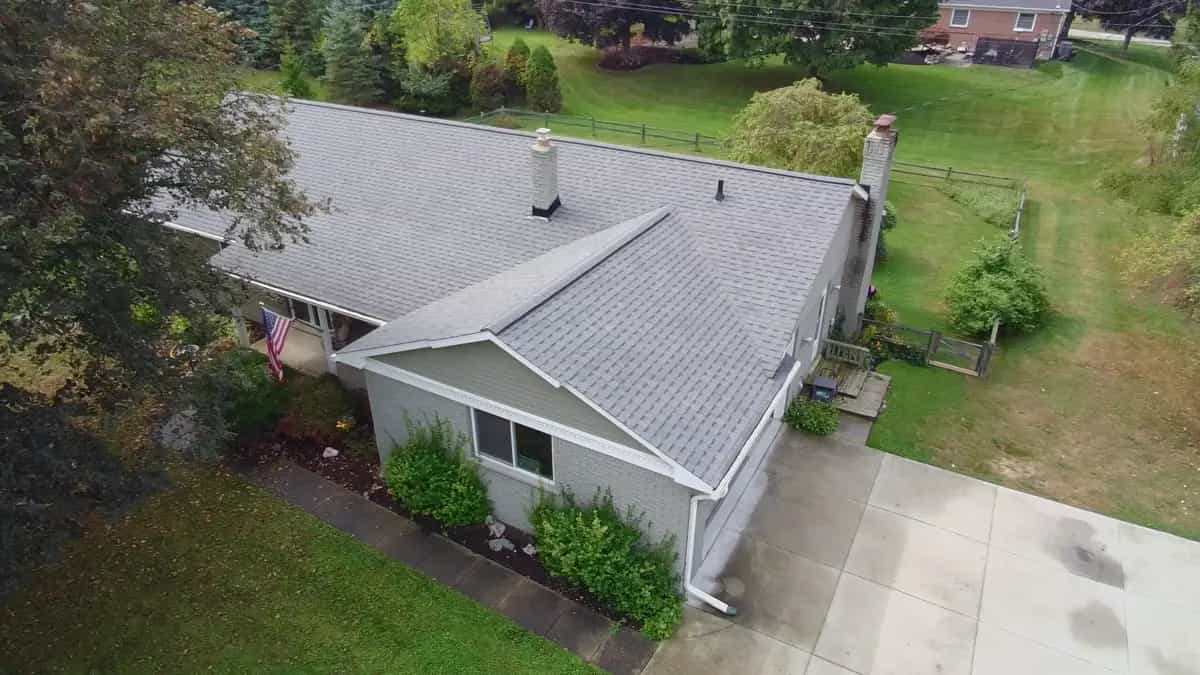
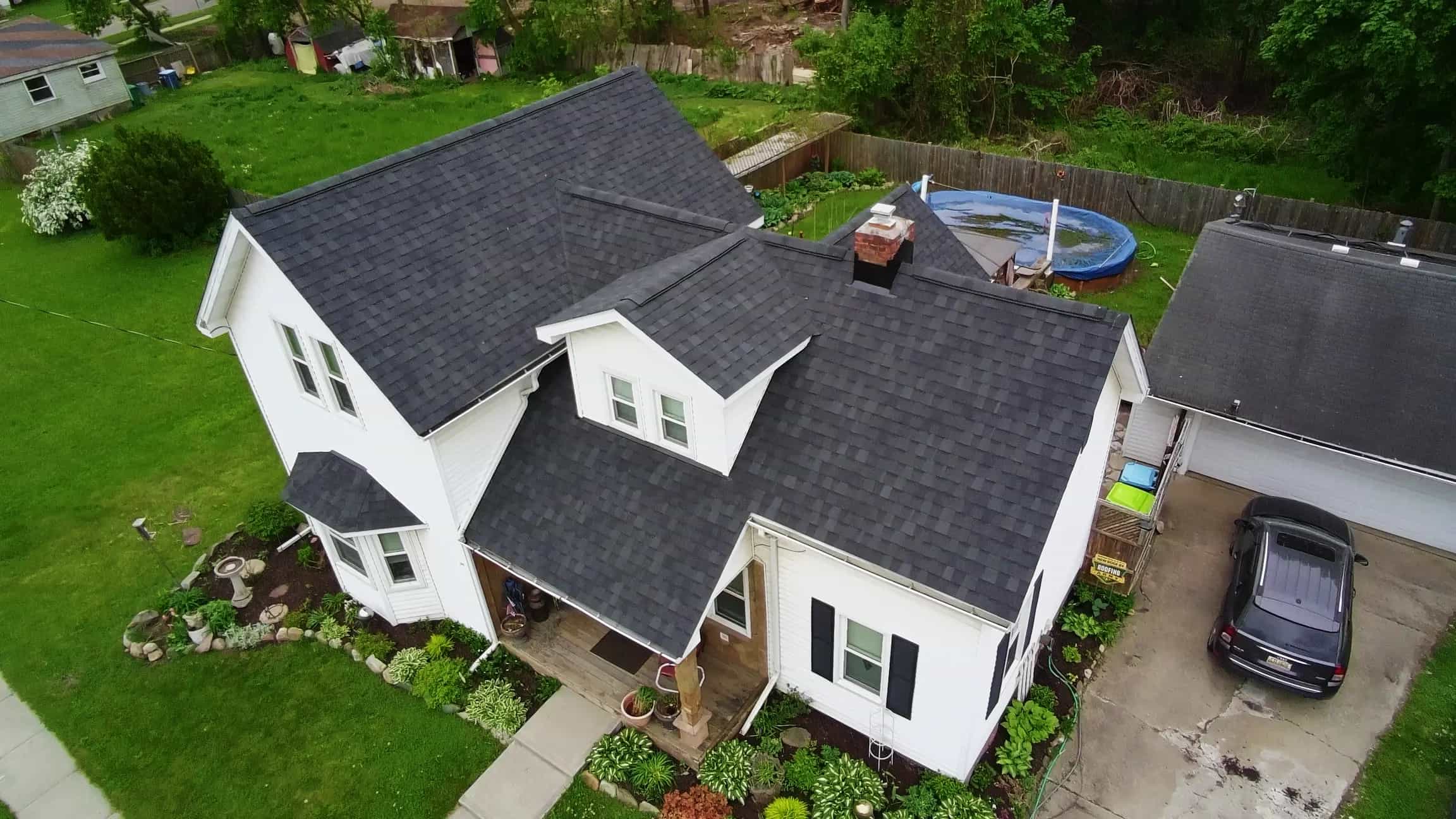
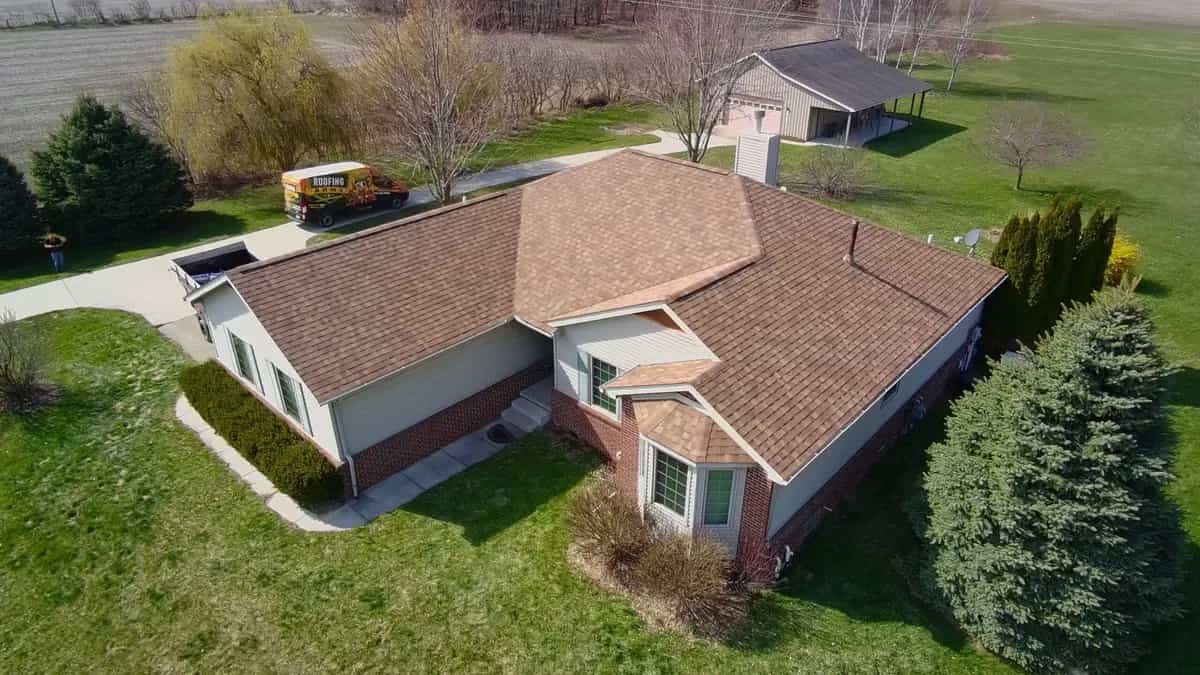
A real example: we replaced a 2,729 square foot roof at 2164 Lawndale Avenue in West Bloomfield, a heavily tree-canopied property, with Atlas architectural shingles in Pewter for $21,300.69. On a lot like that one, we default to a shingle with the strongest algae-resistant granules we offer, not because the homeowner asked for it, but because the tree coverage made it the obvious call. You can see that project, and others like it, in our job gallery.
Should You Pressure Wash a Streaked or Mossy Roof?
No. This is the one piece of advice that is consistent across every source we checked, including the shingle manufacturers themselves. GAF's own technical bulletin on algae staining (TAB-R-102) tells installers and homeowners not to power wash shingles, because the force can dislodge the protective granules and lead to premature shingle failure. ARMA's cleaning guidance is specific: a 50:50 mix of laundry-strength liquid chlorine bleach and water, applied with a sprayer, left to dwell for 15 to 20 minutes, then rinsed off with low pressure water, not a pressure washer. High-pressure water does two things wrong at once. It strips away the granules that shield the shingle mat from UV and weather, and it can force water up under the shingle tabs rather than off the roof, which is the opposite of what you want on a roof that is already dealing with a moisture problem. If a cleaning company shows up with a gas pressure washer instead of a low-pressure sprayer and a soft-wash chemical, that is worth asking about before they start.
Do Algae-Resistant Shingles Actually Work?
Yes, and the warranty terms are real and worth comparing if black streaking bothers you. The major manufacturers we install all build copper or zinc-bearing granules into at least one shingle line specifically to resist algae staining:
- Atlas Pinnacle Pristine (Scotchgard Protector): backed by a Lifetime Algae Resistance Limited Warranty when the roof is finished with matching Atlas hip and ridge shingles. The longest algae warranty of the four, which is one reason it is the shingle we install most.
- GAF Timberline HDZ (StainGuard Plus): a 25-year limited warranty against blue-green algae discoloration, non-prorated for the first 10 years.
- CertainTeed Landmark (StreakFighter): a 25-year algae-resistance warranty on standard Landmark, extended to 30 years on Landmark Pro.
- Owens Corning Duration (StreakGuard): 10 years on the standard data sheet, extended to 25 years when installed with a qualifying Owens Corning hip and ridge shingle, and dropping back to 10 years without one.
We cover the full wind, nailing zone, and system-warranty picture for these same shingles in our Atlas vs GAF vs CertainTeed comparison and our Owens Corning vs GAF comparison, so we will not repeat that here. The short version for algae specifically: any of the four will outperform a basic 3-tab shingle on a shaded roof, and the Atlas lifetime term is the longest if that is your main concern.
When Do Streaks or Moss Mean It's Time for a New Roof, Not Just a Cleaning?
A cleaning makes sense when the shingles underneath are still structurally sound and you are dealing with a cosmetic algae streak. A cleaning is the wrong move, or simply too late to matter, when any of these show up alongside the staining:
- Lifted or curling shingle edges under a moss patch, which signals the moss has already done its damage and cleaning will not reverse it.
- Heavy granule loss visible as bald patches or granules collecting in the gutter, which means the shingle's UV protection is already compromised.
- A roof already near the end of its expected life. Our guide on how long a roof lasts in Michigan walks through typical lifespans by shingle type and construction era; algae staining alone does not shorten that lifespan much, but it is often the first visible sign homeowners notice on a roof that is aging out for other reasons too.
- Soft spots or sagging anywhere near the mossy area, which points to decking damage underneath, not a surface problem a cleaning can fix.
If none of those are present, a professional soft wash and, on your next roof, a shingle with a real algae warranty is the right call. If they are present, cleaning the surface just delays an honest look at what is actually happening underneath.
Get an Honest Look at Your Roof
We serve shaded, tree-heavy neighborhoods across Southeast Michigan from offices in Oxford, Ferndale, and Rochester Hills. A free inspection tells you whether what you are looking at is a cosmetic streak, a moss problem worth addressing before your next storm, or a sign the roof itself is past its useful life. See our full process on the roof replacement and roof repair pages, and browse real completed projects, including shaded, tree-covered lots like the Lawndale Avenue job above, in our job gallery.
Frequently Asked Questions
What causes black streaks on a roof in Michigan?
The streaks are Gloeocapsa magma, a blue-green algae that spreads by airborne spores and settles into shaded, humid shingles. It develops a dark pigmented sheath to protect itself from UV light, which is the black color homeowners see, usually on north-facing or heavily tree-shaded slopes. It is not dirt, mold, or a sign of a leak.
Does roof algae actually damage the shingles?
Mostly no. The Asphalt Roofing Manufacturers Association states there is no scientific evidence that algae staining structurally damages a shingle, though it does reduce reflectivity on lighter colored shingles over time and hurts curb appeal and resale. Moss is the one that actually causes damage, since it can lift shingle edges and trap moisture, which is a bigger concern through a Michigan freeze-thaw winter.
Can you pressure wash a roof to remove algae or moss in Michigan?
No. GAF's own technical bulletin on algae staining advises against power washing shingles because it can dislodge the protective granules and lead to premature failure. The accepted method is a low-pressure soft wash with a diluted bleach solution, left to dwell and then rinsed at low pressure, not blasted with a pressure washer.
Do algae-resistant shingles actually prevent black streaks?
Yes. Atlas, GAF, CertainTeed, and Owens Corning all build copper or zinc-bearing granules into at least one shingle line and back it with a dedicated algae warranty, ranging from 10 years up to a lifetime warranty on Atlas Pinnacle Pristine with Scotchgard Protector when installed with matching hip and ridge shingles. Any of the four will resist streaking far better than a basic 3-tab shingle on a shaded roof.
When do black streaks or moss mean I need a new roof, not just a cleaning?
When the staining is accompanied by lifted or curling shingle edges, heavy granule loss, soft spots in the decking, or a roof that is already near the end of its expected lifespan. On its own, algae staining is cosmetic and a cleaning plus an algae-resistant shingle at your next replacement is enough. Moss with lifted edges, or any sign of decking trouble underneath, is worth a free inspection before you pay for a cleaning that will not fix the real problem.