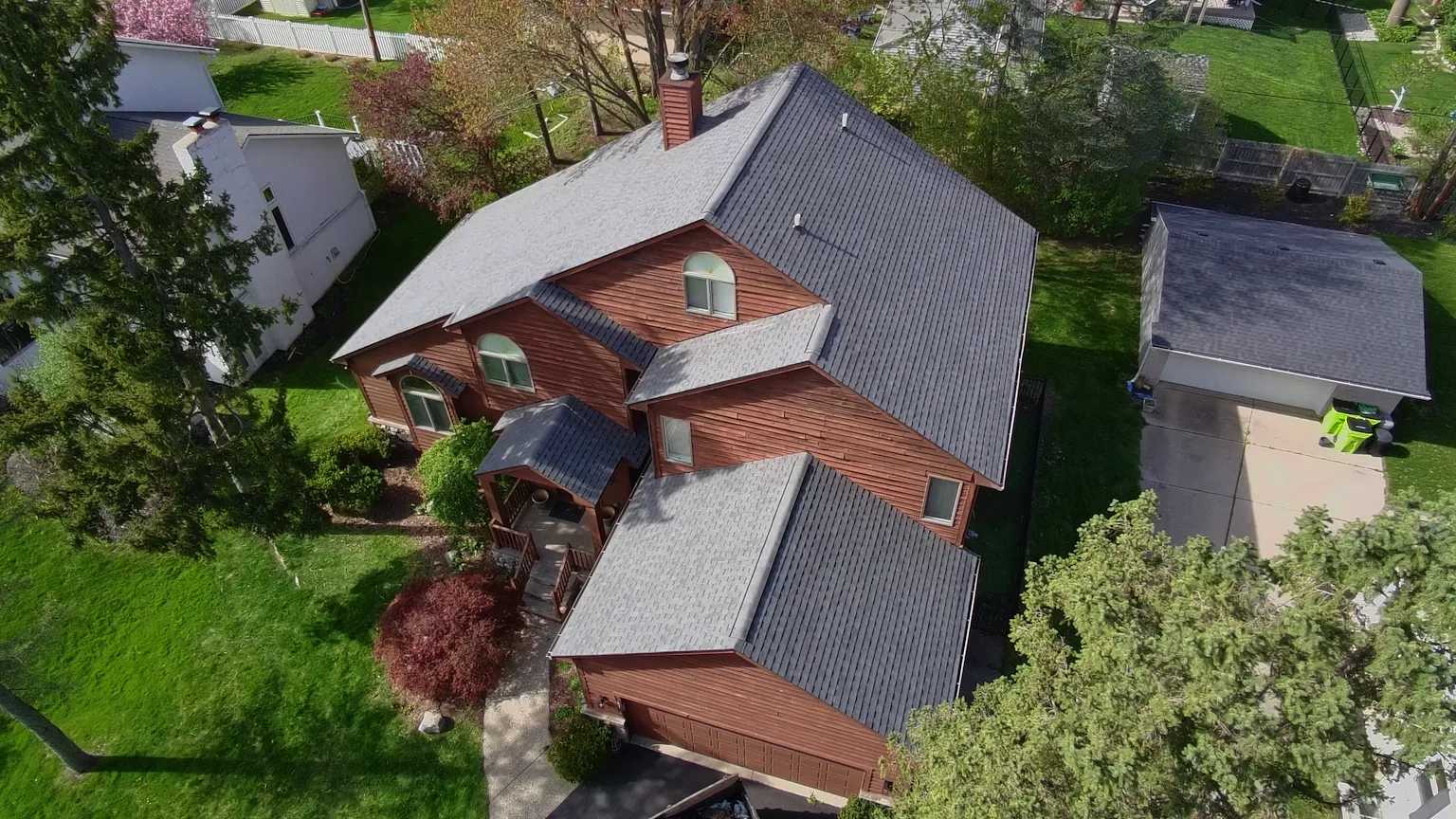
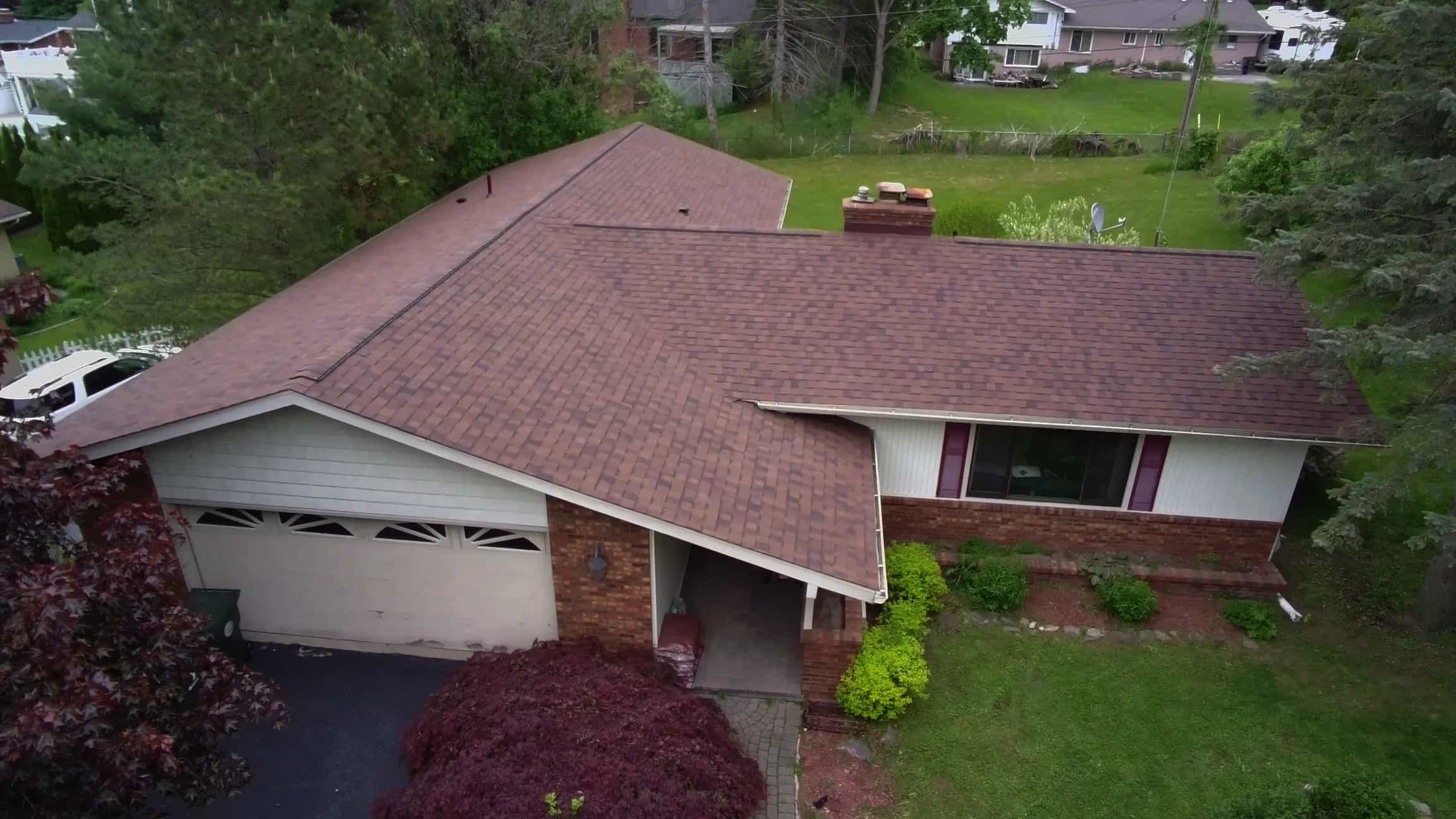
A roof that stays dry in a light rain but leaks during a heavy downpour or a wind-driven storm almost always has a flashing problem at a valley or a roof-to-wall intersection, not a failed shingle. Wind pushes water sideways and uphill under laps built to shed water moving straight down, which is exactly why the source is so hard to find from the ground or even from inside the attic on a calm day.
I am Aaron Scott, licensed Michigan residential builder and owner of Roofing Army. On our own calls this year, valleys are named as the leak source 31 times and "brown spot, cannot find the source" comes up 46 times, almost always describing this exact pattern. Tracing it correctly, instead of guessing, is most of the job.
Why Does My Roof Only Leak in Heavy or Sideways Rain?
Every flashing detail on a roof, a valley, a step-flashed wall, a chimney, a skylight curb, relies on overlapping layers that depend on gravity to carry water downhill and off the roof. In a normal rain, water runs straight down the slope and off the edge, and a few inches of overlap is more than enough. Wind changes that math. A storm pushing rain sideways, or uphill along a slope, can drive water up and under a lap that is perfectly adequate for still air. The harder the wind, the farther up under that lap the water travels, which is why a leak can show up only in a specific kind of storm and stay completely dry through weeks of ordinary rain in between.
Valleys and roof-to-wall intersections take the worst of this because they already concentrate runoff from two roof planes into one narrow channel before wind gets involved at all. Add a gust pushing against that channel and a flashing detail that was fine on a calm, straight-down rain can suddenly let water through.

Is It the Valley, the Wall Flashing, or Something Else?
Before assuming it is a valley, rule out the other usual suspects, since several of them share the same "only in a hard rain" symptom:
- Valley metal or a closed-cut valley with a gap, a nail too close to center, or debris holding water against the seam. Look for staining that lines up directly below where two roof planes meet.
- Step flashing or kick-out flashing at a wall, dormer, or where a lower roof meets a taller section of the house. Staining shows up on an interior wall near where that roofline meets the house, not under an open area of roof.
- Chimney flashing. Covered in detail in our chimney leak guide, since crown, mortar, and flashing each fail differently.
- A skylight curb or frame seal. See our skylight leak guide for how to tell a seal failure from a flashing failure.
- A pipe boot or roof vent on the windward side of the house. Our pipe boot and vent guide covers why these fail first and what they cost to fix.
If the stain only appears along a straight run of gutter and the roof itself stays dry inside, that is usually water spilling over the outside of the gutter at a valley, not a leak into the house. We cover that mechanism, and when a splash guard fixes it, in our guide to why gutters overflow. This guide is about water getting inside, not water missing the gutter.
What Is Kick-Out Flashing and Why Is Its Absence So Easy to Miss?
Where a roof plane runs along a wall and ends, at the bottom of a dormer or the corner where a garage roof meets the house, the step flashing needs one more piece at the very bottom: a kick-out, a small bent piece that physically throws the water off the roof and into the gutter instead of letting it keep following the wall straight down behind the siding. Per the U.S. Department of Energy's Building America Solution Center, a missing or undersized kick-out is one of the most common causes of hidden wall-cavity water damage, because the step flashing above it is doing its job correctly right up until the water reaches the bottom, where it has nowhere to go but behind the cladding.
This is also why a kick-out problem rarely shows up as a roof leak at all. The water is already past the roof and running down inside the wall, so it often surfaces as a stain or soft spot on an interior wall well below the roofline, sometimes a full story down, which makes it one of the leaks most likely to get blamed on a window, siding, or a plumbing problem before anyone looks at the roof.
What Does Michigan Code Require for Valley and Wall Flashing?
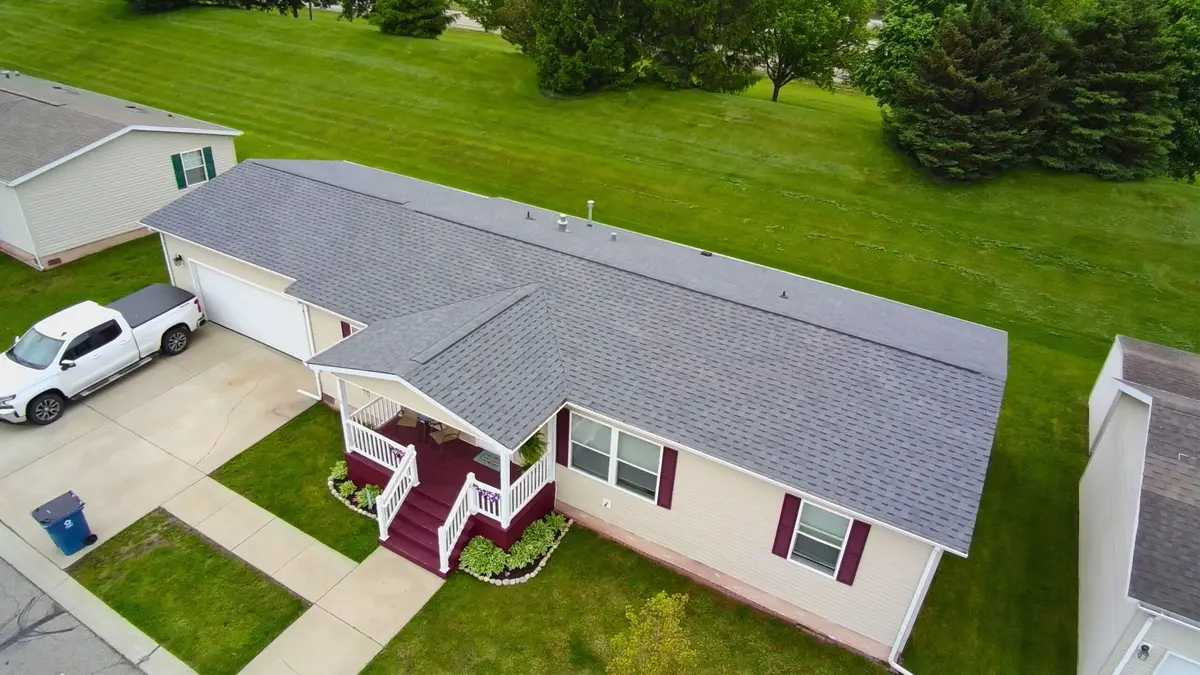
The Michigan Residential Code requires flashing at every roof-to-wall intersection and valley. For valleys specifically, it sets a minimum of corrosion-resistant metal at least 24 inches wide for an open metal valley, or a closed-cut valley built over a code-compliant lining. For step flashing along a sidewall, the code requires each piece to extend at least 4 inches up the wall and at least 4 inches onto the roof. Roofing Army's standard goes beyond the eave minimum the code sets: every valley on a tear-off gets ice and water shield underneath before the metal or shingles go down, not just the areas code requires it, because a valley carries more water than any other part of the roof.
Why Doesn't This Show Up From the Ground or on a Dry Day?
A wind-driven leak at a valley or wall intersection often travels along the underside of the decking or down a rafter before it drips anywhere, so the stain on your ceiling can be several feet from the actual entry point. That is the real story behind the 46 calls a year where a customer describes "a brown spot, but I cannot find where it is coming from." Tracing it correctly means getting into the attic during or right after the kind of storm that causes it, following moisture back along the framing to its actual high point, and checking that point against the flashing from the roof side, not assuming the stain sits directly under the leak.
This is a different mechanism than an ice dam leak, which shows up on thaw days in winter from melting snow backing up under shingles, or rot behind the gutter, which tracks along the fascia rather than into the attic. Confusing the three leads to the wrong fix, which is why a real inspection traces the water rather than guessing from the symptom alone.

How Much Does It Cost to Fix a Valley or Wall Flashing Leak?
A contained repair, replacing a section of valley metal or rebuilding step and kick-out flashing at one wall intersection, is the kind of job our $250 minimum service charge covers at the low end, with most small, isolated repairs like this landing in the $250 to $600 range. Across all 170 repair quotes we wrote this year, the median price was $1,109, with the middle half between $600 and $2,658; a single valley or wall-flashing repair without additional rot or a second leak source typically sits well below that median rather than at it. The number climbs if water has been getting in long enough to rot the decking or framing underneath, since that adds sheathing or structural repair to the job, which is common with a long-missed kick-out leak specifically, since it can run for years before anyone notices a stain. For a broader look at what drives repair pricing across every leak type we see, read our roof repair cost guide.
Get the Actual Source Found, Not Guessed
A leak that only shows up in a hard, sideways storm is one of the easiest problems to misdiagnose and chase for years without fixing, because it hides from every inspection done on a dry day. We trace these from the attic side and the roof side together, check every valley and roof-to-wall intersection by name, and tell you plainly whether it is a contained flashing repair or something that points to a full new-roof-still-leaking situation. For definitions of the parts involved, see our roofing glossary entries on valleys, open metal valleys, closed-cut valleys, step flashing, and kick-out flashing. We serve Southeast Michigan from offices in Oxford, Ferndale, and Rochester Hills. See real project pricing in our job gallery, learn more on our roof repair page, or schedule a free inspection timed, when possible, around the next storm that actually causes the leak.
Frequently Asked Questions
Why does my roof only leak when it rains hard or the wind is blowing?
Flashing at valleys and roof-to-wall intersections is built to shed water running straight downhill. Wind-driven rain gets pushed sideways and uphill under those laps, which only happens past a certain wind speed or rain intensity. That is why the leak can disappear completely between storms and come back only under the same conditions.
What is kick-out flashing and why does a missing one cause a leak low on the house?
Kick-out flashing is the small piece at the bottom of a step-flashed wall that throws water into the gutter instead of letting it keep running down behind the siding. Without one, water travels inside the wall cavity, often surfacing as a stain or soft spot well below the roofline rather than as a visible roof leak.
How do you find a leak that only happens in certain storms?
We get into the attic during or right after the specific kind of storm that causes it and follow moisture along the framing back to its actual high point, then check that point against the flashing from the roof side. Guessing from where a ceiling stain appears is unreliable, since water travels sideways along decking and rafters before it drips.
Does Michigan code require flashing at every valley and roof-to-wall intersection?
Yes. The Michigan Residential Code requires flashing at every roof-to-wall intersection and valley, with open metal valleys at least 24 inches wide in corrosion-resistant metal, and step flashing extending at least 4 inches up the wall and 4 inches onto the roof. Roofing Army also runs ice and water shield under every valley, beyond what code requires at the eaves alone.
How much does it cost to fix a valley or wall flashing leak?
A contained repair at one valley or wall intersection typically falls in our $250 to $600 range for small repairs. Across all 170 repair quotes we wrote this year, the median was $1,109 with the middle half between $600 and $2,658, with the higher end usually driven by rotted decking or framing from a leak that ran undetected for a while.