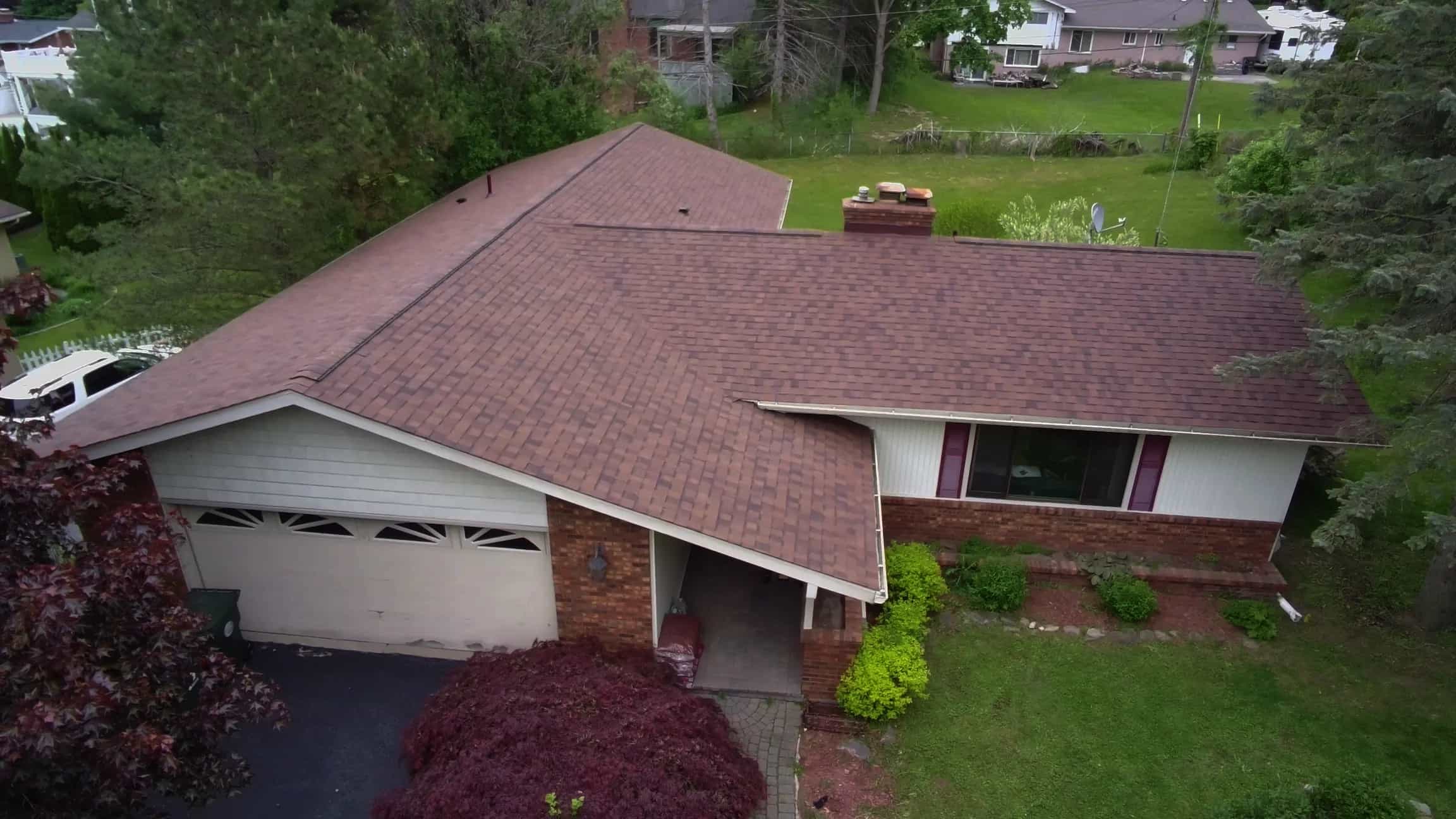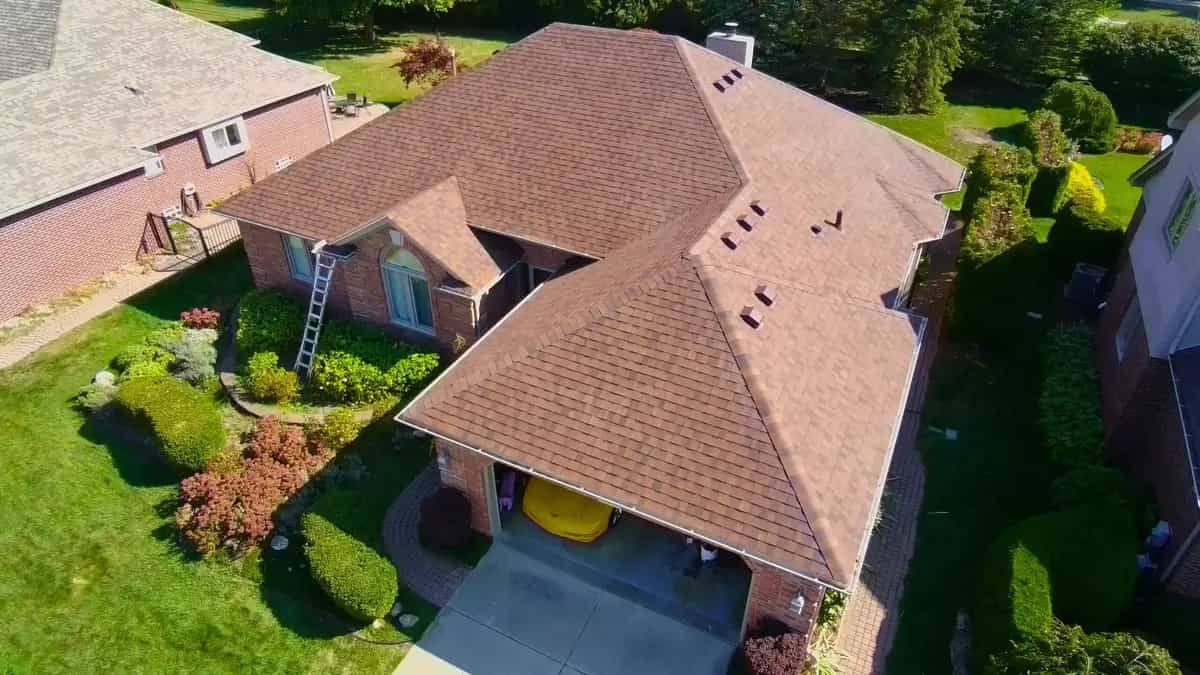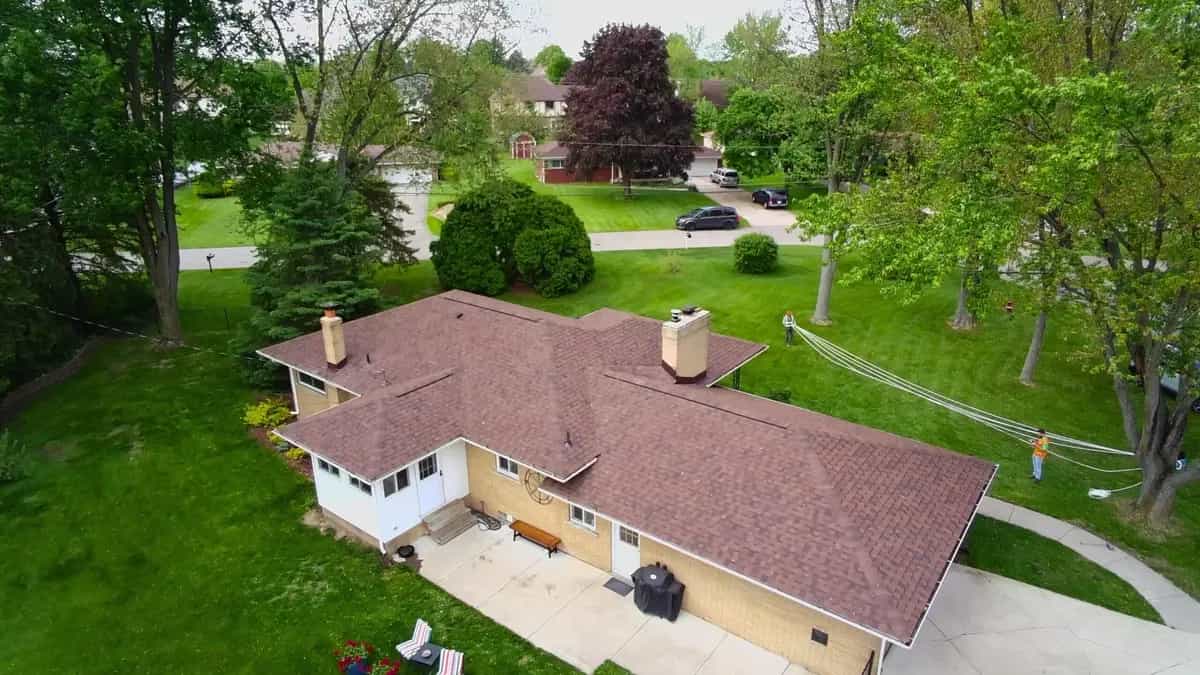
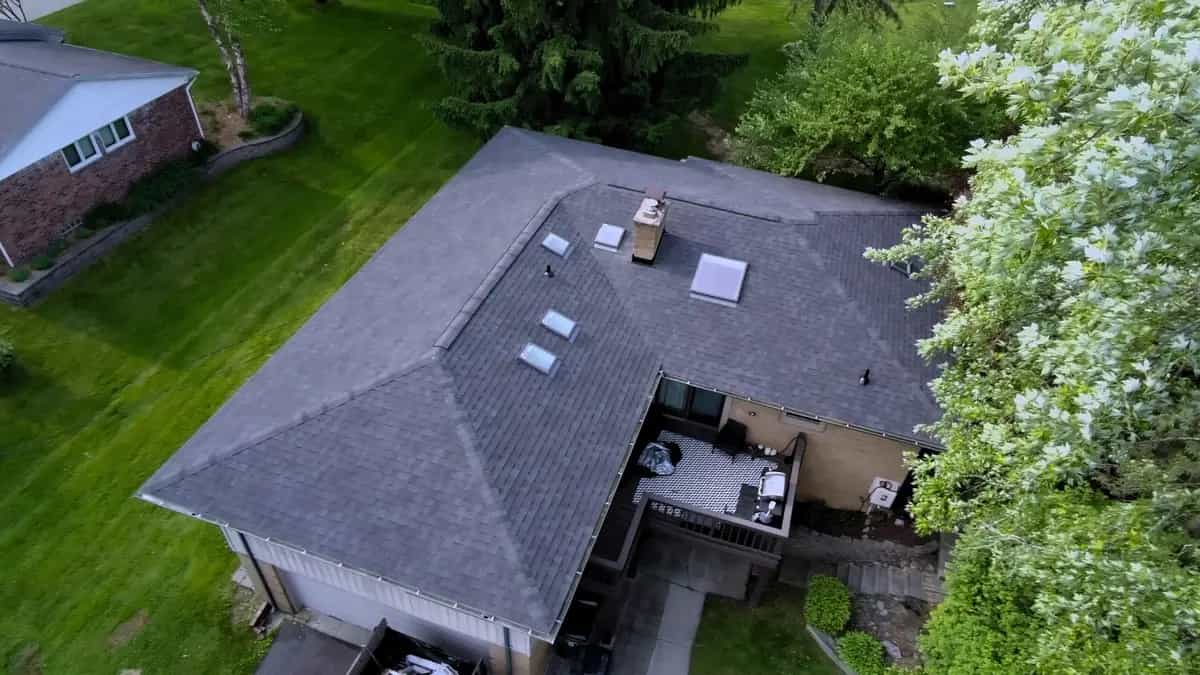
Yes, you can replace just one slope of a roof, and it is one of the most common jobs we get asked about. It makes the most sense for a detached or attached garage, an addition with its own roofline, or a single slope with isolated storm damage. The tradeoffs are a visible seam where old and new shingles meet, imperfect color matching, and pricing that runs higher per square foot than a full tear-off because of fixed costs like mobilization and sourcing matching material. Here is how we walk homeowners through the decision.
Can You Replace Just One Side of a Roof?
Structurally, yes. A roof slope is its own section bounded by a ridge, hips, or valleys, and a roofer can tear off and reshingle just that section without touching the rest of the roof. We get asked about this often enough that it is one of the more common questions on our calls: on the calls we took this year, 71 homeowners specifically asked about redoing just one side or just the garage, separate from a full replacement quote. The real question is not whether it is possible. It is whether it is the right call for your situation, your shingles, and your budget.
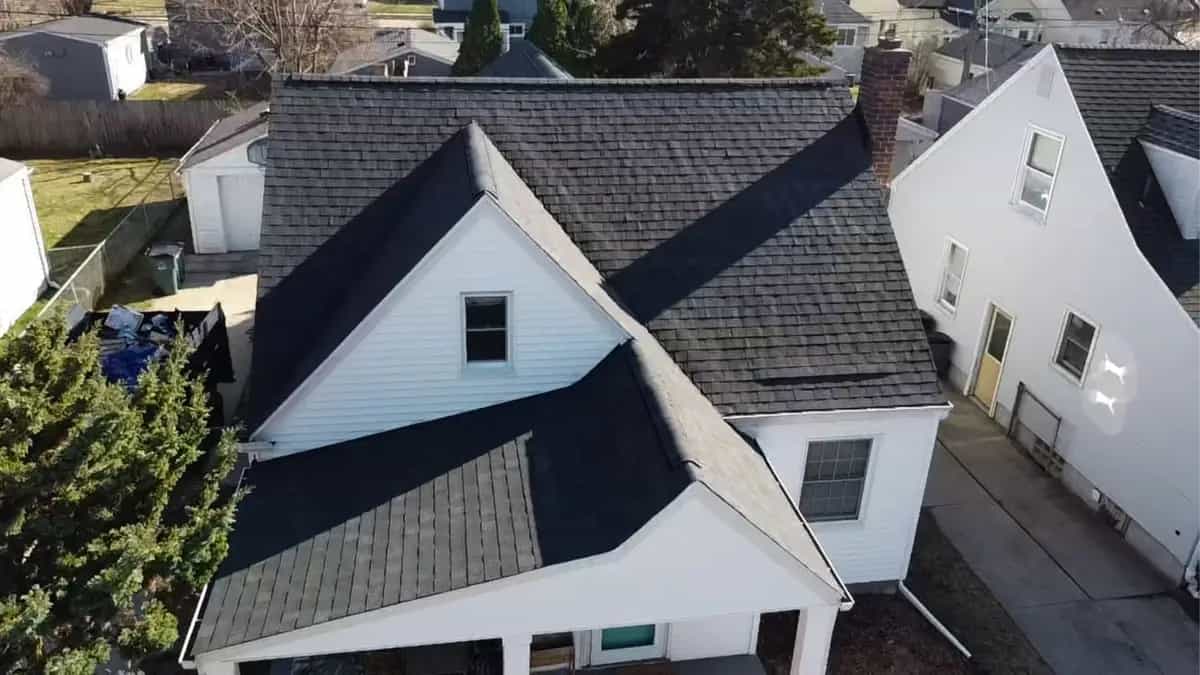
When a One-Slope Replacement Makes Sense
We recommend a single-slope replacement in a few specific situations, and talk people out of it in others.
- A detached or attached garage with its own roofline. If the garage roof is a separate structure or a clearly separated slope and it is failing faster than the house (common when it was reroofed at a different time, or gets more sun), redoing just that section is often the honest answer, not an upsell to the whole house.
- Isolated storm damage to one slope. A wind event that lifts or tears shingles on the slope facing the prevailing wind, while the rest of the roof is healthy, is a textbook case for a slope repair or slope replacement rather than a full tear-off.
- An addition with a distinct roofline. A sunroom, bump-out, or garage addition tied into the main roof at a different pitch or a different install date is its own section by design.
Where we steer people away from a single slope: when the rest of the roof is the same age and in similar condition. Fixing the slope that is failing today just means you are back for the next slope in a year or two, paying mobilization and tie-in costs twice (or three or four times) instead of once. If every slope is the same vintage, our repair versus replacement framework is the better starting point than a slope-by-slope patch plan.
What Happens at the Seam Where Old Meets New?
This is the detail that separates a clean single-slope job from a sloppy one. A roof slope does not just end in open air; it meets the rest of the roof at a ridge, a hip, or a valley, and each of those transitions has to be built correctly or the tie-in becomes the next leak.
- At a ridge, the new slope's shingles run up to the ridge line and the ridge cap is typically redone across the whole ridge, old side included, so the cap sits flat and sealed rather than stepping down in thickness where old cap meets new cap.
- At a hip, the hip shingles get the same treatment as a ridge: redone across the full hip line so the courses lock together correctly.
- At a valley, you cannot stop a new slope's shingles partway down a shared valley. The valley metal or closed-cut valley and the ice and water shield underneath it need to run the full length of the valley as one continuous system, which usually means the old slope's shingles get cut back and rewoven into the new valley rather than left as a seam down the middle of it.
Done right, a one-slope job does not look like two different roofs stapled together. Done wrong, the tie-in at the ridge or valley is exactly where the next leak shows up, which is why we treat those transitions as the hardest part of the job, not an afterthought.
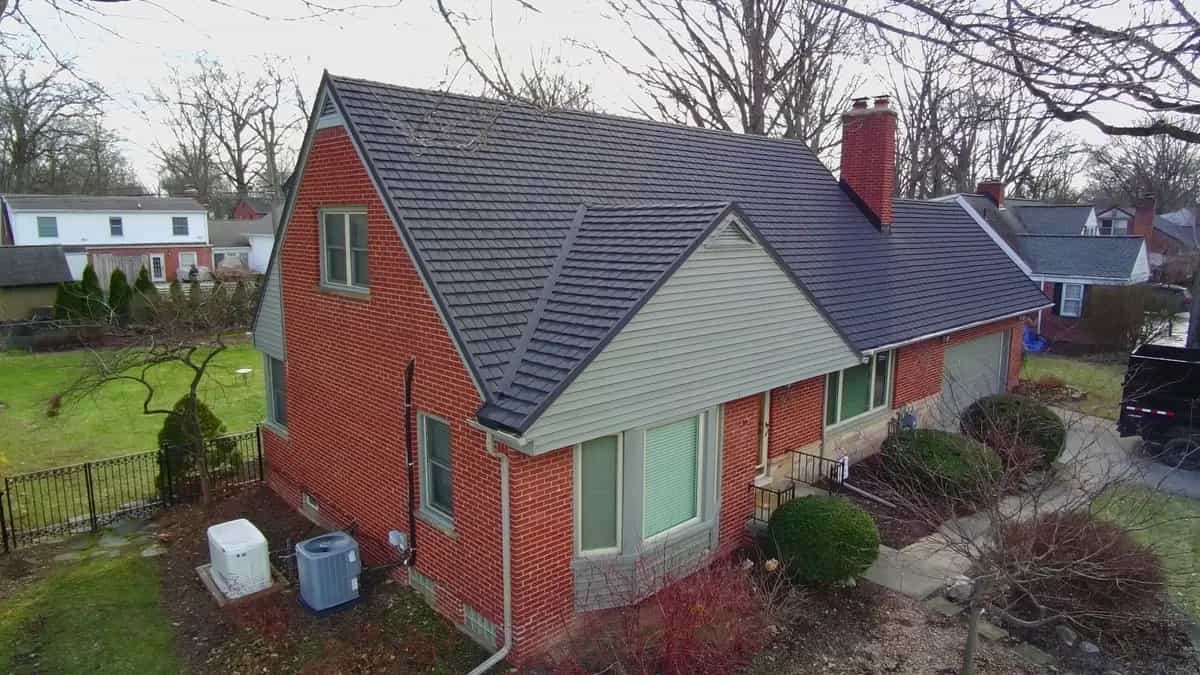
Will the New Shingles Match the Old Ones?
Close, but rarely exact, at least on day one. Existing shingles have weathered in the sun for years, so a new shingle in the same product line and color reads slightly brighter at first and blends in within a season as it weathers too. The bigger risk is availability: shingle colors and entire product lines get discontinued, and if yours has, the closest match comes from a different run or a different line. Most homeowners policies and most honest contractors describe the standard as materials of "like kind and quality," not a pixel-perfect match, so a slightly different shade right after installation is normal, not a sign of a bad job. We cover this same tradeoff in more detail, including when a mismatch is bad enough that the whole slope should be redone instead of patched, in our guide on what to do when shingles blow off in a windstorm.
Why Would an Insurer Only Approve One Slope?
Insurance is the other context where this question comes up, and it is a big one: 20 of our calls this year described exactly this, an insurer approving payment for only the damaged slope rather than the whole roof. Michigan's Department of Insurance and Financial Services states plainly that when hail or high wind lifts shingles, a homeowners policy generally covers the portion of the roof that was actually damaged, and the insurer is not automatically required to replace the entire roof. We have not found a Michigan law that requires an insurer to replace an undamaged slope purely so the shingles match, the way a small number of other states' regulators have ruled. That means a partial, one-slope approval is a normal outcome of a Michigan wind or hail claim, not a sign the adjuster shortchanged you, though it is always worth asking the adjuster directly how they are applying matching language in your specific policy.
If you are deciding whether a one-slope claim is even worth filing, run the numbers against your deductible first. Our hail deductible calculator walks through exactly that math, and our insurance claim calculator and claim filing guide cover the rest of the process.
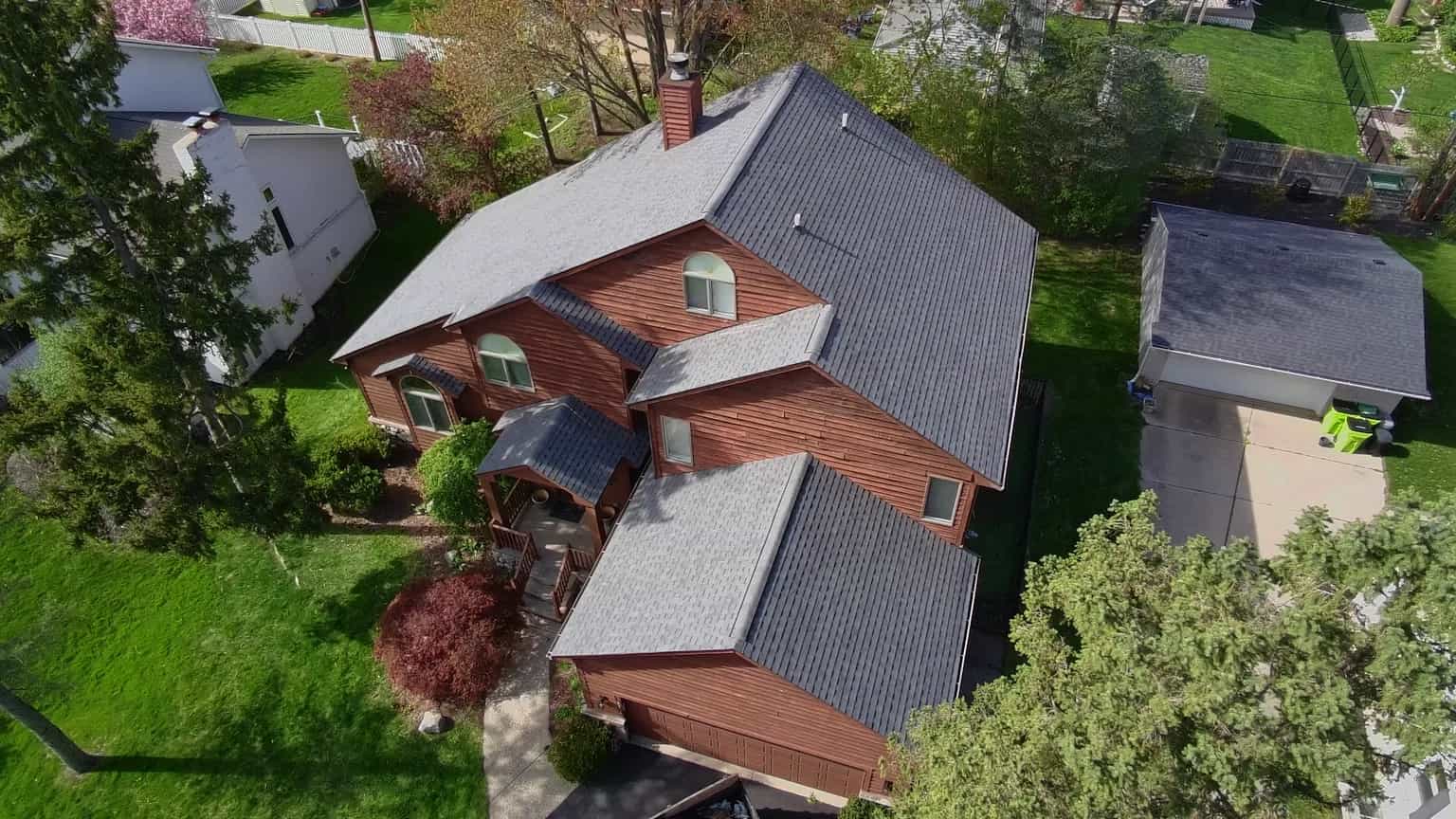
How Much Does It Cost to Replace One Slope?
Start from what a full roof costs per square foot, then adjust. Across the asphalt roofs we have published prices for, half landed between $5.99 and $7.07 per square foot of roof area, with a median around $6.51, as we break down in our Michigan roofing statistics post. A single slope does not simply scale down from that rate, though. Tearing off and reshingling one slope still requires a crew on site, a dumpster or disposal run, sourcing matching shingles (sometimes in smaller bundle counts than a supplier prefers to sell), and careful tie-in work at the ridge or valley described above. Those are largely fixed costs whether the slope is 300 square feet or 900.
In practice, a one-slope job prices closer to a sizable repair than a pro-rated fraction of a full roof. Our own repair data shows most small to midsize repairs land between $250 and $600, with the median sold repair at $900 across every repair we complete, as detailed in our roof repair cost guide; a full slope reshingle, being larger than a typical repair but smaller than a full roof, usually prices above that repair range and below a full tear-off's per-square-foot rate. For a real-dollar anchor on the small end of a full roof, the smallest complete roofs we have published are a 1,048 square foot roof in Madison Heights at $6,412.15 and a 1,252 square foot roof in Oak Park at $8,530.00. Neither of those is a single slope, they are full small roofs, but they are the closest real invoices we can point to for what a compact reshingle job costs before the fixed costs of a partial job push the per-square-foot number higher still.
| Scope | Typical price driver | Real reference point |
|---|---|---|
| Small repair (a few shingles, a pipe boot, flashing) | $250 minimum service visit plus materials | $250 to $600 on most calls |
| One full slope (garage, storm-isolated section) | Mobilization, matching shingles, tie-in flashing at the ridge or valley | Prices above typical repair range; get a written quote for your specific slope size |
| Smallest full roofs we have published | Full tear-off, all slopes | 1,048 sq ft in Madison Heights, $6,412.15; 1,252 sq ft in Oak Park, $8,530.00 |
The only way to get an exact number for your slope is a written quote with the square footage, pitch, and shingle line spelled out. We never take a deposit, so you are not committing money to find out.
When a Full Replacement Is the Smarter Call
A single-slope job stops making financial sense once you are no longer buying time on an otherwise healthy roof. The 25 percent rule under the Michigan Residential Code is part of that math: once the repaired or replaced area within a roof section crosses roughly a quarter of that section in a 12 month period, the work has to be brought up to current code rather than treated as a simple patch, which often closes the price gap between a slope job and a full reroof of that section. It is also worth asking the practical question: if the rest of the roof is the same age as the slope you are about to fix, are you buying one or two more years before you are back here again, paying mobilization costs a second time? If so, a full replacement, priced out with all five of our quote options, is usually the better long-term number even though the upfront check is bigger.
Get a Straight Answer for Your Roof
Whether a garage roof, one storm-damaged slope, or the whole house makes sense for you depends on the actual condition of every slope, not just the one that is currently a problem. A project manager inspects every slope on every job we take on, not just the one you called about, and we will tell you plainly if a single slope is the right fix or if it is a short-term patch on a roof that is retiring soon either way. Schedule a free inspection, or see what a quote should include in our guide on what is included in a roof replacement quote.
Frequently Asked Questions
Can you replace just one side of a roof?
Yes. A roof slope is bounded by a ridge, hips, or valleys and can be torn off and reshingled on its own without touching the rest of the roof. It is most common for a garage with its own roofline, an addition, or a slope with isolated storm damage. The key is a clean tie-in at the ridge or valley where old and new meet.
Will the new shingles match the rest of my roof?
Close, but rarely exact at first. Existing shingles have weathered in the sun, so new shingles in the same line and color read slightly brighter until they weather in, usually within a season. The bigger risk is a discontinued color or product line. Most policies and most contractors describe the standard as materials of like kind and quality, not a pixel-perfect match.
Why did my insurance company only approve one slope?
Michigan's Department of Insurance and Financial Services states that when hail or wind lifts shingles, a homeowners policy generally covers the portion of the roof that was actually damaged, and the insurer is not automatically required to replace the entire roof. A partial, one-slope approval is a normal outcome of a Michigan claim. Ask your adjuster directly how matching language in your specific policy is being applied.
How much does it cost to replace one slope of a roof?
There is no flat per-square-foot discount for a partial roof. Mobilization, sourcing matching shingles, and tie-in work at the ridge or valley are largely fixed costs whether the slope is small or large, so a one-slope job typically prices above a typical repair range and below the per-square-foot rate of a full tear-off. Across our published asphalt roofs, half priced between $5.99 and $7.07 per square foot of total roof area; get a written quote for your specific slope.
When should I replace the whole roof instead of just one slope?
When the rest of the roof is the same age and condition as the slope that is currently failing. Fixing one slope at a time means paying mobilization and tie-in costs repeatedly instead of once. The Michigan Residential Code's 25 percent rule also applies: once repaired area within a section crosses roughly a quarter of that section in 12 months, it has to meet current code, which often closes the price gap with a full reroof of that section.